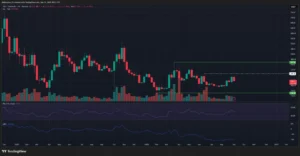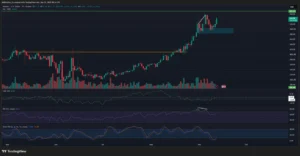
The cryptocurrency market is currently navigating a period of intense anticipation as Bitcoin approaches significant technical resistance levels. Amidst this backdrop, sophisticated market participants are deploying complex hedging strategies to safeguard their long-term holdings. Notably, Chainlink’s native governance token, LINK, has been identified by prominent traders as a primary instrument for executing a short-hedge strategy designed to protect portfolios against a potential localized top in Bitcoin.
This financial maneuver involves maintaining a long-term position in Bitcoin—bolstered by its recent institutional adoption—while simultaneously taking a short position in an altcoin like Chainlink. This approach allows traders to mitigate downside risk without liquidating their primary Bitcoin holdings, effectively capitalizing on the relative performance gap between the two assets.
The Evolution of the Short-Hedge Strategy
A traditional short hedge is a risk management technique where a trader opens a short position in an asset they already own to offset potential losses. However, the strategy currently being observed in the crypto ecosystem represents a hybrid approach. Instead of shorting the same asset, traders are utilizing "cross-asset hedging." By shorting Chainlink, traders are betting that in the event of a broad market correction triggered by Bitcoin, altcoins will experience a more pronounced decline, thereby allowing the trader to capture gains on the short position that offset the unrealized losses of their Bitcoin portfolio.
This strategy is underpinned by the current market climate, characterized by a surging Bitcoin Dominance metric. As of late 2020, Bitcoin Dominance—the ratio of Bitcoin’s market capitalization to the total market capitalization of all cryptocurrencies—has climbed from approximately 57 percent to over 63 percent. This rise indicates a massive migration of capital out of the altcoin market and into Bitcoin, driven by expectations of fiscal stimulus and increased institutional entry.
Chronology of Market Shifts
The current market sentiment is deeply influenced by a sequence of macroeconomic and industry-specific events. Throughout 2020, Bitcoin shifted from being viewed merely as a speculative retail asset to a legitimate institutional reserve.

- Mid-2020: The decentralized finance (DeFi) sector experienced a period of exponential growth, with Chainlink acting as a critical infrastructure layer.
- August 2020: Bitcoin Dominance hit a local floor of approximately 57.21 percent, suggesting that altcoins were briefly outperforming or holding steady against the primary digital asset.
- October 2020: The announcement of institutional integration by major financial service providers, including PayPal and Square, signaled a paradigm shift. These events triggered a rapid rise in Bitcoin’s price, which simultaneously began draining liquidity from the broader altcoin market.
- Early November 2020: Traders began publicly discussing the use of LINK as a "scapegoat asset." By November 3, as markets braced for US presidential election volatility and potential multi-trillion dollar stimulus packages, the short-hedge strategy became a focal point for risk-averse investors.
Supporting Data and Market Dynamics
The preference for Chainlink as a hedge is not arbitrary. Chainlink has been one of the highest-performing assets of the year, boasting gains exceeding 560 percent in 2020. This substantial appreciation makes it an ideal candidate for a short position; its high volatility and rapid ascent provide traders with both the liquidity needed to enter and exit positions and the potential for a significant "reversion to the mean" should the broader market contract.
Furthermore, the "delivery" aspect of the Chainlink protocol provides a fundamental layer to the technical hedging strategy. With over 112 new partnerships announced in 2020 and nearly 200 firms integrated since its mainnet launch, Chainlink is recognized as the dominant force in the blockchain oracle sector. Analysts from Messari have characterized the project as "writing the playbook" for oracle infrastructure. This fundamental strength ensures that even during a short-term price decline, the project retains long-term value, making it a "quality" asset to short during moments of temporary market exhaustion.
Institutional Adoption and Its Consequences
The decision to hold Bitcoin while hedging with altcoins is a direct response to the "institutionalization" of the crypto space. The involvement of firms like DBS and the broader integration of cryptocurrency into mainstream payment rails have altered the risk-reward calculus for professional traders.
The expectation of a $2 trillion stimulus package following the US election has created a "risk-on" environment for Bitcoin. Investors view the asset as a hedge against fiat currency debasement. However, because Bitcoin’s price is prone to sudden, sharp corrections following aggressive rallies, traders are unwilling to exit their positions. Instead, they look for ways to weather the volatility. By shorting LINK, they create a synthetic "insurance policy" that protects their capital without the tax implications or potential loss of entry point associated with selling their Bitcoin.
The Role of Oracles in Market Stability
Chainlink’s role as an oracle provider—connecting real-world data to smart contracts—is central to the DeFi ecosystem. Because so many DeFi protocols rely on Chainlink for price feeds, the token’s price action is inextricably linked to the health of the entire decentralized finance sector.
When traders short LINK, they are essentially expressing a bearish view on the short-term stability of the DeFi sector. If Bitcoin falls, DeFi platforms often face liquidation events, which in turn leads to a drop in the demand for oracle services, creating a negative feedback loop for the LINK token. This structural vulnerability is exactly what the short-sellers are aiming to capitalize on.

Expert Analysis and Future Implications
The strategy adopted by these traders highlights a maturing market. The ability to use cross-asset hedging demonstrates that the cryptocurrency market is no longer a monolithic entity where all assets move in lockstep. Instead, it is becoming a complex environment where institutional strategies, such as relative value trading and delta-neutral hedging, are becoming common.
Recent data shows that this strategy can be highly effective. One prominent trader recently reported covering a short position in Chainlink with a 1.5 percent profit, opting to close the position because of the belief that Bitcoin was poised for a major upward move. This fluidity—moving in and out of hedges based on technical signals—reflects the high-frequency nature of modern crypto trading.
Looking Ahead
As the industry moves forward, the relationship between Bitcoin and high-utility altcoins will continue to evolve. While Bitcoin currently enjoys a status as a macro hedge against global economic instability, assets like Chainlink serve as the utility layer that powers the next generation of financial services.
The use of Chainlink as a hedge serves as a reminder that even the most promising projects are subject to market cycles. For investors, the takeaway is clear: the integration of traditional financial risk management techniques into the crypto space is accelerating. Whether this leads to increased market stability or adds another layer of complexity to price discovery remains to be seen. However, as long as Bitcoin maintains its current trajectory of institutional adoption, the use of altcoins as tactical hedges is likely to remain a cornerstone of professional crypto trading strategies.
The underlying strength of the Chainlink protocol suggests that while the token may be used as a tool for short-term hedging, its fundamental value proposition remains intact. As more firms adopt its oracle solutions, the demand for the token is likely to stabilize, potentially reducing its volatility over the long term. For now, however, it remains a focal point for those looking to protect their Bitcoin holdings in a volatile, fast-paced, and increasingly institutionalized marketplace.