The landscape of digital asset trading underwent a fundamental shift in 2020, as crypto derivatives trading surpassed traditional spot market volume to become the dominant segment of the global cryptocurrency exchange ecosystem. This transition was driven by an influx of institutional capital and a growing cohort of retail traders seeking sophisticated financial instruments to hedge positions and capitalize on high volatility. In response to these evolving market demands, Huobi Futures, the derivatives arm of the established Huobi Global exchange, has implemented a suite of operational upgrades designed to provide users with greater capital efficiency and granular risk control.
The Evolution of Crypto Derivatives
Since its inception in December 2018, Huobi Futures has positioned itself as a critical infrastructure provider within the broader Huobi Global ecosystem. As one of the longest-standing participants in the digital asset exchange sector, the platform has historically supported contracts and options trading across a diverse range of underlying assets, including Bitcoin (BTC), Ethereum (ETH), Litecoin (LTC), Filecoin (FIL), and the native Huobi Token (HT).

The decision to roll out these new functionalities marks a strategic pivot toward meeting the requirements of a more mature trading environment. By introducing daily settlements and automated risk management features such as stop-loss (SL) and take-profit (TP) orders, the platform seeks to reduce the manual oversight burden that has traditionally characterized crypto-margin trading.
Implementation of Daily Settlements: A Strategic Shift
Beginning January 7, 2021, Huobi Futures initiated a transition for its coin-margined futures products, moving from a weekly delivery cycle to a daily settlement mechanism. This adjustment represents a significant departure from standard industry practices, which often tethered the realization of profits to the expiration of weekly, bi-weekly, or quarterly contracts.
Under the new framework, realized profits are calculated and accessible to traders daily at 16:00 (GMT+8). This shift is expected to provide traders with enhanced liquidity, as they are no longer required to wait until the end of the work week to withdraw earnings or reallocate capital. By allowing for daily adjustments to trading strategies, the exchange aims to foster a more dynamic environment where users can pivot their exposure in response to rapid market movements—a necessity in the notoriously volatile crypto sector.

The transition, which was initially introduced on a trial basis through June 30, 2021, covers the full spectrum of contract expiration periods. While weekly contracts previously delivered at 16:00 every Friday, they now undergo daily settlement, with delivery still occurring at the end of the contract term. Bi-weekly, quarterly, and bi-quarterly contracts have seen a similar migration, ensuring that the entire coin-margined suite operates on a daily settlement cadence. This optimization effectively lowers the barrier for capital reinvestment and enhances the overall efficiency of margin utilization for professional and retail participants alike.
Advanced Risk Management: Stop-Loss and Take-Profit Integration
Concurrent with the settlement upgrades, Huobi Futures has integrated automated stop-loss and take-profit functionality across its coin-margined futures, coin-margined swaps, and USDT-margined swaps. These features are accessible via both the platform’s web-based interface and its API, catering to both manual traders and those utilizing algorithmic trading strategies.
In the context of volatile market conditions—such as the bullish rallies characteristic of the 2020–2021 cycle—these tools are vital for preserving capital. A stop-loss order acts as a safeguard, automatically closing a position when the asset price reaches a predetermined threshold to limit potential losses. Conversely, a take-profit order enables traders to lock in gains once a target price is reached, ensuring that profit targets are met even if the trader is not actively monitoring the market.
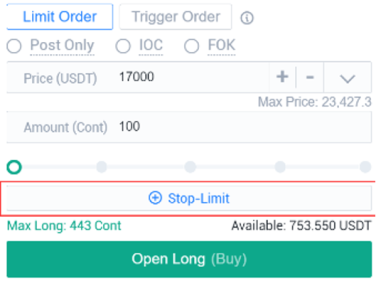
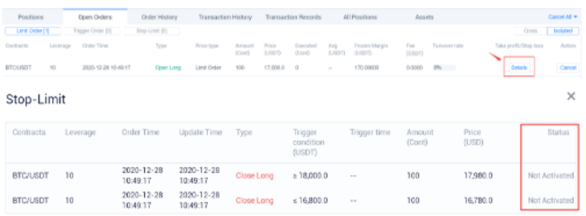
The mechanism is designed for flexibility. Traders can configure these orders when initially opening a position or apply them to existing holdings. An important aspect of this implementation is the "interrelated" nature of the orders; when a take-profit and stop-loss order are set simultaneously, the execution of one automatically triggers the cancellation of the other. This prevents unintended open positions and streamlines the trade lifecycle.
Practical Application and Workflow
To illustrate the operational impact, consider a scenario involving a long position in Bitcoin. If a trader identifies a support level at 17,000 USDT, they may set a stop-loss order at 16,800 USDT to protect against a trend reversal, while setting a take-profit order at 18,000 USDT to capture the expected upside.
The process for configuring these parameters has been streamlined into the "Limit Order" interface. For new positions, users specify their price, quantity, and the associated SL/TP trigger prices at the moment of order placement. For positions already in progress, the platform provides two distinct methods for setting these constraints:
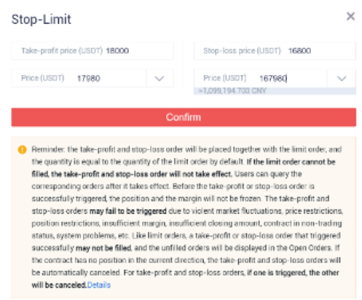
- By Price: Users define exact USDT price levels for both profit-taking and loss-mitigation.
- By Profit Rate: Users define their exit points based on the percentage of profit desired, allowing for a more strategic approach to return-on-equity (ROE) goals.
This dual-method approach is intended to accommodate different trading styles, from the technical analyst focusing on price support and resistance levels to the more casual trader focused on percentage-based performance metrics.
Broader Market Implications
The introduction of these features by a major exchange like Huobi underscores a broader trend of "professionalization" within the cryptocurrency derivatives market. As regulators and institutional investors demand higher standards of risk management, exchanges are increasingly compelled to provide tools that align with traditional financial market norms.
By moving toward daily settlements, Huobi Futures is effectively reducing the counterparty and duration risk inherent in long-dated crypto contracts. The ability to withdraw realized gains daily improves the capital velocity for users, which is a significant competitive advantage in a market where opportunities can emerge and vanish within hours.
Furthermore, the integration of API-ready risk management tools facilitates the participation of institutional high-frequency traders who rely on automated execution to maintain complex hedging strategies. As these tools become standard, the volatility associated with "panic selling" during market dips may be partially mitigated, as more traders utilize pre-set exit strategies rather than reactive, emotion-driven trades.
Future Outlook and Conclusion
The 2021 upgrade cycle at Huobi Futures highlights the exchange’s commitment to maintaining its market share in an increasingly crowded derivatives space. By focusing on the "nuts and bolts" of trading—settlement frequency and order automation—the platform has addressed the primary pain points for active participants.
The success of these tools throughout the trial period and beyond serves as a litmus test for the platform’s ability to innovate within the regulatory constraints of the global crypto market. As Bitcoin and other digital assets continue to command attention as speculative assets, the availability of robust, user-friendly, and efficient derivatives infrastructure will remain a cornerstone of market growth. Whether for the individual retail trader or the sophisticated institutional entity, the ability to manage risk effectively remains the single most important factor in long-term survival within the digital asset economy. Through these technical advancements, Huobi Futures has taken a definitive step toward aligning the crypto trading experience with the expectations of a sophisticated global financial audience.