The identity-focused cryptocurrency project World Network, formerly known as Worldcoin, officially rolled out its self-custodial financial platform, World Money, across 150 countries on Thursday, September 17. The debut of this comprehensive application—frequently described by its developers as a web3 "super app"—marks a significant milestone in the project’s strategy to bridge decentralized identity verification with mainstream consumer finance. Combining peer-to-peer trading, stablecoin payment rails, and digital asset reward systems, World Money aims to provide a unified portal for millions of users worldwide who interact with both traditional fiat currencies and digital assets.
Simultaneously, the platform has integrated several prominent third-party mini-applications to expand its utility. Users can now seamlessly access services from predictive markets platform Kalshi, financial infrastructure giant Stripe, digital credit protocols, and decentralized finance (DeFi) liquidity market Morpho directly within the World Money ecosystem. Furthermore, the application features native support for eight distinct national currencies, while an innovative funding partnership with Stripe introduces a streamlined U.S. funding flow. This particular feature enables American users to convert balances held in Apple Pay directly into stablecoins with minimal friction, highlighting a concerted effort by the World Network team to reduce the technical barriers typically associated with entering the cryptocurrency economy.
Market Response and Immediate Price Action
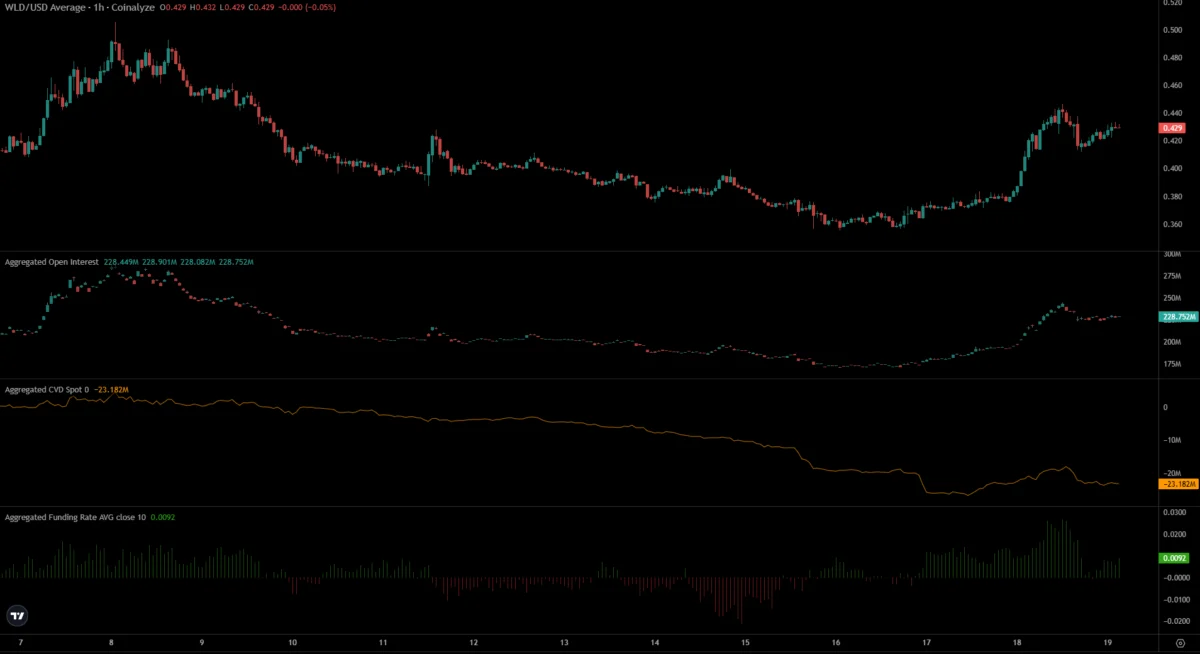
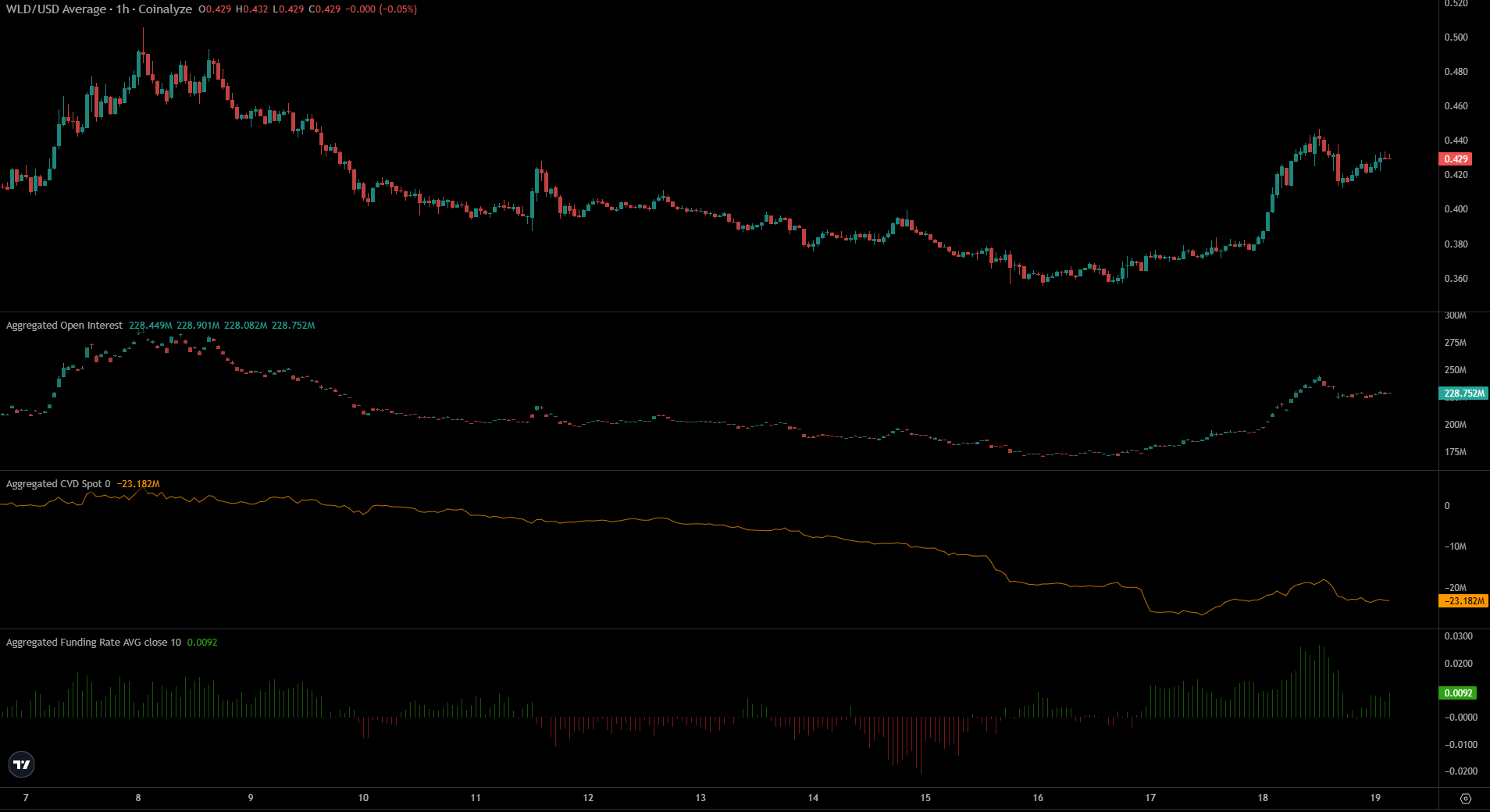
The global rollout of World Money acted as an immediate catalyst for positive market sentiment surrounding the project’s native utility and governance token, WLD. Within twenty-four hours of the announcement, the token’s market valuation appreciated by roughly 15%, capturing the attention of both retail participants and institutional observers. On-chain metrics and derivatives data confirmed that the price movement was accompanied by robust structural participation rather than speculative retail frenzy alone.

Specifically, aggregate Open Interest across major derivatives exchanges experienced an 8.5% increase over the same 24-hour window, signifying that fresh capital was entering the market to support the upward trajectory. Concurrently, spot Cumulative Volume Delta (CVD) indicators began a sustained recovery, climbing higher to demonstrate organic, persistent demand for the altcoin in spot markets. Funding rates across perpetual swap contracts remained positive yet comfortably balanced, reflecting healthy underlying market conditions on the derivatives side without the dangerous overextension typically indicative of unsustainable leverage bubbles.
Chronology of World Network’s Strategic Evolution
The journey toward the launch of World Money has been characterized by systematic product development, regulatory navigation, and infrastructural scaling. Originally conceived as an ambitious initiative to establish a globally inclusive identity network through biometric verification—famously utilizing specialized imaging devices known as "Orbs"—the project underwent a comprehensive rebrand to World Network to better reflect its expanding technological scope.
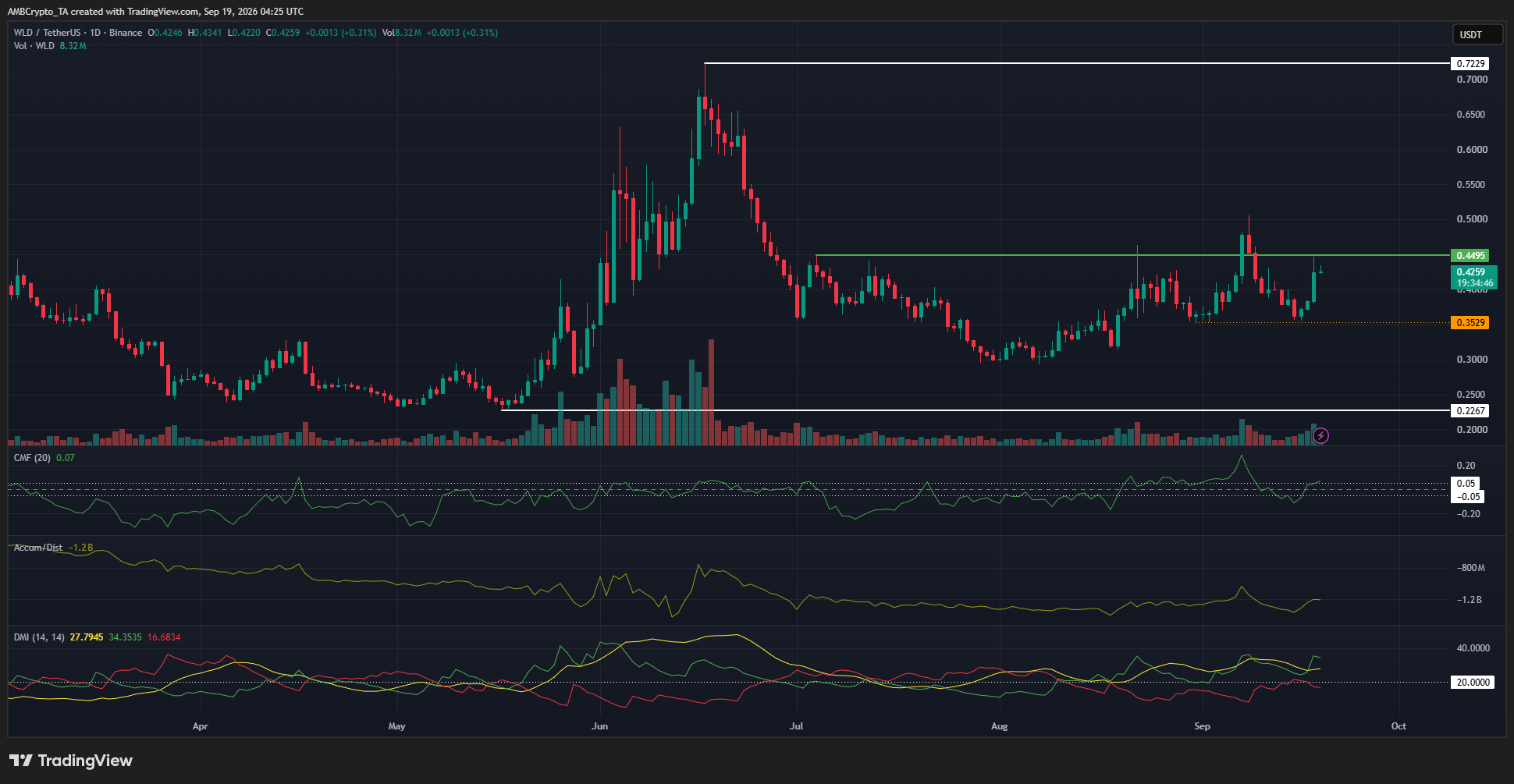
During the late spring months of May and June, WLD experienced a pronounced macro trend shift, rallying significantly from a local low of $0.226 to a peak of $0.723. This explosive upward movement established a new higher-timeframe structure, signaling the definitive end of a prolonged corrective phase. Following this peak, the asset underwent a deep retracement, eventually bottoming out near the $0.30 psychological support level.
As the calendar turned to September, buyers systematically stepped in to defend critical technical boundaries. An internal swing point at $0.445 was decisively breached upward during the first week of the month, setting the stage for the recent rally. This momentum ultimately derived its foundation from a robust local support zone situated between $0.353 and $0.41—an area that had been rigorously tested and validated by market participants multiple times since late August. By clearing the local supply ceiling near the $0.41 mark and subsequently retesting it successfully as a newly formed demand zone, WLD established a solid technical springboard just in time for the September 17 product launch.
Technical Analysis of Higher Timeframe and Intraday Charts
A comprehensive examination of the asset’s daily price charts reveals strengthening underlying fundamentals that continue to encourage both swing traders and long-term portfolio managers. The 1-day candlestick formations indicate that the macro trend remains resolutely bullish, supported by momentum indicators that suggest sustained buying pressure.
The Chaikin Money Flow (CMF) indicator registered a healthy reading of +0.07 following the product launch, confirming that capital was actively flowing into the asset rather than quietly exiting. Complementing this, the Accumulation/Distribution (A/D) line has steadily trended upward over the past several daily sessions, reinforcing the thesis of patient, institutional-grade accumulation. Furthermore, the Directional Movement Index (DMI) on the daily timeframe points toward the development of a robust and enduring uptrend.
On shorter intraday timeframes, such as the 2-hour charts, technical configurations mirror the broader bullish sentiment. After clearing local resistance overhead, price action has consistently printed higher lows, creating a favorable risk-reward ratio for market participants. Analysts note, however, that the continuation of this constructive trend remains conditionally tied to the broader macroeconomic health of the cryptocurrency market, particularly the price stability of Bitcoin (BTC), which continues to dictate overall market liquidity and risk appetite.
Industry Implications and Ecosystem Integration
The introduction of the World Money super app carries significant implications for the broader intersection of decentralized finance, stablecoin adoption, and consumer-facing Web3 applications. By embedding established fintech primitives—such as Stripe’s payment processing capabilities and Apple Pay conversion pathways—alongside decentralized protocols like Morpho, World Network is aggressively pursuing a "hybrid" model that bridges traditional financial rails with blockchain architecture.
Industry analysts suggest that the ability to handle multiple national currencies alongside stablecoins within a single self-custodial interface addresses one of the most persistent friction points in digital asset adoption. Users in up to 150 countries can now utilize the application not merely as a speculative token-holding wallet, but as an active financial dashboard capable of interacting with predictive markets, earning digital asset rewards, and executing international payments.
Moreover, the integration of prominent decentralized lending and forecasting platforms transforms the application from a single-purpose utility into a versatile ecosystem hub. As regulatory scrutiny regarding digital identity and financial compliance continues to evolve globally, World Network’s emphasis on combining verified human identity infrastructure with flexible, self-custodial financial tools positions the project uniquely within the competitive landscape of digital finance. Whether these technological advancements and strategic partnerships will be sufficient to sustain WLD’s upward price trajectory over the long term will depend heavily on sustained user adoption, ongoing developer integration, and the broader regulatory climate surrounding identity-linked digital assets.