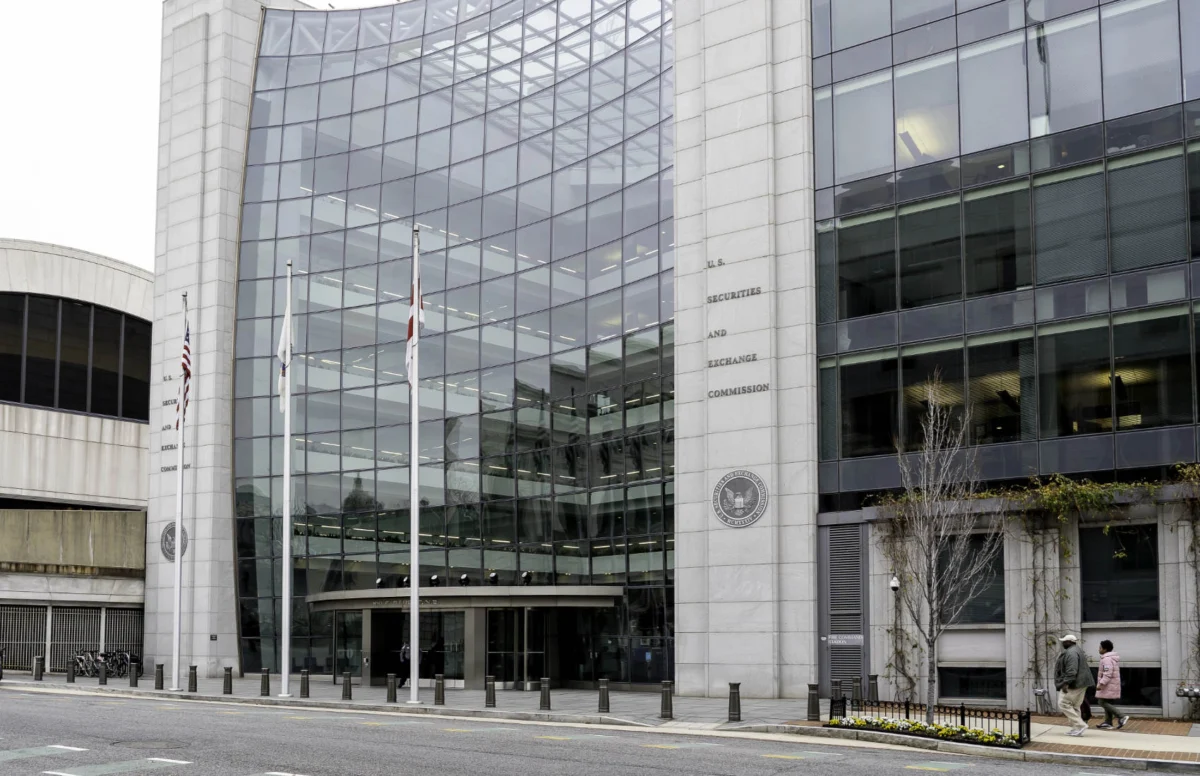
The United States Securities and Exchange Commission (SEC) has officially lifted the veil on its much-anticipated regulatory innovation exemption framework, resolving months of speculation within the digital asset and traditional finance sectors. Under a newly issued order, the regulatory body will permit specific tokenized stocks—restricted exclusively to exchange-listed National Market System (NMS) equities—to be traded through automated market makers (AMMs). Crucially, this temporary regulatory relief waives the stringent requirement for these AMM trading venues to formally register as national securities exchanges, while simultaneously exempting underlying liquidity providers from mandatory dealer registration.
This landmark regulatory shift, structured to span an initial five-year trial period, represents a measured bridge between decentralized finance (DeFi) infrastructure and traditional capital markets. Concurrently, the Commission has opened a public comment period to gather industry feedback, technical insights, and risk assessments from market participants, academics, and legal experts as the framework takes its first steps toward implementation.
Detailed Framework and Structural Limitations
While the SEC’s order opens the door for blockchain-based trading of mainstream equities, the regulatory parameters are intentionally rigid to mitigate systemic risk, prevent market manipulation, and safeguard investor protection. The exemption is not a blanket allowance for all crypto-assets or tokenized instruments. Instead, it applies exclusively to tokenized representations of NMS stocks.
To prevent potential market distortions or destabilization of traditional order books during this experimental phase, the SEC has imposed strict quantitative limits. These constraints include strict caps on aggregate trading volumes and limitations on the total number of distinct stock symbols that can be traded via AMM pools at any given time. Furthermore, while the technical execution of these trades must occur on public, permissionless blockchain networks—preserving the transparency, immutability, and composability characteristic of decentralized protocols—the actual participation and transfer of assets must adhere to strict, permissioned compliance standards. Liquidity providers and participants must still satisfy identity verification and anti-money laundering (AML) protocols to interact with these pools.
Exclusions, Shareholder Rights, and the Third-Party Token Controversy
The specificity of the SEC’s mandate directly addresses recent high-profile controversies regarding tokenized equities, synthetic assets, and corporate governance. In recent months, tensions flared publicly between corporate executives and digital asset platforms—notably involving a high-profile dispute between AMC Entertainment CEO Adam Aron and retail brokerage giant Robinhood concerning synthetic stocks and tokenized debt instruments.
The SEC’s new order draws a definitive line regarding what qualifies for the exemption. Tokens that represent a different issuer’s debt, or those functioning merely as synthetic derivatives backed one-for-one without granting direct equity ownership, are explicitly excluded. To qualify for the regulatory exemption, a tokenized stock must provide its holder with full, unencumbered economic and voting rights identical to holding the traditional equity directly through the Depository Trust Company (DTC).
Moreover, the framework addresses the contentious issue of third-party tokenization—situations where tokens are issued by custodians, brokers, or secondary platforms rather than the underlying corporate issuer itself. Under the new guidelines, third-party tokens are permitted to trade via AMMs provided they pass through full shareholder rights, including proxy voting capabilities. However, this provision includes a vital corporate safeguard: the underlying stock issuer retains the absolute right to object. The AMM venue is legally required to formally notify the stock issuer 30 days prior to commencing the trading of any third-party token. If the issuer objects within that window, the token cannot be traded under the terms of the exemption. Consequently, the framework accommodates issuer-sponsored tokens, broker-led initiatives, and custodian-backed offerings alike, provided they clear the corporate consent hurdle.
Background Context and Evolution of Tokenized Securities
The journey toward integrating tokenized equities with automated market makers has been a protracted and cautious undertaking. For years, financial technology firms and blockchain startups have argued that distributed ledger technology (DLT) can dramatically modernize post-trade settlement, reduce clearing times from the standard T+1 cycle to instantaneous atomic settlement, and significantly lower operational overhead.
Traditional securities settlement has long relied on centralized clearinghouses and multi-layered intermediary networks. Automated market makers, which utilize mathematical formulas (such as the constant product market maker model popularized by decentralized exchanges) to price and execute trades autonomously against liquidity pools, offer an alternative model of continuous, 24/7 liquidity. However, regulatory bodies globally have viewed these algorithms with skepticism, citing concerns over market fragmentation, lack of circuit breakers, opaque pricing during extreme volatility, and the absence of traditional broker-dealer accountability.
Prior to this order, any entity facilitating the buying and selling of securities in the United States was bound by strict statutory definitions requiring registration as a national securities exchange under Section 6 of the Securities Exchange Act of 1934, or registration as a broker-dealer under Section 15. These requirements acted as an insurmountable regulatory barrier for decentralized protocols, which inherently lack a central corporate entity capable of registering with federal authorities. The SEC’s five-year innovation exemption marks the first formal federal mechanism designed to test how decentralized liquidity mechanisms can legally intersect with SEC-regulated securities.
Industry Reactions and Market Implications
Initial reactions from the financial technology and digital asset sectors have been a mix of cautious optimism and rigorous analysis. Proponents of tokenization view the SEC’s move as a watershed moment that validates the utility of public blockchains for mainstream financial assets. By carving out a temporary safe harbor, the Commission is effectively allowing fintech firms, liquidity providers, and institutional players to gather empirical data on AMM efficiency, smart contract security, and cross-border settlement capabilities within a controlled regulatory perimeter.
Conversely, traditional market participants and institutional risk managers are expected to scrutinize the operational risks associated with permissionless infrastructure. Questions remain regarding how smart contract vulnerabilities, oracle failures, or sudden network congestion on public blockchains will be managed within the context of federally protected securities trading. The mandatory 30-day corporate notification window for third-party tokens is also anticipated to spark considerable legal review, as public companies evaluate whether to embrace or restrict the secondary tokenization of their shares.
Broader Economic Impact and Future Outlook
As the public comment period commences, the implications of this five-year exemption extend far beyond the immediate technical integration of NMS stocks and AMM liquidity pools. If successful, the pilot program could serve as a foundational blueprint for modernizing capital markets, potentially paving the way for broader regulatory frameworks accommodating digital assets, tokenized debt instruments, and other real-world assets (RWAs).
The dual requirement of utilizing public, permissionless infrastructure while enforcing permissioned compliance and full corporate rights highlights a pragmatic regulatory evolution. Rather than attempting to force decentralized technology into legacy bureaucratic boxes or pushing innovation entirely offshore, the SEC’s approach attempts to construct a temporary, supervised testing ground.
Ultimately, the success of this five-year experiment will likely be measured by market adoption, systemic stability, and the ability of liquidity providers and AMM operators to maintain robust compliance standards without compromising the efficiencies inherent to blockchain technology. As market participants review the fine print and prepare their feedback for the Commission, the traditional financial architecture stands at the precipice of a carefully monitored, highly consequential technological transition.