The landscape for privacy-focused digital assets is undergoing a profound structural transformation as global regulatory authorities move to dismantle the core anonymity features that once defined the sector. As the United States intensifies its oversight of the cryptocurrency market under the new administration, privacy coins—once heralded as the vanguard of financial sovereignty—are facing an unprecedented wave of delistings, market volatility, and legislative pressure. The confluence of strict Anti-Money Laundering (AML) mandates and the global enforcement of Know-Your-Customer (KYC) protocols has placed assets like Zcash [ZEC] and Monero [XMR] in a precarious position, forcing investors and exchanges to re-evaluate the viability of untraceable transactions in an increasingly transparent financial ecosystem.
The Regulatory Shift: A New Era of Oversight
The current regulatory climate is driven by a push toward total integration between decentralized finance and traditional banking compliance frameworks. Under the guidance of the U.S. administration, specifically with the appointment of David Sacks as the designated "crypto czar," the government is prioritizing the mitigation of illicit financial flows. This initiative has empowered the Financial Crimes Enforcement Network (FinCEN) to treat privacy-centric protocols with heightened scrutiny.
For years, the promise of privacy coins was predicated on the technical ability to obfuscate transaction trails. However, the U.S. Treasury’s evolving policy explicitly targets these obfuscation methods, arguing that they facilitate money laundering and terrorism financing. By mandating that any entity facilitating the transfer of digital assets must adhere to rigorous AML and KYC standards, regulators are effectively forcing developers to choose between compliance and censorship resistance. If a network cannot provide the transaction transparency required by law, it becomes functionally incompatible with regulated financial institutions.
Chronology of the 2025-2026 Downturn
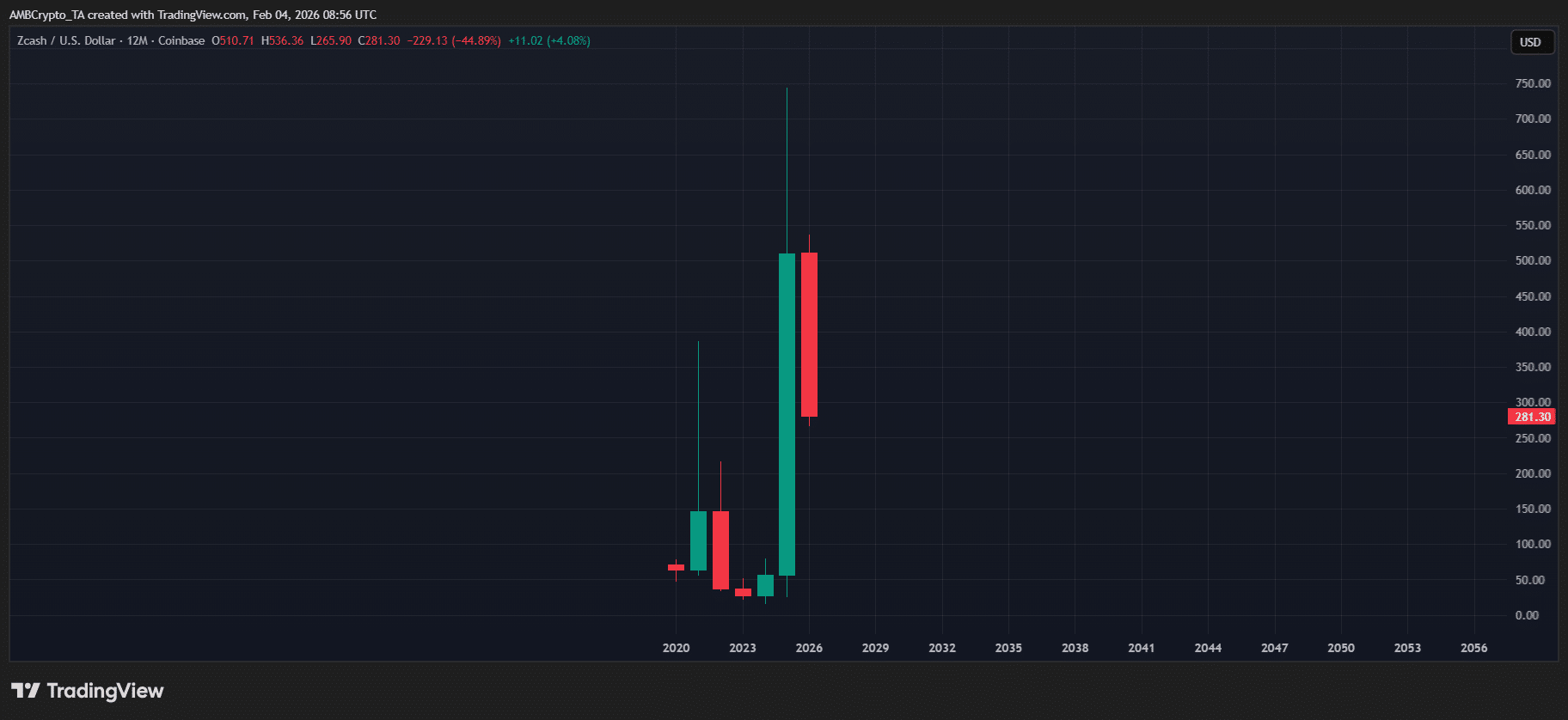
To understand the current volatility, one must look at the meteoric rise and subsequent collapse of the privacy sector. Throughout 2025, privacy coins experienced a massive resurgence in interest. Zcash, for instance, witnessed an 800% appreciation in value as market participants sought refuge in "secure" assets during a period of broader macroeconomic uncertainty. This growth, however, drew the attention of regulators who were already wary of the rapid expansion of non-transparent financial instruments.
By early 2026, the sentiment shifted from cautious oversight to active prohibition. In February 2026, the market observed a synchronized sell-off, with major exchanges—including influential platforms in India and across the Asia-Pacific region—beginning to delist privacy-focused assets. This wave of delistings was not merely a reaction to market trends but a proactive measure to avoid potential litigation from domestic regulators who were aligning their own policies with the U.S. Treasury’s new guidelines. The sudden exodus of liquidity providers and institutional support resulted in a 45% drawdown for Zcash and a $1 billion loss in market capitalization for Monero in a single week.
Market Data and Technical Indicators
The current technical posture for privacy coins remains bearish, as the loss of exchange access creates a liquidity trap. Monero, which has long served as the industry standard for private transactions, has seen its price action regress to fourth-quarter 2025 levels. Technical analysts point to the widening gap between the price of these assets and the broader market recovery seen in major tokens like Bitcoin and Ethereum.
The "FUD" (fear, uncertainty, and doubt) currently plaguing the sector is compounded by the threat of a federal ban. If the U.S. government moves to classify privacy-preserving software as an inherently illegal financial service, the remaining liquidity in the ecosystem could evaporate. Institutional investors, who require regulatory clarity to commit capital, have largely divested from privacy-centric portfolios, citing the "compliance risk" as insurmountable.
The Institutional and Industry Response
The industry response has been characterized by sharp division. Circle’s CEO and other high-profile figures in the stablecoin and DeFi space have expressed significant concerns regarding the aggressive nature of the new regulatory bills. Critics of the current policy argue that by forcing transparency on all transactions, the government is inadvertently compromising the financial privacy of legitimate users, effectively treating every transaction as suspicious until proven otherwise.

Conversely, proponents of the regulatory measures contend that the lack of accountability in the privacy sector has acted as a barrier to mass adoption. They argue that if digital assets are to function as a global medium of exchange, they must satisfy the baseline requirements of the modern banking system. This debate highlights the central tension in the crypto space: the struggle between the original ethos of decentralized, private finance and the practical requirements of a global, regulated monetary system.
Broader Implications for the Cryptocurrency Ecosystem
The crackdown on privacy coins has implications that extend far beyond the assets themselves. It signals a broader shift in how authorities view decentralized protocols. If privacy features can be banned or regulated out of existence, the precedent could be applied to other areas of the blockchain sector, including decentralized identity solutions and private smart contracts.
Moreover, the delisting of these assets by centralized exchanges marks a turning point in the decentralization narrative. As these platforms become more compliant with government mandates, they become more indistinguishable from traditional brokerage firms. This transition suggests that the next phase of the crypto cycle will be defined by "permissioned" or "transparent" blockchain solutions that operate in harmony with state interests.
For investors, the current environment necessitates a transition toward risk management. The potential for a complete, federally enforced prohibition on privacy-focused technologies remains a tangible threat. As the regulatory apparatus continues to prioritize AML compliance, the niche for privacy-centric coins is shrinking. Whether these protocols can adapt by introducing "optional" privacy features—where transparency is the default and privacy is a verified, auditable layer—remains to be seen.
Conclusion: Is the "Ban" Inevitable?
The path forward for privacy coins is increasingly narrow. As the U.S. administration strengthens its oversight, the technical features that were once considered the "killer app" of these projects are now viewed as their greatest liability. The current market behavior, marked by massive capital outflows and reduced accessibility, reflects a collective realization that the era of unfettered financial anonymity is coming to a close.
Whether the sector can survive in a landscape that demands total transparency is the defining question of the next fiscal year. If privacy coins fail to integrate with the regulatory frameworks mandated by the Treasury, they risk becoming obsolete relics of an earlier, more experimental phase of cryptocurrency development. For now, the combination of institutional pressure, legislative force, and exchange-level restrictions suggests that the market for privacy-focused assets will continue to face significant headwinds, with the threat of a full-scale ban looming as a distinct possibility in the near term. Investors are advised to monitor the ongoing developments from the U.S. Treasury and the subsequent reaction from global regulatory bodies, as these will likely determine the ultimate fate of this controversial, yet historically significant, asset class.