The Regulatory Landscape Shift
The tension between digital privacy and regulatory transparency is not a new phenomenon, but the intensity of the current crackdown represents a departure from previous years. For much of the early 2020s, privacy coins operated in a grey area, tolerated by regulators but viewed with suspicion. However, the appointment of a dedicated "crypto czar," such as the role occupied by David Sacks under the administration of U.S. President Donald Trump, signals a transition toward a more centralized, enforcement-heavy approach.
The primary catalyst for this shift is the federal enforcement of rigorous Know-Your-Customer (KYC) and AML standards. These policies are designed to bring decentralized finance into alignment with the traditional banking system. When a regulatory body like FinCEN (the Financial Crimes Enforcement Network) mandates that all financial service providers must perform identity verification, the fundamental design of privacy coins—which rely on shielded addresses and hidden transaction histories—becomes a direct target for policy intervention. If an exchange cannot audit a transaction to verify the sender and recipient, it risks severe penalties, leading to a wave of delistings that has effectively crippled the liquidity of these assets.
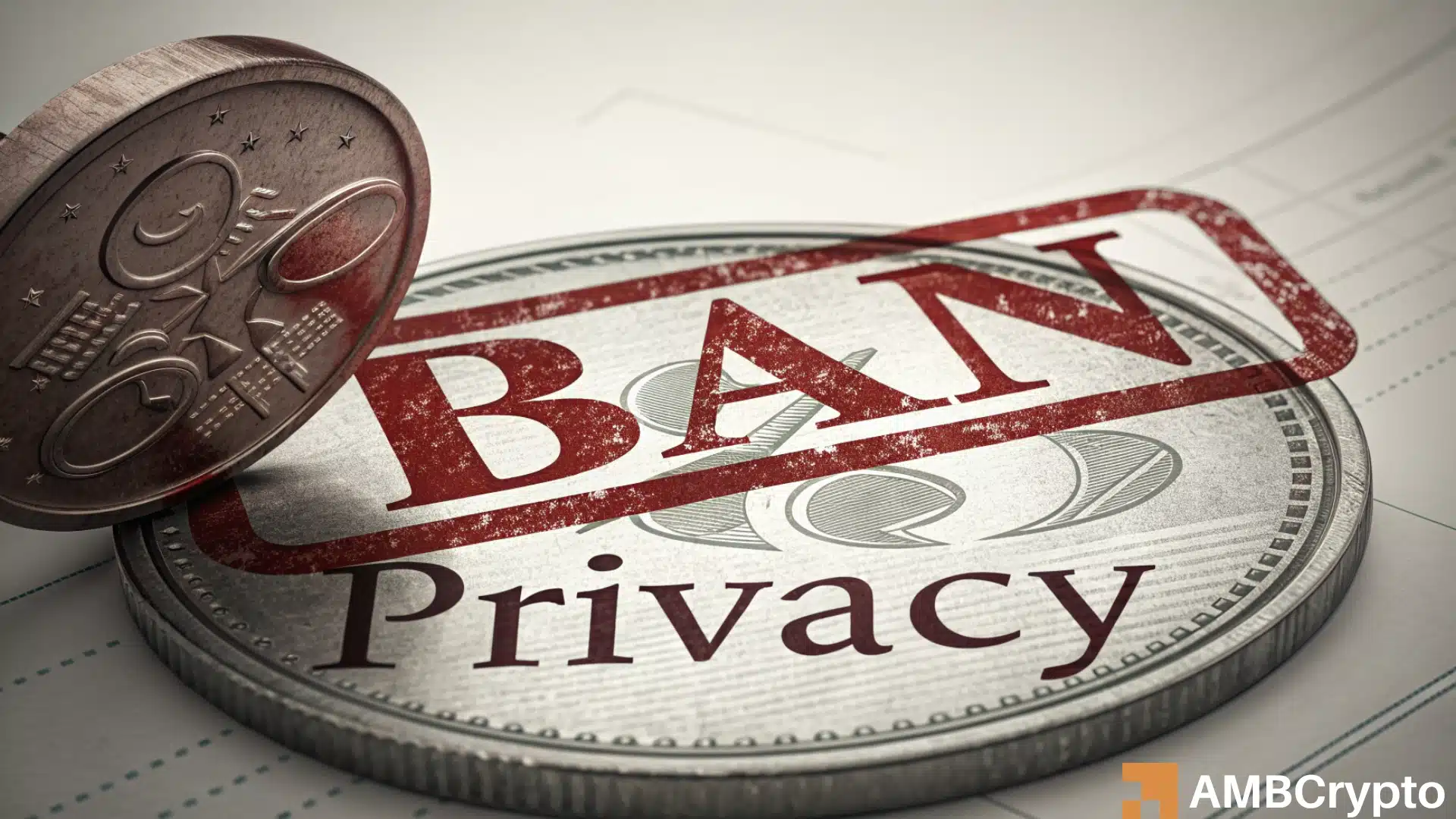
Chronology of the 2026 Privacy Coin Contraction
To understand the current volatility, one must look at the trajectory of the market over the past eighteen months.
- Q1–Q4 2025: The Bullish Divergence: During this period, the privacy sector experienced a notable resurgence. As macroeconomic uncertainty increased, investors sought refuge in assets that promised financial sovereignty. Zcash (ZEC), in particular, recorded a staggering 800% rally, capturing the interest of institutional and retail investors alike. The rally was fueled by the narrative that as surveillance increases, the demand for privacy will grow proportionally.
- January 2026: The Regulatory Pivot: The U.S. administration intensified its focus on stablecoins and privacy protocols. The announcement of stricter rules targeting stablecoin rewards—which drew sharp criticism from industry leaders like Circle’s CEO—served as a precursor to the broader assault on privacy-enhancing technologies.
- February 2026: The Delisting Wave: By early February, the regulatory pressure transitioned from rhetoric to action. Major exchanges, not only in the United States but also across key emerging markets like India, began removing privacy-focused assets from their trading pairs. This mass delisting triggered a liquidity crunch, causing assets like Monero (XMR) to shed over $1 billion in market capitalization within a single week.
Market Data and Technical Analysis
The price action observed in early February 2026 illustrates the sensitivity of privacy coins to regulatory news. ZEC/USDT, which had previously held strong support levels throughout 2025, faced a sharp 45% correction in the wake of the new federal directives. From a technical perspective, the breakdown below critical support levels suggests a capitulation phase.
Monero (XMR), the market leader in the privacy space, saw a similar trend. With its market cap retreating to levels not seen since the final quarter of 2025, the asset has lost its momentum. Traders and analysts are pointing to a "fear-driven" sell-off. Unlike other digital assets that may bounce back on technical indicators, privacy coins are currently governed by "regulatory FUD" (Fear, Uncertainty, and Doubt). In this environment, market participants are prioritizing compliance-friendly assets, leading to a rotation of capital out of privacy-centric projects and into more transparent, regulated tokens.
Industry and Institutional Reactions
The response from the crypto industry has been bifurcated. On one side, industry advocates argue that privacy is a human right and a necessary feature for a functioning digital economy. They maintain that the ability to transact without exposing one’s entire financial history is essential for both individual users and enterprises that require commercial confidentiality.
Conversely, the institutional stance—heavily influenced by the new U.S. regulatory framework—is that anonymity acts as a catalyst for illicit activity. The "crypto czar" office has repeatedly emphasized that for digital assets to achieve mass adoption, they must be "clean" and verifiable. This stance has left developers of privacy-focused protocols in a difficult position: either implement "view keys" or compliance hooks that effectively strip the coin of its privacy features, or risk total exclusion from the regulated financial system.
The Implications of a De Facto Ban
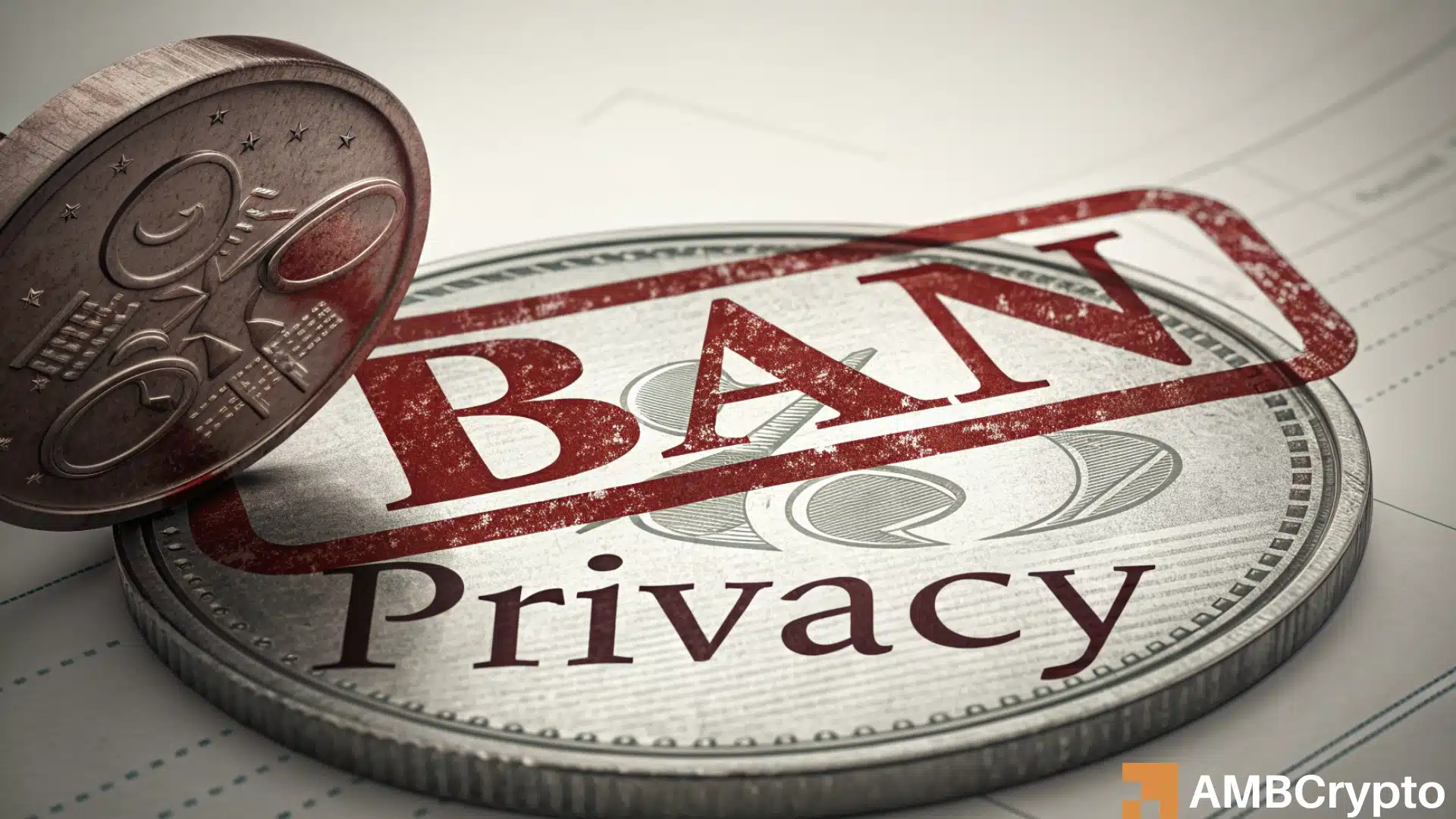
While a total, explicit ban on the ownership of privacy coins remains a subject of legal debate, the industry is witnessing a de facto ban through market access restrictions. When a coin is delisted from all major centralized exchanges (CEXs), its utility for the average user drops to near zero.

The broader implications are twofold:
- Fragmentation of Liquidity: Privacy assets may be forced to migrate exclusively to decentralized exchanges (DEXs) or peer-to-peer (P2P) platforms. While this aligns with the ethos of decentralization, it severely limits the ease of access for the general public, likely reducing the overall market value of these tokens.
- Innovation Stagnation: Development teams are now forced to navigate a minefield of legal risks. Many developers may pivot toward "privacy-preserving" technology that is compliant by design—such as zero-knowledge proofs (ZK-proofs) that allow for verification without full disclosure—rather than absolute anonymity.
Conclusion: The Future of Financial Privacy
The current market cycle for privacy coins highlights a fundamental clash between the original vision of blockchain technology and the demands of modern financial regulation. As the U.S. and other global powers harmonize their approaches to AML and KYC, the "anonymity-first" model is being aggressively curtailed.
Whether these assets can survive by evolving their technical frameworks to satisfy regulators remains to be seen. However, the current data suggests that until the regulatory environment stabilizes or developers find a middle ground that satisfies both the need for privacy and the requirement for transparency, privacy coins will continue to face significant downward pressure. For investors, the takeaway is clear: the era of unchecked financial anonymity in the public crypto market is drawing to a close, replaced by an era of enforced accountability. The coming months will be critical in determining whether privacy tokens can retain their relevance in a highly regulated future or if they will remain relegated to the fringes of the global financial system.