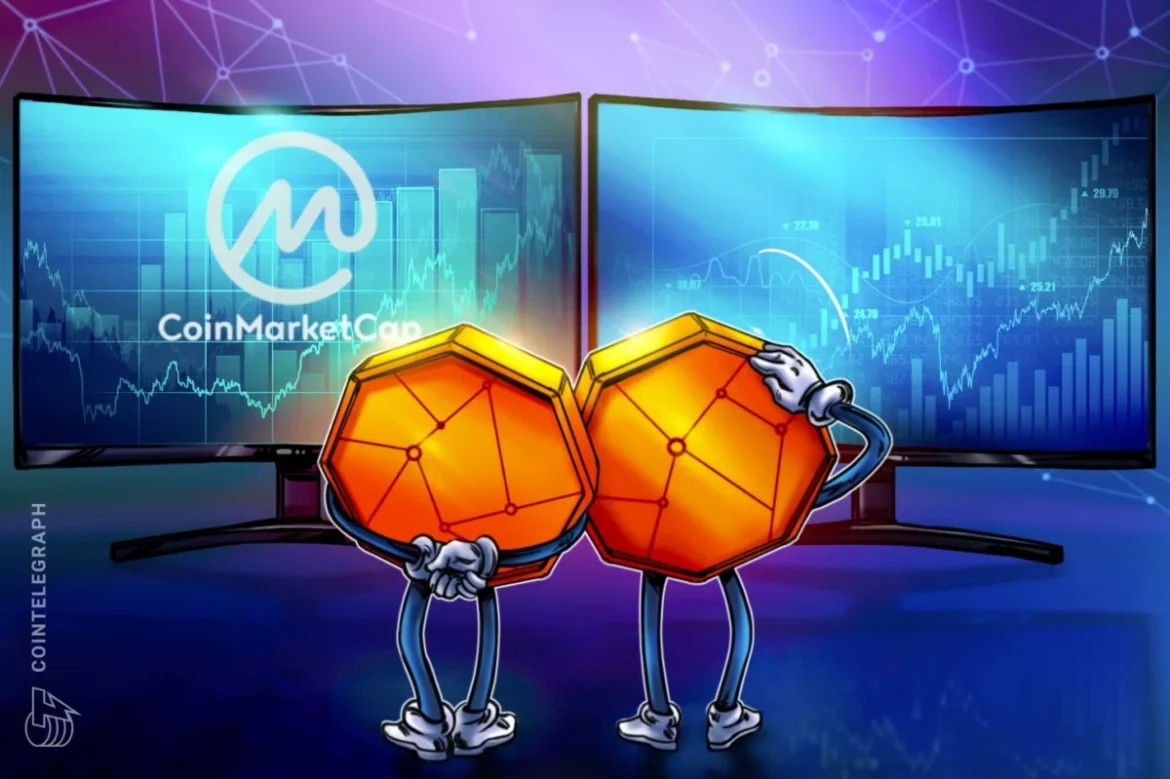
Crypto market data powerhouse CoinMarketCap has officially announced the acquisition of CoinGlass, a leading platform specializing in cryptocurrency derivatives and leveraged trading data. The strategic buyout, finalized for an undisclosed sum, aims to bridge the gap between traditional spot market metrics and the rapidly expanding ecosystem of crypto derivatives. According to the official statements released by both entities on Friday, the acquisition will integrate advanced futures, options, and liquidation analytics directly into CoinMarketCap’s widely referenced price-tracking infrastructure.
Despite the change in ownership, CoinMarketCap has assured its global user base and industry stakeholders that CoinGlass will retain its established brand identity and operational independence. The existing team behind CoinGlass will remain in place to oversee daily operations, ensuring that product development and technical maintenance proceed without interruption. Furthermore, core service offerings—including the CoinGlass website, mobile application, complimentary analytical tools, application programming interfaces (APIs), and existing pricing tiers—will remain entirely unchanged.
This corporate consolidation represents a significant milestone in the evolution of cryptocurrency market intelligence. By fusing CoinMarketCap’s massive retail audience with CoinGlass’s institutional-grade derivatives analytics, the combined entity is positioned to offer a comprehensive, 360-degree view of digital asset market dynamics. As leveraged trading continues to dictate short-term market volatility and price direction, the ability to monitor open interest, funding rates, and liquidation cascades in real-time has transitioned from a niche requirement to an essential component of modern crypto trading.
Understanding CoinGlass and Its Industry Footprint
Founded to address the lack of transparent, aggregated data within the crypto derivatives sector, CoinGlass has grown into an indispensable resource for professional traders, quantitative funds, and retail enthusiasts alike. The platform specializes in tracking complex financial instruments that extend far beyond simple spot purchases and sales.
At its core, CoinGlass aggregates critical market data across an extensive network of centralized and decentralized exchanges. The platform currently tracks 28 major derivatives exchanges and monitors upwards of 2,500 distinct trading instruments. Its primary data offerings include:
- Open Interest (OI): Measuring the total number of open derivative contracts, such as futures and options, that have not been settled. This metric serves as a key indicator of market sentiment and capital inflows.
- Funding Rates: Tracking the periodic payments made between long and short traders in perpetual swap markets. Funding rates provide crucial insights into whether the market is overly leveraged to the bullish or bearish side.
- Liquidations: Recording forced position closures when traders fail to maintain their margin requirements. CoinGlass maps out where liquidation clusters lie, highlighting potential price magnets and cascade points.
- Options Analytics: Providing detailed breakdowns of options volume, open interest by strike price, and put-call ratios, which help traders gauge longer-term market expectations and volatility expectations.
By integrating these specialized metrics, CoinMarketCap users will no longer need to navigate multiple external dashboards to understand the macroeconomic forces driving sudden price movements. Instead, traders will be able to view spot prices alongside live derivatives positioning data, illuminating the underlying leverage driving market trends.
The Chronology of Expansion: From Binance to CoinGlass
The acquisition of CoinGlass by CoinMarketCap does not occur in a vacuum; it is the latest chapter in a broader consolidation trend within the cryptocurrency data and infrastructure sector. To fully understand the strategic weight of this transaction, one must examine the corporate genealogy and historical timeline connecting these industry giants.
The foundational shift for CoinMarketCap occurred in April 2020, when the world’s largest cryptocurrency exchange by trading volume, Binance, announced the acquisition of CoinMarketCap for an undisclosed nine-figure sum. At the time of the 2020 buyout, the acquisition raised regulatory and ethical questions across the crypto community regarding potential conflicts of interest, specifically concerns that Binance might leverage its ownership of the industry’s most prominent price aggregator to favor its own exchange tokens or trading volumes.
To mitigate these concerns, both Binance and CoinMarketCap leadership established strict operational firewalls. Binance explicitly stated at the time that CoinMarketCap would continue to operate as an independent business entity, maintaining a strict wall of separation between its ranking algorithms and Binance’s commercial operations. Over the subsequent four years, CoinMarketCap maintained its editorial and algorithmic autonomy, cementing its status as the default homepage for millions of retail crypto participants.
Following years of steady organic growth and strategic partnerships, CoinMarketCap turned its attention toward the derivatives sector. While spot markets dictate the baseline valuation of digital assets, modern crypto market cycles are increasingly driven—and occasionally violently disrupted—by the derivatives market. Recognizing a gap in its comprehensive market overview, CoinMarketCap initiated acquisition talks with CoinGlass, culminating in the Friday announcement.
Strategic Implications for Traders and Exchanges
The integration of CoinGlass into the CoinMarketCap ecosystem carries profound implications for various stakeholders across the digital asset economy. As the lines between traditional finance and cryptocurrency continue to blur, market participants demand deeper, more transparent data to manage risk effectively.
For retail traders, the democratization of derivatives data is perhaps the most notable takeaway. Historically, advanced leverage metrics, heatmaps of liquidation clusters, and real-time funding rate monitors were locked behind expensive institutional subscriptions or required technical proficiency to compile via raw APIs. By making these tools readily accessible through CoinMarketCap’s mainstream interface, retail participants gain a clearer picture of market mechanics, potentially reducing the vulnerability of over-leveraged retail accounts during market volatility events.
For institutional investors and quantitative funds, the consolidation signals a maturation of market infrastructure. Institutional players require robust, verified data streams to execute algorithmic strategies, manage risk models, and comply with emerging regulatory frameworks. The combined resources of CoinMarketCap and CoinGlass create a formidable data repository that rivals traditional financial market terminals in depth and accessibility.
Furthermore, the acquisition places pressure on competing data aggregators. Platforms such as Coingecko, TradingView, and various boutique analytics providers must now contend with an integrated competitor that combines the world’s largest spot price tracker with premier derivatives monitoring tools. This competitive pressure is expected to drive further innovation and data accuracy across the entire crypto analytics industry.
Regulatory and Operational Considerations
As digital asset markets mature, regulatory scrutiny regarding data integrity, market manipulation, and exchange transparency has intensified globally. Regulators in multiple jurisdictions have expressed concerns regarding the accuracy of reported trading volumes, wash trading on unregulated exchanges, and the systemic risks posed by excessive leverage in retail-facing derivatives markets.
By incorporating CoinGlass’s transparent tracking of open interest and liquidations, CoinMarketCap enhances its utility as a reliable auditing tool for market researchers and regulatory bodies. Transparent reporting of funding rates and liquidation cascades provides an objective record of market stress, helping researchers identify systemic vulnerabilities before they manifest into systemic contagion events.
Regarding operational continuity, CoinGlass leadership has reiterated that the platform’s core ethos of independence and technical reliability will persist. The retention of the original team ensures that the proprietary algorithms and data-scraping infrastructure that made CoinGlass a trusted name will remain intact and insulated from corporate bureaucratic slowdowns.
Market Outlook and Future Developments
Looking ahead, the acquisition sets the stage for a new generation of financial products and data visualization tools within the CoinMarketCap ecosystem. Industry analysts anticipate that over the coming months, developers will roll out advanced UI/UX integrations, allowing users to overlay derivatives data directly onto historical price charts. This could include visual indicators showing historical liquidation spikes coinciding with major price corrections, or predictive models assessing the likelihood of short and long squeezes based on live funding rate differentials.
As the cryptocurrency market prepares for future cycles characterized by institutional inflows, exchange-traded funds (ETFs), and complex derivatives products, the need for centralized, reliable, and comprehensive market intelligence has never been greater. The marriage of CoinMarketCap’s widespread accessibility and CoinGlass’s specialized derivatives analytics creates a powerful synergy designed to meet the demands of a maturing financial landscape.
Ultimately, the acquisition underscores a broader truth about the current state of cryptocurrency: price action can no longer be understood in isolation. By uniting spot market valuations with the high-stakes world of leverage, funding, and liquidation data, CoinMarketCap and CoinGlass are providing the market with the essential navigational tools required to safely traverse the volatility of the digital asset economy.