The landscape of digital asset investment has undergone a profound transformation, shifting from the speculative fervor of early retail adoption to the calculated, systematic accumulation models favored by institutional giants and disciplined individual investors alike. As Bitcoin (BTC) cements its status as a foundational global asset, the debate between Dollar-Cost Averaging (DCA) and strategic timing has become central to portfolio management. While historical data highlights the immense rewards reaped by early adopters, the current market climate—characterized by higher price floors and increased institutional participation—requires a more nuanced approach to capital allocation. Simultaneously, the ecosystem is witnessing a technological pivot toward Layer 2 solutions, such as Bitcoin Hyper (HYPER), which aim to bridge the gap between Bitcoin’s unparalleled security and the high-performance demands of decentralized finance.
The Mechanics and Limitations of Dollar-Cost Averaging
Dollar-cost averaging remains the gold standard for long-term investors seeking to mitigate the inherent volatility of the cryptocurrency market. By investing a fixed amount of capital at regular intervals, regardless of the asset’s price, an investor effectively lowers their average entry point over time. This strategy eliminates the psychological burden of attempting to "time the market," a feat notoriously difficult even for professional traders.
Recent data tracking a modest investment of $5 per day into Bitcoin reveals both the strengths and the constraints of this method. Over a 12-month period, this consistent accumulation resulted in a 5% gain. While positive, this figure is markedly lower than the exponential growth seen by investors who entered the market during the 2020-2022 accumulation phase. The discrepancy underscores a fundamental reality of the current market cycle: as the asset class matures and its market capitalization swells, the percentage-based gains from small, periodic entries become more moderate compared to the "hyper-growth" phase of previous cycles.

Institutional Parallels: The Strategy Model
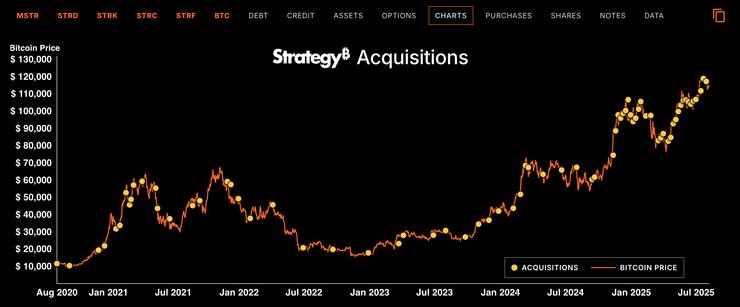
The efficacy of systematic accumulation is not merely a retail phenomenon; it is the cornerstone of some of the largest corporate treasury strategies in history. A notable example is the firm Strategy, which has aggressively built a reserve of 628,791 BTC, valued at approximately $72.1 billion. By maintaining a consistent, high-volume accumulation schedule, the firm has achieved returns of roughly 25%. However, the firm’s competitive advantage was forged during the 2020 market cycle and the subsequent winter of 2022-2023, where significantly lower entry prices allowed for the massive accumulation of assets that now provide a substantial cushion against short-term price fluctuations.
The lesson for the modern investor is clear: the benefits of compounding interest are amplified by the duration of the holding period and the cost-basis of the initial entry. An investor who began a $5-a-day DCA strategy in 2020 would have invested a total of $9,130 to acquire roughly 0.275 BTC. At current valuations of $114,800 per coin, that portfolio would be worth approximately $31,570, representing a return of 245.78%. In contrast, a single lump-sum investment in 2020 would have secured a significantly larger share of the network, potentially yielding returns exceeding 900%.
Technological Evolution: The Role of Layer 2 Protocols
While Bitcoin remains the undisputed leader in security and decentralization, its base layer is limited in throughput, typically handling roughly seven transactions per second. This limitation has historically hindered the development of complex decentralized applications (dApps) and high-speed financial services on the network. The industry is currently responding to this challenge through the deployment of Layer 2 (L2) solutions, which process transactions off-chain before anchoring them to the Bitcoin mainnet.

One of the most ambitious entrants in this space is Bitcoin Hyper (HYPER). By integrating the Solana Virtual Machine (SVM), the project aims to introduce a level of scalability that has previously been absent from the Bitcoin ecosystem. The SVM is renowned for its high-throughput capabilities, theoretically offering speeds 1,000 times faster than the native Bitcoin blockchain.
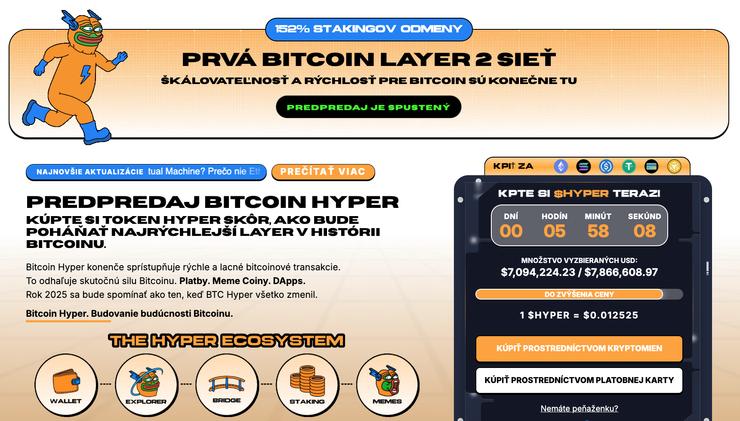
The technical architecture of Bitcoin Hyper involves a "canonical bridge" mechanism. This system allows users to lock their native BTC on the main chain, while simultaneously minting a tokenized equivalent for use within the L2 environment. This allows for high-frequency trading, gaming, and DeFi activities without compromising the security of the underlying asset. The project has already generated significant interest, with its presale raising over $7 million, signaling a strong market appetite for protocols that can marry Bitcoin’s security with the operational speed of modern smart-contract platforms.
Market Context: The Transition to Scalable Solutions
The rise of Layer 2 protocols is a direct consequence of the "Trilemma" in blockchain technology: the difficulty of balancing security, decentralization, and scalability. As Bitcoin approaches higher price points—with some analysts projecting mid-term valuations of $200,000 and long-term targets reaching the $1 million threshold—the demand for a more versatile ecosystem grows.
Current market data indicates that existing Layer 2 solutions across various blockchain networks hold a combined market capitalization of approximately $14.9 billion. This sector has become the primary engine for blockchain adoption, facilitating everything from micro-payments to complex liquidity protocols. The introduction of Bitcoin-native L2s represents a significant shift, as it suggests that the future of the Bitcoin network may involve a dual-layer approach: a "store of value" base layer combined with an "execution" layer for daily transactions.
Investment Implications and Future Outlook
For the modern investor, the challenge lies in balancing the relative safety of established assets like Bitcoin with the high-risk, high-reward nature of emerging technologies. The presale phase of projects like Bitcoin Hyper offers a glimpse into the mechanics of early-stage venture participation. At a current price of $0.012525, the token is positioned to capitalize on the increasing integration of Bitcoin into the broader decentralized economy.
However, market analysts advise that prospective participants perform thorough due diligence. While early-stage entry into L2 protocols carries the potential for significant appreciation, these assets are sensitive to broader market sentiment and the speed of technical development. Platforms like Best Wallet, which has listed HYPER in its "Upcoming Tokens" section, suggest that the market is beginning to categorize these scalable solutions as essential infrastructure for the next phase of the digital asset revolution.
As we look toward the remainder of 2025, the narrative is no longer solely about the price of Bitcoin, but rather about the utility of the network. The shift toward layer-based architectures suggests a maturing market that is no longer satisfied with holding assets, but is instead looking to deploy them in a sophisticated, automated, and high-velocity financial environment. Whether through the slow-and-steady approach of DCA or the targeted allocation into new infrastructure projects, the strategy of the successful investor must remain fluid, adapting to the technological innovations that continue to define the blockchain sector.
Chronology of Development and Market Sentiment
The timeline for these developments is critical. 2020 served as the catalyst for the current institutional bull run, while 2022-2023 provided the necessary testing ground for long-term holders to increase their positions. By early 2025, the focus of the industry shifted from basic accumulation to functional utility. The rapid fundraising success of the Bitcoin Hyper project indicates that capital is moving toward protocols that provide a tangible solution to Bitcoin’s throughput constraints.
In conclusion, the dual pursuit of wealth preservation through Bitcoin and wealth creation through technological innovation remains the dominant theme in modern finance. The ongoing integration of the Solana Virtual Machine into the Bitcoin ecosystem stands as a testament to the industry’s commitment to overcoming its technical limitations. As these systems move from development to mainstream adoption, they are likely to redefine what is possible within the Bitcoin network, potentially bridging the gap between a digital "gold" and a global financial operating system. Investors, whether utilizing systematic DCA or strategic early-stage participation, are encouraged to keep a close watch on the intersection of these two trends, as it is here that the next generation of value will likely be created.