The digital asset ecosystem has undergone a remarkable evolution over the past decade, shifting from a niche technological experiment into a multi-billion-dollar global industry. Among the most transformative innovations within this space are Non-Fungible Tokens (NFTs) and BRC-20 tokens, which have fundamentally redefined how creators, collectors, and investors conceptualize digital ownership, provenance, and value. For artists, musicians, and developers, the allure of minting and monetizing digital creations through NFTs offers an unprecedented level of creative control and direct financial reward. Beyond the realm of traditional fine art and digital illustration, NFTs have proven capable of fostering highly engaged communities, granting exclusive access to real-world and virtual events, and serving as dynamic crowdfunding mechanisms for innovative startups.
However, entering the world of decentralized token creation and smart contract deployment is not without its operational challenges. It demands a rigorous technical understanding of underlying blockchain architectures, proficiency with Web3 wallet management, and a careful assessment of financial risks, including market volatility and transaction gas fees. Furthermore, creators must navigate complex regulatory landscapes that vary significantly across global jurisdictions. Before committing resources to minting digital assets, prospective creators must carefully evaluate their overarching strategic goals, technical capabilities, and personal risk tolerances. While the possibilities within the decentralized web are vast and economically compelling, responsible, highly informed action remains the cornerstone of successfully navigating this rapidly changing digital frontier.
Understanding the Mechanics of Non-Fungible Tokens

To fully grasp the significance of creating and deploying digital assets, one must first understand the fundamental mechanics that differentiate NFTs from other cryptographic assets. Non-Fungible Tokens are cryptographic tokens hosted on a distributed ledger that certify a digital asset to be unique and, therefore, not interchangeable. Unlike fungible cryptocurrencies such as Bitcoin or Ethereum—where one coin or token holds an identical value to another of the same asset and can be exchanged on a strict one-to-one basis—each NFT possesses distinct metadata and a unique cryptographic identifier. This makes every single token entirely distinct, much like an original painting or a rare, serialized collectible.
NFTs can represent an extraordinarily wide range of tangible and intangible items, spanning digital artwork, musical compositions, video files, virtual real estate within metaverse environments, and interactive gaming items. The foundational architecture relies heavily on smart contracts—self-executing code stored on a blockchain that automatically enforces the terms of an agreement without the need for intermediaries. These smart contracts establish immutable proof of ownership, govern royalty distributions for secondary market sales, and enable transparent, peer-to-peer transactions across decentralized marketplaces. While Ethereum remains the dominant foundational network for NFT activity, alternative EVM-compatible blockchains, as well as networks like Solana and Binance Smart Chain, have emerged as prominent hubs for digital asset creation and trading.
The Historical Evolution of the NFT Market
The concept of non-fungible tokens did not emerge overnight; rather, it represents the culmination of years of experimentation with colored coins and blockchain-based asset representation. The earliest iterations of non-fungible assets can be traced back to Bitcoin-based experiments like Namecoin in 2011 and Counterparty protocols in 2014, which allowed users to issue and trade rare digital assets. However, the modern NFT era truly commenced in 2017 with the launch of CryptoPunks by Larva Labs—a collection of 10,000 uniquely generated pixel art characters on the Ethereum blockchain—followed closely by the explosive popularity of Dapper Labs’ CryptoKitties later that same year.
CryptoKitties famously pushed the Ethereum network to its computational limits, demonstrating both the massive consumer appetite for digital collectability and the scalability bottlenecks facing early public blockchains. Following a subsequent bear market, the NFT sector experienced an unprecedented parabolic expansion in 2021 and 2022. During this period, global trading volumes surged into the tens of billions of dollars, driven by high-profile digital art sales, mainstream celebrity endorsements, and institutional adoption. Artworks such as Beeple’s digital collage Everydays: the First 5000 Days, which sold at Christie’s auction house for $69.3 million, thrust NFTs into the global cultural consciousness.
Despite subsequent market corrections and macroeconomic pressures that tempered speculative excesses, the underlying infrastructure of the NFT market has matured significantly. Today, the focus has shifted away from purely speculative trading toward utility-driven applications, including ticketing, digital identity verification, supply chain tracking, and real-world asset (RWA) tokenization. Industry analysts and financial institutions, including projections from major banking executives, continue to anticipate robust long-term growth for the broader digital asset and tokenization sectors through the remainder of the decade.
Choosing the Right Ecosystem and Marketplace
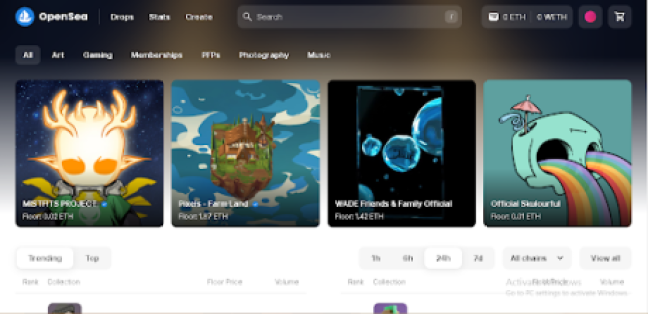
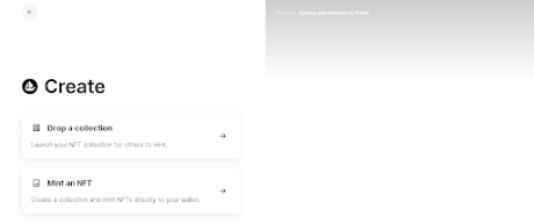
For creators looking to embark on their first minting journey, selecting the appropriate ecosystem and marketplace is a critical preliminary step. Among the numerous decentralized exchanges and trading platforms available today, OpenSea has historically maintained its position as one of the largest and most comprehensive peer-to-peer marketplaces for non-fungible tokens. Built primarily upon the Ethereum blockchain, OpenSea provides a user-friendly interface that aggregates millions of digital assets, offering robust tools for discovering, purchasing, and managing blockchain-verified items.
When evaluating a marketplace, creators must consider several technical and financial variables:
- Blockchain Compatibility: Different platforms support different underlying networks. Ethereum offers maximum liquidity and prestige but traditionally features higher transaction (gas) fees. Layer-2 scaling solutions and alternative EVM chains offer lower costs.
- Smart Contract Customization: Advanced creators may wish to deploy bespoke smart contracts that grant them complete ownership over their collection parameters, whereas beginner-friendly platforms often utilize standardized factory contracts.
- Royalty Enforcement: Creators must examine how marketplaces handle secondary sale royalties, as creator fee enforcement has become a subject of significant industry debate among competing platforms.
- User Security and Interface Design: A seamless, secure integration with reputable Web3 wallets ensures that users can interact with decentralized applications safely without exposing their private keys or seed phrases to malicious actors.
Step-by-Step Guide to Deploying a Smart Contract and Minting an NFT
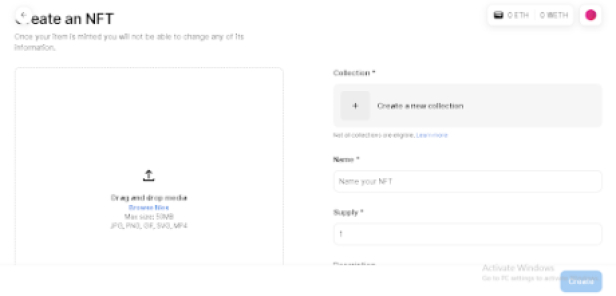
Executing the creation and minting of a non-fungible token requires a precise sequence of technical steps, moving from wallet setup to smart contract deployment and final asset generation. Below is a comprehensive operational walkthrough based on standard procedures utilized on major Ethereum-based platforms like OpenSea Studio.
Step 1: Establishing and Connecting a Web3 Wallet
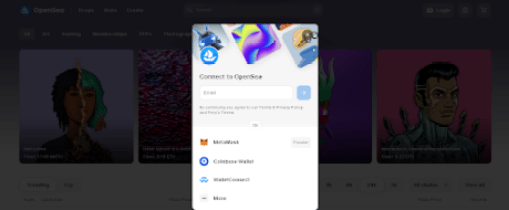
Before any interaction with a decentralized application can occur, a user must establish custody of their digital assets through a secure Web3 crypto wallet, such as MetaMask, Coinbase Wallet, or OKX Wallet. Navigating to the official OpenSea website, the user initiates the connection process by selecting the "Login" or "Connect Wallet" prompt located in the upper right-hand corner of the user interface. The wallet extension will prompt the user to approve the connection request, securely linking the browser session to the blockchain address without revealing private credentials.
Step 2: Accessing the Creator Studio
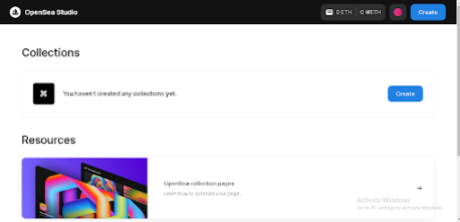
Once the wallet is successfully connected, the user clicks on their profile icon positioned at the top right of the interface. From the dropdown menu, the creator selects the "Studio" option. This specialized dashboard is designed specifically for creators, artists, and developers looking to deploy custom smart contracts and manage digital asset collections efficiently without writing complex Solidity code from scratch.
Step 3: Initializing a New Collection and Deploying a Smart Contract
Within the Studio dashboard, the creator clicks the "Create" button, which presents options to either launch a pre-existing collection or create a brand-new digital asset ecosystem. Choosing to create a new collection initiates the smart contract deployment process.
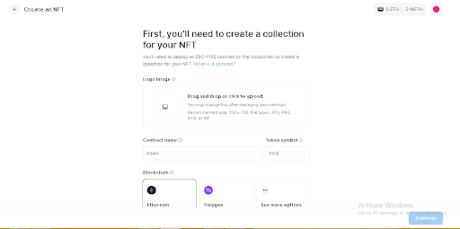
- Customization: The creator must input essential metadata for the contract, including uploading a high-resolution logo image, designating a formal contract name, and assigning a unique token symbol (e.g., a three-to-four-letter ticker).
- Blockchain Selection: The creator selects the target EVM-compatible blockchain network on which the smart contract will reside.
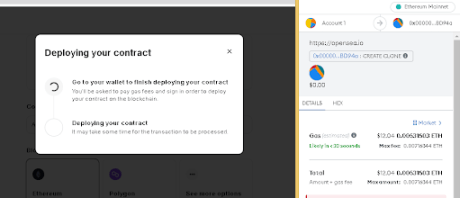
- Gas Fees and Network Activity: Deploying a smart contract requires a blockchain transaction, which incurs a "gas fee" paid to network validators. Because gas fees fluctuate dynamically based on real-time network congestion and computational demand, creators are advised to monitor fee estimates carefully and execute transactions during periods of lower network activity if optimization is required.
Step 4: Executing the Transaction Signature
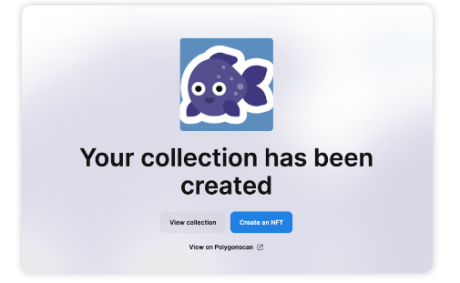
Upon finalizing the collection parameters and confirming the chosen network, the creator clicks "Continue." This action triggers a cryptographic signature request within the connected Web3 wallet. The user must review the transaction details—including the estimated gas cost—and formally approve the signature. Once broadcast to the network and validated by the blockchain consensus mechanism, the smart contract is permanently deployed, and a confirmation message is displayed.
Step 5: Minting the Non-Fungible Token
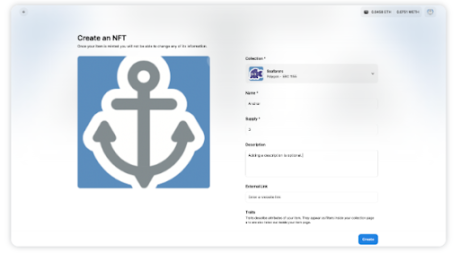
With a verified smart contract successfully deployed to the blockchain, the creator is fully prepared to mint their actual NFT. It is vital to note that once an item is officially minted and written to the blockchain ledger, its core metadata and parameters become immutable and cannot be altered. For many digital art projects, creators utilize standards such as ERC-1155, which permits the creation of semi-fungible tokens, allowing for either unique one-of-one items or multiple identical copies of the same digital asset.
- Media Upload: The creator uploads the digital file representing the artwork or asset (e.g., PNG, JPEG, GIF, MP4, or audio files).
- Metadata Input: The creator assigns a specific title to the item, writes a descriptive narrative, and sets the item supply parameter. Selecting an item supply of "1" establishes the asset as a scarce, one-of-one creation, whereas a higher number generates multiple verified editions.
- Finalizing Minting: After reviewing all details, the creator clicks the "Create" or "Mint" button. A final transaction approval request is sent to the Web3 wallet to authorize the minting process. Upon network confirmation, a success notification appears, indicating that the digital asset now officially resides within the creator’s decentralized wallet.
Economic Implications and Industry Outlook
The maturation of NFT minting infrastructure and the broader expansion of blockchain-based digital assets carry profound implications for the global digital economy. By removing traditional intermediaries—such as galleries, record labels, and centralized publishing platforms—blockchain technology empowers creators to establish direct economic relationships with their global audiences. Furthermore, programmable smart contracts ensure that creators can automatically receive a predetermined percentage of secondary market sales, establishing a sustainable revenue model that was virtually impossible within legacy analog markets.
However, challenges remain. Regulatory bodies across various jurisdictions continue to scrutinize the digital asset sector, examining issues related to consumer protection, copyright infringement, taxation, and the potential classification of certain tokens as securities. Compliance, transparency, and adherence to evolving legal standards will be critical determinants in ensuring the long-term legitimacy and institutional integration of tokenized assets.
In conclusion, while NFTs and alternative token standards like BRC-20 operate across distinct architectural frameworks, they collectively reinforce the foundational paradigm shift toward verifiable digital ownership. As blockchain technology continues to scale through layer-2 networks and improved user interfaces, the barrier to entry for creators and collectors alike will continue to diminish, paving the way for the next phase of the digital asset revolution.