The Evolution of the Regulatory Landscape
For years, the privacy coin sector, led by assets like Monero (XMR) and Zcash (ZEC), operated in a grey area of global finance. These protocols were designed to provide fungibility and user confidentiality, features that attracted a user base ranging from privacy advocates and whistleblowers to institutional investors seeking to obfuscate large-scale movements. However, the 2025-2026 period has marked a decisive pivot in how global regulators approach these technologies.
The transition began with the broader institutionalization of the cryptocurrency market. As traditional financial institutions began integrating Bitcoin and stablecoins, regulators demanded higher transparency to mitigate risks related to Anti-Money Laundering (AML) and Counter-Terrorist Financing (CTF). The U.S. Treasury’s Financial Crimes Enforcement Network (FinCEN) has increasingly signaled that anonymity-enhancing features are inherently incompatible with the Bank Secrecy Act (BSA) and the Travel Rule, which require financial institutions to collect and share data on transacting parties.
With President Donald Trump’s administration appointing David Sacks as the crypto czar, the regulatory apparatus has shifted from a stance of observation to one of enforcement. The mandate is clear: the digital asset market must mirror the security and reporting requirements of the traditional banking sector. Consequently, the "anonymity shield" that once defined the privacy coin market is now viewed by federal watchdogs as a liability rather than a feature.
Chronology of the Decline
The recent market volatility in the privacy coin sector did not occur in a vacuum. It is the culmination of a multi-year effort by global financial regulators to de-anonymize digital transactions.
- Q3 2025: Privacy coins experienced a period of significant growth, with Zcash (ZEC) recording an 800% rally. This surge was driven by a market-wide obsession with security following several high-profile centralized exchange hacks, leading many retail investors to view privacy-focused assets as a safe haven.
- Q4 2025: Regulatory pressure began to manifest in the form of regional directives. Several European and Asian jurisdictions intensified their warnings against the use of privacy-enhancing technologies on centralized exchanges.
- January 2026: The U.S. administration formalized its new framework for digital assets. The introduction of the "Digital Asset Transparency Act" set the stage for strict compliance requirements, forcing exchanges to choose between servicing privacy coin users and maintaining their operating licenses.
- February 2026: The situation reached a tipping point. Major exchanges in India and other key emerging markets initiated mass delistings of privacy-centric tokens, citing the risk of regulatory non-compliance. This triggered a liquidity crisis, causing tokens like Monero to shed over $1 billion in market capitalization within a single week.
Data-Driven Analysis of Market Impact
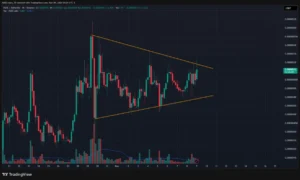
The market performance of privacy coins in early 2026 serves as a clear indicator of investor sentiment. Zcash, which had enjoyed a banner year in 2025, has faced a severe correction, with its valuation plummeting by 45% in a matter of weeks. The technical charts for ZEC/USDT reveal a pattern of sustained bearish pressure, as volume on centralized exchanges has evaporated due to delistings.
Monero, while remaining the industry leader by market capitalization, has fared no better. The $1 billion drop in market cap recorded this week reflects a flight to safety by institutional and retail holders alike, who fear that their assets may become "frozen" or "untradeable" if they remain held on centralized platforms.
This liquidity crunch is exacerbated by the "compliance cost" of maintaining these assets. For an exchange, providing a trading pair for a privacy coin now requires sophisticated forensic tools to track the origin of funds. When the cost of compliance outweighs the trading fees generated by these assets, exchanges have found it more profitable to remove them entirely.
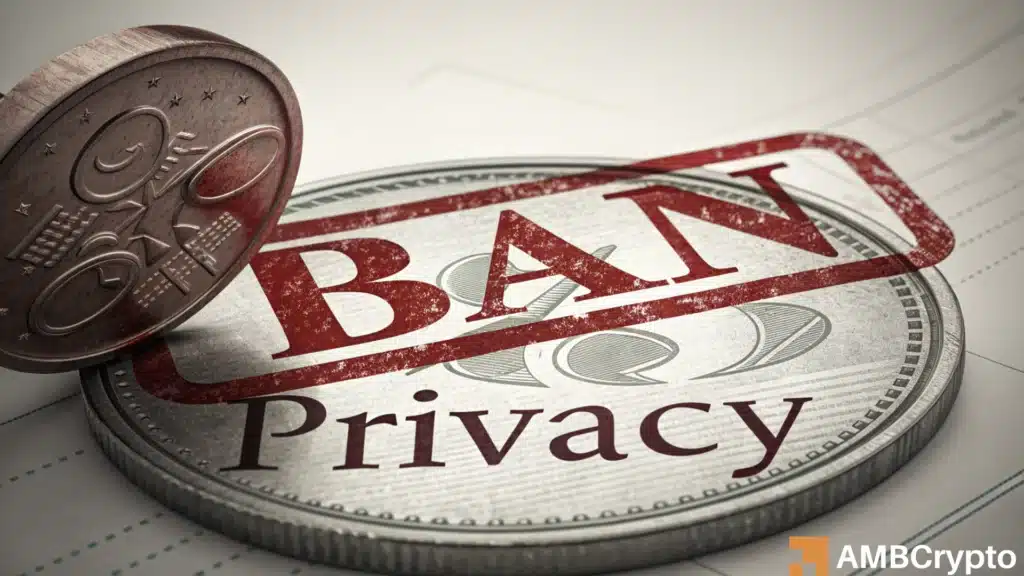
The Conflict Between Privacy and Compliance
The fundamental tension lies in the definition of "financial privacy." Proponents argue that privacy is a human right, essential for protection against identity theft and state overreach. Conversely, regulators argue that financial privacy cannot exist in a vacuum where illegal actors—such as sanctioned entities or ransomware operators—can move funds without oversight.
FinCEN’s latest policy directives specifically target the "obfuscation" capabilities of privacy coins. By requiring exchanges to enforce Know-Your-Customer (KYC) and AML standards at every touchpoint, the government effectively mandates that every transaction must be auditable. For privacy coins, which are built on cryptographic architectures like zk-SNARKs or Ring Signatures, this requirement is a technical paradox. To be compliant, they must break their own fundamental architecture, effectively rendering them indistinguishable from standard, transparent tokens.
Official Responses and Industry Reaction
While industry leaders have attempted to bridge the gap, the reception from Washington has been cold. Circle’s CEO and other industry stalwarts have expressed concerns that overly restrictive policies regarding stablecoins and privacy assets could stifle innovation and push the crypto industry into an "underground" market. However, these pleas for nuanced regulation have largely been ignored in favor of the current "safety-first" mandate.
The silence from the project developers of these privacy coins is telling. Many have opted to move their operations to decentralized platforms (DEXs), hoping that decentralized liquidity will provide a buffer against the regulatory onslaught. Yet, even in the DeFi space, regulators are looking at front-end interface providers and liquidity pool facilitators as potential points of enforcement.

Broader Implications for the Cryptocurrency Ecosystem
The implications of this regulatory crackdown extend beyond the privacy coin sector. If the U.S. government succeeds in effectively banning or forcing the de-anonymization of privacy coins, it sets a dangerous precedent for the broader crypto market. The question that remains is whether this signals a "slippery slope" where all cryptocurrency transactions will eventually be subjected to the same level of federal oversight as traditional wire transfers.
Investors should note that the current environment is one of extreme risk. The shift toward total compliance means that the days of "anonymous" trading on major, reputable platforms are effectively over. For those who remain invested in privacy-focused assets, the risks are no longer just market-based—they are now deeply political and legal.
Conclusion: A Turning Point
The current landscape for privacy coins is characterized by a "death by a thousand cuts." With exchanges delisting these assets at a rapid pace and federal authorities closing the net on anonymous transactions, the sector is struggling to find a viable path forward. The 800% gains of 2025 now feel like a distant memory, replaced by the harsh reality of 2026’s regulatory climate.
As the industry navigates these headwinds, the focus will likely shift toward privacy-preserving technology that can prove compliance without sacrificing user security. Until such a middle ground is achieved, however, privacy coins will remain in a state of high volatility and extreme vulnerability. Whether these assets can survive as legitimate financial instruments or will be pushed into the shadows of the dark web remains the most pressing question for the digital asset market today. The outcome will not only define the future of Zcash and Monero but will also serve as a barometer for the future of digital freedom in an increasingly regulated world.