The contemporary blockchain ecosystem has undergone an unprecedented expansion, with the number of active networks proliferating at a rate that often outpaces genuine utility. According to data from DefiLlama, the decentralized finance landscape now tracks more than 500 distinct blockchain chains, a testament to the rapid, albeit fragmented, growth of the industry. However, a stark dichotomy has emerged: while market capitalization remains a primary metric for investor sentiment, it has become increasingly decoupled from actual network participation. Alchemy’s registry of top-tier blockchains identifies roughly 64 networks that maintain significant market valuations, yet beneath this surface-level prestige, a subset of projects is struggling with a near-total collapse in active user demand, raising critical questions regarding their long-term sustainability.
The Phenomenon of Ghost Chains in the Current Market
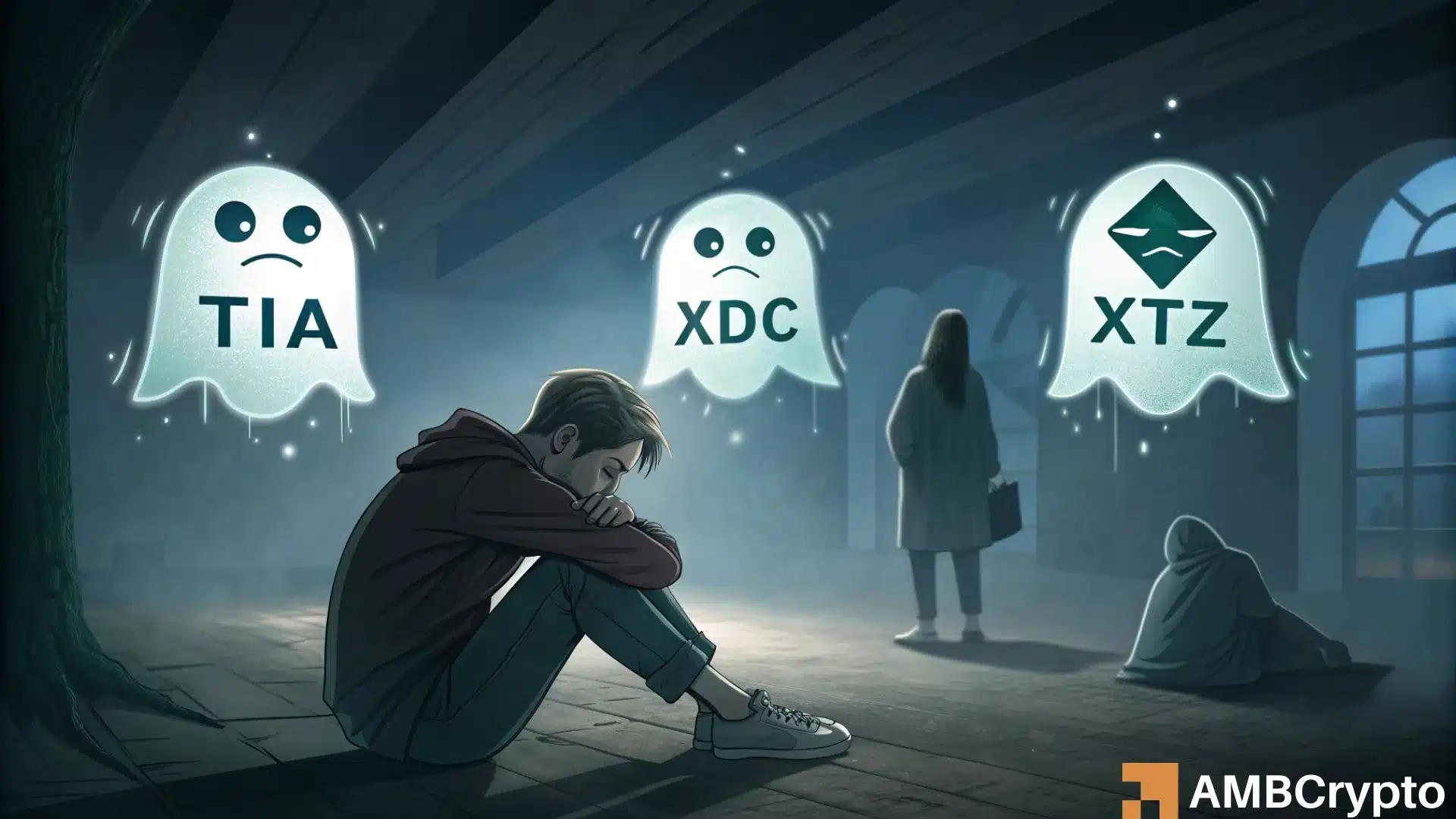
In the lexicon of cryptocurrency, a "ghost chain" refers to a blockchain network that commands a substantial market valuation—often in the hundreds of millions or billions of dollars—but suffers from negligible daily active users (DAU) and limited transaction volume. This misalignment suggests that the token’s price is being sustained by speculative trading or legacy capital rather than demand for the network’s underlying technological services. As the market matures, institutional and retail participants are shifting their focus toward "real yield" and network utility, leaving these high-valuation, low-activity projects in a precarious position.
Case Study: XDC Network and the Erosion of User Base
The XDC Network serves as a primary example of how a once-promising infrastructure project can face a disconnect between its market standing and its operational metrics. Historically, XDC established itself as a niche player in the enterprise blockchain space. However, recent data paints a concerning picture of declining engagement. While the network continues to retain a position among the top 100 cryptocurrencies by market capitalization, its valuation has undergone a significant correction, falling from a peak of $2 billion to approximately $644 million.
The fundamental issue lies in the trajectory of its user base. Token Terminal data reveals that Daily Active Addresses on the XDC Network have plummeted by 84.38% from their 2021 highs of 288,000 to a current level of roughly 45,000, with some daily metrics dipping as low as 16,000. This erosion of activity suggests that the value proposition of the XDC chain has struggled to retain developers and decentralized application (dApp) users in an increasingly competitive Layer-1 and Layer-2 landscape. Consequently, the native XDC token has faced severe downward pressure, posting a 62.5% decline on annualized charts, mirroring the withdrawal of community participation.
Celestia and the Challenge of Sustained Adoption
Celestia (TIA), which gained significant industry attention for its modular blockchain architecture, is currently navigating a period of sharp contraction. For a project designed to serve as the foundational data availability layer for a new generation of rollups, the decline in its own on-chain activity is particularly notable. Usage metrics for the Celestia network peaked in 2024 at 36,000 active addresses, a figure that has since evaporated.
Current data indicates that network Active Addresses have dropped by 96.92% from their 2023 peak of 39,000 to a mere 1,200 at the time of writing. This precipitous drop is not merely a statistical anomaly; it represents a fundamental shift in how the network is being utilized—or rather, a lack thereof. As the demand for TIA-based infrastructure has cooled, the token has suffered a 98.2% decline from its all-time high (ATH), currently trading near the $0.35 mark. This trajectory underscores a broader industry reality: even technological innovation cannot guarantee market relevance if adoption rates do not materialize to support the ecosystem’s economic model.
Tezos: A Struggle for Network Sustainability
The Tezos (XTZ) network, a pioneer in self-amending blockchain technology, provides another case study in the struggle for network sustainability. Despite a market capitalization exceeding $400 million, the chain has seen its fee and revenue generation capacity hollowed out. Data from Artemis highlights a 68% decline in fees and revenue over the past 12 months.
In the blockchain economy, fees are a direct proxy for block space demand. When fees and total network revenue decline, it indicates that fewer developers are deploying smart contracts and fewer users are executing transactions on the chain. Without the cyclical demand for the XTZ token to pay for these gas fees, the token’s price action has become decoupled from the network’s long-term utility goals. Consequently, XTZ has witnessed a 95% decline from its historic peak and a 47% drop over the last year, reflecting the market’s reaction to the lack of tangible on-chain growth.

The Direct Correlation Between Network Activity and Valuation
The implications of these trends are significant for both developers and investors. There is a demonstrable, linear correlation between the health of a blockchain’s ecosystem—measured by active wallets, transaction volume, and total value locked (TVL)—and the long-term price performance of its native asset. When a network ceases to facilitate economic activity, its native token often loses its primary utility, reverting to a purely speculative asset.
This "utility-to-valuation" gap is a warning signal to the broader crypto sector. As the industry moves past the "irrational exuberance" of early-stage blockchain deployment, capital is becoming more discerning. Projects that fail to convert their initial funding into sustainable, high-usage ecosystems are finding themselves effectively sidelined. The current market environment suggests that we are witnessing a "flight to quality," where capital is being reallocated toward chains that demonstrate consistent growth in developer activity and daily transactions, such as Solana, Ethereum, or high-throughput Layer-2s.
Broader Industry Implications and Future Outlook
The "ghost chain" phenomenon is not merely an isolated set of data points but a reflection of a maturing market. Historically, many chains were launched with substantial venture capital backing and high valuations that were not predicated on usage. In the current era, as tokens unlock and liquidity flows to more active ecosystems, these "zombie" networks are finding it increasingly difficult to compete.

For the networks mentioned—XDC, Celestia, and Tezos—the path to recovery requires a strategic pivot toward incentivizing actual, organic on-chain activity rather than relying on historical market caps. This may involve enhancing the developer experience, fostering a more robust dApp ecosystem, or adjusting tokenomics to better align with real-world network usage.
From an analytical standpoint, the decline of these networks serves as a broader lesson for the decentralized web. Innovation in consensus mechanisms and scalability is necessary, but it is insufficient without a corresponding community that utilizes the network for its intended purposes. As the market enters this next phase of the blockchain lifecycle, investors are increasingly looking for evidence of "product-market fit." Those chains that cannot prove their utility through transparent, on-chain data are likely to see their market valuations continue to converge toward their actual utility value—a process that is often painful for long-term token holders but ultimately necessary for the health of the broader digital asset landscape.
Ultimately, the divergence between market perception and operational reality represents a period of necessary correction. As the industry continues to filter out unsustainable models, the focus will likely remain on networks that can demonstrate not just technical novelty, but enduring value and consistent, high-frequency user engagement. The coming months will be critical for these projects as they attempt to reverse the tide of declining activity and prove that their infrastructure remains a vital component of the decentralized future.