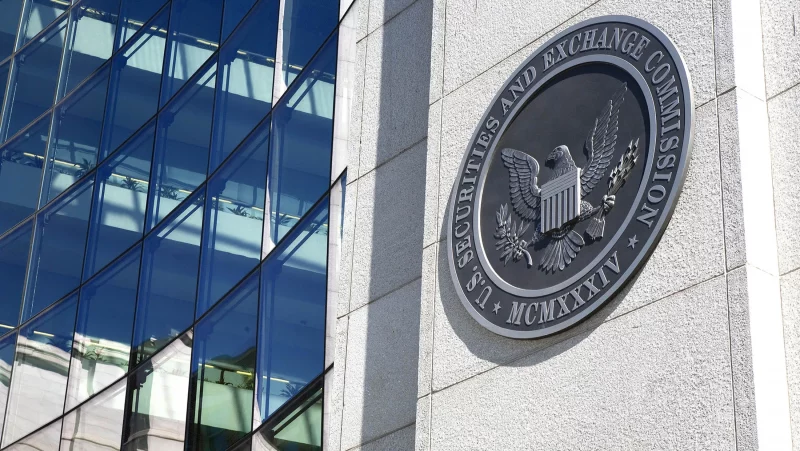
The United States Securities and Exchange Commission (SEC) has released comprehensive new compliance guidance aimed at demystifying the regulatory treatment of digital assets, token buybacks, staking receipt tokens, and ongoing blockchain development. Published by the SEC’s Division of Corporation Finance, the frequently asked questions (FAQs) build directly upon the Commission’s interpretive release issued in March, offering much-needed clarity to developers, protocols, and market participants operating within the digital asset ecosystem.
While the newly released document does not carry the formal force of federal law—nor has it been officially approved or disapproved by the presidentially appointed Commission itself—it provides critical insight into how regulatory staff intend to interpret existing securities laws when evaluating blockchain-based economic activities. The guidance addresses several long-standing gray areas that have historically complicated compliance for decentralized projects, institutional participants, and retail-facing applications in the United States.
Background Context and Regulatory Evolution
The relationship between federal securities regulations and decentralized ledger technology has been a subject of intense debate and regulatory scrutiny for nearly a decade. At the core of the SEC’s oversight of the crypto industry is the Howey test, a legal framework derived from the 1946 Supreme Court case SEC v. W.J. Howey Co. Under this standard, an investment contract exists if there is an investment of money in a common enterprise with a reasonable expectation of profits to be derived from the entrepreneurial or managerial efforts of others.
As the blockchain industry evolved from simple peer-to-peer payment networks to complex ecosystems featuring decentralized finance (DeFi), liquid staking protocols, and automated market makers, applying the Howey test became increasingly difficult. Projects frequently struggled to determine whether post-launch activities—such as network upgrades, marketing campaigns, and governance token buybacks—would inadvertently transform a functional digital asset into an unregistered security.
In response to mounting pressure from lawmakers, industry advocacy groups, and market participants for clearer regulatory parameters, the SEC’s Division of Corporation Finance has gradually increased its output of interpretive guidance. The latest set of FAQs represents the most targeted attempt yet to delineate the boundaries between compliant operational activities and unregistered securities offerings.
Token Buybacks and the Functional Network Distinction
One of the most significant clarifications in the SEC staff’s guidance addresses token buyback programs—a mechanism increasingly utilized by decentralized autonomous organizations (DAOs) and protocol treasuries to return value to token holders or manage circulating supply.
According to the staff, when a crypto network is already fully functional, the announcement and execution of a buyback for a non-security crypto asset would not, by itself, constitute a promise to perform "essential managerial efforts" under the Howey test. This distinction is vital because it separates routine capital allocation strategies executed by established networks from the promotional activities typical of early-stage token offerings.
However, the regulatory analysis shifts dramatically if the underlying network is not yet functional. In pre-launch or development-phase scenarios, a token buyback program could still contribute to the creation of an investment contract. This is particularly true if the buyback is marketed or presented to prospective buyers as a primary driver of yield, capital appreciation, or investment returns. By drawing this bright line between functional systems and developmental projects, the SEC staff has provided developers with a clearer framework for returning capital without triggering inadvertent securities violations.
Navigating Liquid Staking and Staking Receipt Tokens
The guidance also tackles the complex landscape of liquid staking, a rapidly growing sector within decentralized finance that allows users to earn network consensus rewards while retaining liquidity through the use of staking receipt tokens.
Under the new FAQs, a staking receipt token that represents a digital commodity—which itself is not subject to an investment contract—can be treated functionally as a "digital tool." In this context, the receipt serves primarily as a verifiable claim on the underlying staked asset rather than a separate investment vehicle.
Furthermore, the SEC staff noted that in specific scenarios, a staking receipt token issued by a protocol-based liquid staking provider may be classified as a digital commodity. This classification applies when the token’s economic value is directly tied to the operational mechanics of a functional crypto system, alongside standard market forces of supply and demand, rather than dependence on the managerial efforts of a central issuer or promoter.
Operational Freedom for Developers and Network Maintenance
Developers and core contributors have long expressed concern that routine software maintenance, security patching, and protocol upgrades could be misconstrued by regulators as the "managerial efforts" required to sustain an investment contract under the Howey test.
The SEC staff sought to alleviate these concerns by clarifying that developers can continue to maintain, secure, and improve a functional network without those ongoing technical activities automatically constituting essential managerial efforts.
Additionally, the guidance addresses network promotion and marketing. According to the staff, promoting a network’s current utility, operational capabilities, or technical features would generally not, on its own, amount to a promise of future profits or managerial stewardship. Similarly, aspirational statements regarding potential future features or roadmap milestones may fall outside the scope of the Howey analysis, provided those statements are not framed or promoted as drivers of potential financial returns for investors.
Secondary Markets and the Definition of a Promoter
Addressing concerns within the trading ecosystem, the SEC staff clarified that the mere operation of a secondary market for a crypto asset does not automatically designate a trading platform or exchange as a "promoter" of that asset.
For a trading platform to be classified as a promoter under federal rules, it must meet the specific legal criteria outlined in Securities Act Rule 405. This clarification provides a degree of reassurance to decentralized exchanges, alternative trading systems, and intermediary platforms that facilitate secondary market liquidity without engaging in promotional activities on behalf of token issuers.
Market Implications and Industry Reaction
While legal experts and industry participants have welcomed the guidance as a constructive step toward regulatory clarity, market analysts emphasize that the document represents the views of the SEC’s Division of Corporation Finance rather than binding administrative law. Consequently, the FAQs do not preclude private civil litigation or formal enforcement actions by the Commission if factual circumstances differ from the hypothetical scenarios addressed in the guidance.
Nevertheless, the release underscores a growing willingness within regulatory agencies to engage with the technical realities of modern blockchain architectures. By acknowledging the operational independence of functional networks, the viability of liquid staking tokens, and the legitimate role of developer maintenance, the SEC staff has provided a roadmap that may encourage greater compliance and innovation within the U.S. digital asset market. As the legal landscape continues to evolve through both administrative guidance and potential congressional legislation, market participants will closely monitor how these interpretive principles are applied in practice.