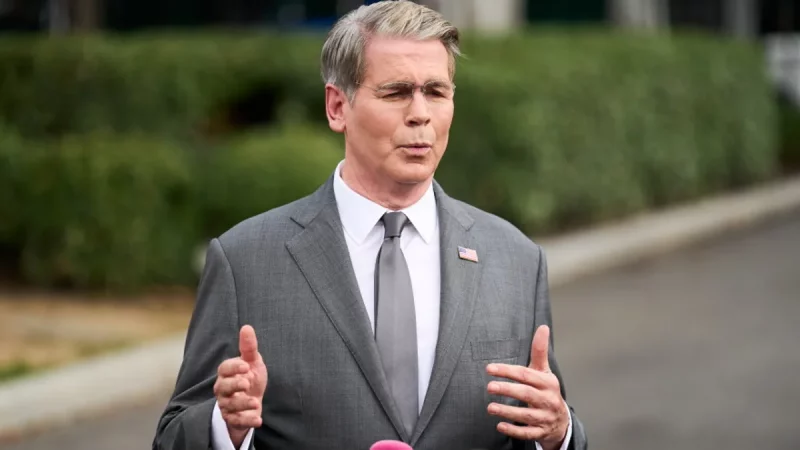
Treasury Secretary Scott Bessent has reportedly emerged as a frontrunner for the newly envisioned position of presidential artificial intelligence czar under the administration of President Donald Trump. According to multiple individuals familiar with internal White House deliberations, Bessent’s growing footprint in technology governance, macroeconomic strategy, and international diplomacy has positioned him at the center of the administration’s emerging artificial intelligence framework. While administration officials maintain that no definitive appointment has been finalized, the prospect of consolidating AI policy oversight within the executive branch highlights the rapidly escalating convergence of national security, economic competition, and advanced computational technology.
The potential creation of an AI czar role underscores how artificial intelligence has transformed from a sector-specific commercial novelty into a cornerstone of geopolitical strategy. As machine learning models grow more sophisticated, autonomous, and integrated into critical infrastructure, governments worldwide are scrambling to establish centralized authorities capable of balancing rapid innovation with stringent risk management. For the Trump administration, selecting a high-profile economic official like Bessent to coordinate AI policy signals a deliberate effort to align technological advancement with broader fiscal and international trade priorities.
The Evolution of Executive AI Governance and the Contenders
The architecture of federal artificial intelligence oversight has evolved significantly over successive administrations, transitioning from advisory committees to more centralized coordination offices. Under the current administration, the push for a dedicated AI czar reflects a perceived need for a single, authoritative voice to streamline federal initiatives, resolve interagency friction, and manage international technology negotiations.
While Scott Bessent currently leads the field of candidates, administration insiders note that other key figures are also under serious consideration for the role. Among them are Michael Kratsios, Director of the White House Office of Science and Technology Policy, and Scott Kupor, Director of the Office of Personnel Management. Both individuals bring extensive technical and operational expertise to the table, having navigated the complex intersection of federal bureaucracy and the private technology sector.
Kratsios, who previously held prominent science and technology roles during the first Trump administration, is well-versed in federal R&D priorities, semiconductor supply chains, and domestic tech policy. Kupor brings a deep venture capital and administrative background, having spent years evaluating high-growth technology firms and understanding the labor market dynamics essential for scaling artificial intelligence talent within the public sector.
Despite the credentials of these alternative candidates, Bessent’s dual involvement in economic policy and high-level international diplomacy has given him a distinct edge. Observers point out that holding the AI czar position would not necessarily require Bessent to relinquish his current portfolio at the Department of the Treasury. President Trump has historically favored flexible administrative structures, frequently assigning cabinet-level officials additional policy coordination roles that cut across traditional departmental boundaries.
High-Level Diplomatic Engagement in Beijing and Washington
Bessent’s emergence as a top candidate for the AI czar post is not merely a domestic administrative development; it is heavily underscored by his recent diplomatic maneuvers on the international stage. In the days leading up to a highly anticipated summit between President Donald Trump and Chinese President Xi Jinping, Bessent engaged in crucial preliminary talks with Chinese Vice Premier He Lifeng.
Central to these discussions was the future of artificial intelligence cooperation and risk mitigation between the world’s two largest economic superpowers. According to sources close to the negotiations, Bessent and Vice Premier He explored the establishment of a formal, bilateral dialogue channel dedicated exclusively to artificial intelligence. This proposed framework aims to prevent misunderstandings and mitigate the potential for escalation in a domain where technological dominance directly correlates with military and economic hegemony.
Furthermore, the talks yielded discussions regarding a mutual notification mechanism for high-stakes incidents involving artificial intelligence. As autonomous systems take on greater operational roles within military, financial, and critical infrastructure networks, the risk of cascading failures or algorithmic miscalculations has grown exponentially. A dedicated communications pipeline designed to alert opposing governments to anomalous AI behavior could serve as a vital guardrail against unintended geopolitical friction. Bessent confirmed following the meetings that both delegations intend to maintain an active dialogue on these matters, signaling a pragmatic recognition that certain boundaries must be established regardless of broader strategic competition.
Regulatory Philosophy and Liability Frameworks
Beyond international diplomacy, Scott Bessent has begun articulating a distinct regulatory philosophy regarding the deployment and accountability of artificial intelligence systems. As the private sector accelerates the deployment of generative models and autonomous agents, debates surrounding legal liability and operational accountability have taken center stage in Washington.
Bessent has recently advocated for a firm regulatory stance: human beings and corporate entities must remain strictly responsible for the actions and outcomes generated by artificial intelligence systems. By pushing back against the notion that advanced software should bear operational culpability or that corporate developers should enjoy blanket liability shields, Bessent’s approach aligns with traditional legal principles of agency and corporate governance. This perspective seeks to prevent firms from externalizing the risks associated with flawed algorithms, biased data sets, or security vulnerabilities onto the public sphere.
This philosophy is expected to shape any comprehensive domestic AI policy framework that emerges from the administration. By ensuring that human oversight and legal accountability remain mandatory, the administration hopes to foster public trust while deterring reckless deployment practices within the tech industry. It also places a heavy compliance burden on developers, requiring robust internal testing, auditing, and fail-safe mechanisms before commercial or governmental systems are deployed at scale.
Official Responses and Administrative Speculation
In response to widespread media reporting regarding the potential appointment, the White House has moved to manage expectations and reiterate protocol regarding executive personnel decisions.
Kush Desai, a White House spokesperson, addressed the reports by emphasizing that personnel announcements remain strictly speculative until officially confirmed by the administration. "Any reports concerning staffing decisions or administrative roles that have not been formally announced by the White House should be treated as speculation at this time," Desai stated.
This cautious stance is standard operating procedure within executive administrations, where premature leaks can complicate ongoing diplomatic negotiations, senate confirmation processes, or internal policy alignments. Nevertheless, political analysts note that the deliberate floating of names often serves as a testing ground for policy direction, allowing the administration to gauge the reactions of key stakeholders, industry leaders, and international allies before making a final commitment.
Broader Economic and National Security Implications
The potential consolidation of AI policy under a dedicated czar—particularly one rooted in economic stewardship like Treasury Secretary Bessent—reflects the profound economic and national security stakes involved in the artificial intelligence revolution.
From an economic perspective, artificial intelligence is rapidly becoming the primary driver of productivity growth, labor market transformation, and capital investment. Semiconductors, data centers, energy consumption, and proprietary algorithmic models represent trillions of dollars in global enterprise value. By integrating AI oversight with the Department of the Treasury, the administration can more effectively manage industrial policy, export controls, and foreign direct investment in critical technology sectors.
From a national security standpoint, the militarization and strategic weaponization of artificial intelligence present unprecedented challenges. Cybersecurity defense, autonomous weapons systems, intelligence gathering, and disinformation campaigns are all deeply augmented by machine learning capabilities. The United States faces intense strategic competition, primarily from China, to achieve and maintain technological supremacy in these domains.
As President Trump and President Xi prepare for their upcoming discussions at the White House, artificial intelligence is slated to be one of the preeminent agenda items. The outcome of these talks, combined with the structural decisions made regarding federal AI leadership, will set the trajectory for global technology governance for years to come. Whether Scott Bessent formally assumes the title of AI czar or continues to exert profound influence from his position at Treasury, his growing involvement ensures that economic pragmatism and strategic rigor will remain at the forefront of America’s artificial intelligence policy.