The Biden administration is currently engaged in a high-level strategic review of the digital asset landscape, with reports suggesting that the White House is drafting an executive order aimed at formalizing a cohesive federal approach to cryptocurrency oversight. According to sources familiar with internal discussions, the directive seeks to unify the currently fragmented regulatory landscape, tasking various federal agencies with assessing the risks and opportunities posed by blockchain technology and virtual currencies. This move reflects the growing consensus within Washington that the rapid expansion of the crypto sector—now a multi-trillion dollar industry—demands a structured, whole-of-government response to protect consumers, ensure financial stability, and maintain the competitive edge of the United States in the global financial system.
The Push for Regulatory Cohesion
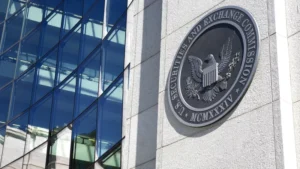
For years, the regulation of cryptocurrencies in the United States has been characterized by a "patchwork" approach. Various agencies, including the Securities and Exchange Commission (SEC), the Commodity Futures Trading Commission (CFTC), the Treasury Department, and the Federal Reserve, have operated within their specific mandates, often leading to jurisdictional ambiguity. The proposed executive order aims to resolve these overlaps by requiring a centralized review process.
Under the framework currently under consideration, the Department of Commerce, the National Science Foundation, the Treasury, and various national security agencies would be mandated to conduct comprehensive studies on the ecosystem. The goal is to move beyond disparate enforcement actions and toward a harmonized regulatory environment. By clarifying the specific responsibilities of each agency, the White House hopes to create a predictable environment for both market participants and institutional investors. While the draft has circulated through various departments, it remains fluid; officials have noted that the administration may ultimately opt for a less formal directive if it achieves the desired coordination without the rigidity of a signed executive order.
Chronology of Regulatory Escalation
The interest in a formal executive order did not occur in a vacuum. It follows a year of significant growth in decentralized finance (DeFi), the proliferation of stablecoins, and the mainstream adoption of digital assets by major financial institutions.
- Early 2021: The entry of institutional giants like PayPal, Visa, and Tesla into the crypto space accelerated the urgency for federal guidance.
- Mid-2021: Federal Reserve Chair Jerome Powell and other central bankers began highlighting the "mushrooming" stablecoin market as a potential systemic risk, noting that these assets, which are pegged to fiat currencies, require robust oversight to prevent runs or liquidity crises.
- October 2021: The Department of Justice announced the launch of a dedicated National Cryptocurrency Enforcement Team (NCET), marking a shift toward aggressive criminal prosecution of illicit activities involving digital assets.
- Q4 2021: SEC Chair Gary Gensler reiterated his stance that many digital tokens function as unregistered securities, urging platforms to register with the SEC to protect investors.
This timeline demonstrates a transition from monitoring to active governance. The Biden administration’s internal discussions represent the culmination of this trend, signaling that the federal government is shifting its focus from skepticism to structural integration.
Institutional Perspectives and Agency Roles
The regulatory landscape is currently defined by a few key players, each with a distinct mandate. The SEC, under the leadership of Gary Gensler, has been the most vocal, emphasizing investor protection. Gensler has consistently argued that the vast majority of crypto-tokens fall under the definition of investment contracts, thereby subjecting them to securities laws. However, he has also acknowledged the limitations of his agency, explicitly stating that a total ban on cryptocurrencies is not within the SEC’s purview and would require legislative action from Congress.
Conversely, the Treasury Department has focused on the illicit finance risks associated with anonymous transactions. As digital assets increasingly integrate into the global payments system, the Treasury is concerned about money laundering, tax evasion, and the use of ransomware by malicious state and non-state actors. The Federal Reserve, meanwhile, is primarily concerned with the impact of stablecoins on the broader economy and the ongoing research into a potential Central Bank Digital Currency (CBDC). The proposed executive order would force these agencies to align these divergent priorities into a single, cohesive policy document.

The Search for a "Crypto Czar"
A critical component of the administration’s strategy involves the potential appointment of a "crypto czar"—a senior official tasked with overseeing the execution of this government-wide policy. The current lack of a centralized figure with deep technical and policy expertise in digital assets has been identified as a weakness in the White House’s current structure.
The administration’s search for this role has faced hurdles. While officials like Tim Wu, who holds a significant role in technology and competition policy, possess the relevant experience, their personal involvement in the crypto market through holdings creates potential conflicts of interest. This has forced the White House to look toward personnel from the Treasury and the National Security Council, such as Deputy National Security Advisor Daleep Singh, to bridge the gap in the interim. The appointment of a dedicated czar would signal that the White House views digital assets as a permanent fixture of the U.S. economy, rather than a transient technological trend.
Fact-Based Analysis: Economic Implications
The implications of this move are significant for the broader financial sector. A formal executive order would likely provide the "regulatory clarity" that industry advocates have requested for years. For institutional investors—such as pension funds and asset managers—the primary barrier to entry has been the legal uncertainty surrounding digital assets. If the administration provides a clear roadmap for compliance, it could trigger a new wave of capital inflow into the sector.
However, the risk of over-regulation remains a primary concern for developers and startups. If the government’s directive leans too heavily toward restrictive enforcement, there is a risk that innovation could migrate to more favorable jurisdictions, such as Singapore, Switzerland, or the United Arab Emirates. The challenge for the Biden administration is to balance the need for consumer protection and financial security with the imperative to foster technological innovation.
Furthermore, the focus on stablecoins in the rumored draft suggests that the government is particularly worried about the "shadow banking" nature of these assets. By bringing stablecoin issuers under a regulatory umbrella similar to that of traditional banks, the administration hopes to mitigate the risk of financial contagion. This would likely require these firms to hold higher capital reserves and undergo regular audits, fundamentally changing the economics of the stablecoin industry.
Broader Impact and Future Outlook
The Biden administration’s interest in crypto regulation is also tied to broader geopolitical concerns. As China moves forward with its digital yuan and other nations explore sovereign digital currencies, the U.S. government is increasingly sensitive to the risk of losing the dollar’s status as the world’s reserve currency. A robust, well-regulated U.S. crypto framework is seen as a necessary foundation for maintaining American financial leadership in the 21st century.
As the administration continues to refine its approach, the crypto industry and the traditional financial sector remain on high alert. The move is widely expected to be the first step in a multi-year effort to modernize the U.S. financial regulatory architecture. While the exact wording and scope of the potential executive order remain under wraps, the signal to the market is clear: the era of "Wild West" regulation is coming to an end. The federal government has moved from observation to engagement, and the next phase of the digital asset industry will be defined by its ability to integrate with the established regulatory and legal systems of the United States.
The upcoming announcement of this strategy will likely serve as a watershed moment for the industry. Whether it leads to a surge in legitimate institutional adoption or a contraction in the more speculative corners of the market, the impact on the global financial ecosystem will be profound. For now, market participants, investors, and technologists are waiting for the White House to finalize its position, as the outcome will dictate the terms of engagement for the next decade of digital finance.