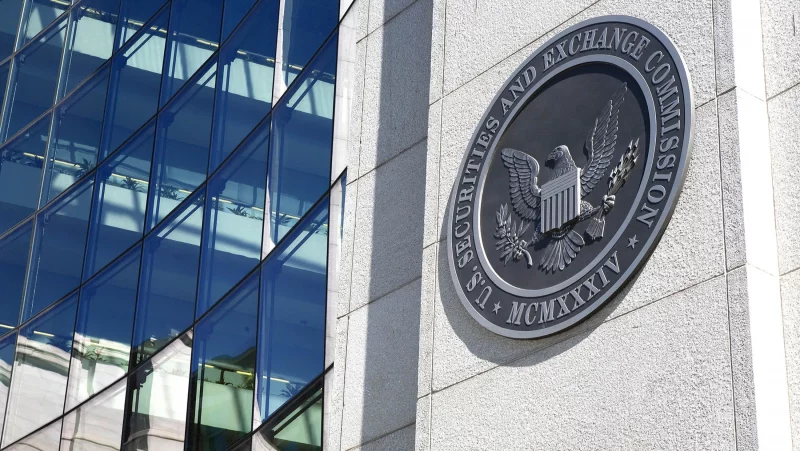
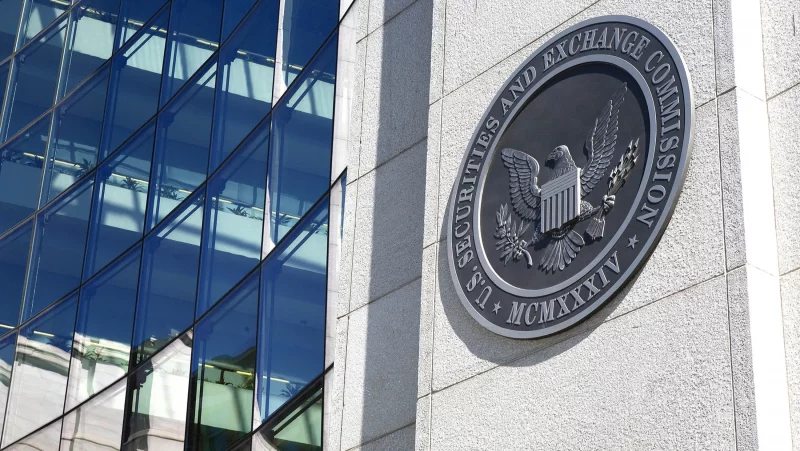
The United States Securities and Exchange Commission (SEC) has released a comprehensive new set of frequently asked questions (FAQs) aimed at shedding light on how federal securities laws apply to digital assets. Published by the SEC’s Division of Corporation Finance, the guidance specifically addresses complex facets of the digital asset ecosystem, including token buybacks, staking receipt tokens, ongoing blockchain development, and secondary market operations. While the publication marks a significant step toward regulatory clarity for the blockchain industry, the agency noted that the document represents the views of the staff only. It does not carry the formal force of law and has not been formally approved or disapproved by the full Commission.
This latest regulatory development arrives at a critical juncture for the digital asset industry, which has long grappled with regulatory ambiguity. For years, market participants, legal experts, and developers have called on the SEC to provide clear, actionable frameworks rather than relying strictly on enforcement actions—a regulatory approach often criticized by industry stakeholders as "regulation by enforcement." The newly issued FAQs build directly upon the Commission’s interpretive release from March, expanding on key legal concepts to help market participants navigate the delicate boundary between utility tokens and investment contracts under U.S. securities laws.
Decoding the Howey Test: Token Buybacks and Functional Networks
At the core of the SEC’s guidance is the application of the Howey test, the landmark 1946 Supreme Court case that determines whether a transaction qualifies as an investment contract and, consequently, a security. Under the Howey test, an investment contract exists if there is an investment of money in a common enterprise with a reasonable expectation of profits derived primarily from the efforts of others.
The new SEC staff guidance provides crucial distinctions regarding how token buybacks interact with this legal standard, specifically pivoting on the maturity and functionality of the underlying crypto network:
- Functional Networks: When a crypto network is fully functional and operational, the staff clarified that announcing or executing a buyback of a non-security crypto asset would not, by itself, constitute a promise to perform "essential managerial efforts." Because the network is already functioning independently of the issuer’s ongoing managerial control, the buyback is viewed more akin to a corporate share repurchase in traditional equity markets rather than an inducement based on managerial expectations.
- Non-Functional Networks: Conversely, the regulatory analysis changes dramatically if the network is still in development or not yet functional. In pre-launch or early-stage environments, a token buyback could contribute to the formation of an investment contract. This is particularly true if the buyback mechanism is marketed or presented to prospective buyers as a primary driver of yield, scarcity, or future financial returns for token holders.
Legal scholars note that this distinction incentivizes developers to achieve full decentralization and operational functionality as quickly as possible, as the regulatory burden and legal risk decrease significantly once a network is genuinely operational.
Navigating Liquid Staking and Staking Receipt Tokens
Liquid staking has emerged as one of the most popular mechanisms within decentralized finance (DeFi), allowing users to earn staking rewards on proof-of-stake networks without locking up their underlying assets. However, the legal classification of staking receipt tokens—the derivative tokens given to users in exchange for their staked assets—has remained a persistent gray area.
The SEC staff’s new FAQs address this growing sector by categorizing staking receipt tokens through two distinct lenses:
- Digital Tools: A staking receipt token that represents an underlying digital commodity not subject to an investment contract can be treated as a "digital tool." In this capacity, the receipt simply serves as a verifiable receipt or claim check for the underlying asset deposited into the staking protocol, functioning similarly to a warehouse receipt in traditional commodity markets.
- Digital Commodities: In other scenarios—particularly when issued by a protocol-based liquid staking provider—a staking receipt token may be classified as a digital commodity in its own right. This classification applies when the token’s value is directly tied to the operational health and functionality of the underlying crypto system, alongside traditional market dynamics of supply and demand, rather than the entrepreneurial or managerial efforts of a centralized issuer.
This nuanced approach offers relief to decentralized staking providers, acknowledging that not all derivative tokens created via smart contracts function as securities.
Developer Activities and Marketing Communications
One of the most persistent concerns among blockchain developers has been whether routine maintenance, security upgrades, and network improvements could be weaponized by regulators as evidence of the "essential managerial efforts" required to trigger securities laws.
The SEC staff sought to alleviate these fears by clarifying that developers can continue to maintain, secure, and improve a functional network without those technical activities automatically qualifying as managerial efforts under the Howey framework. This distinction recognizes that open-source software development is continuous and decentralized, and that updating code does not inherently equate to managing an investment enterprise on behalf of token holders.
Furthermore, the guidance addresses marketing and promotional activities surrounding blockchain projects:
- Promoting Current Utility: Promoting a network’s existing utility, current capabilities, and operational features generally does not, on its own, amount to a promise of future managerial efforts.
- Aspirational Statements: Statements regarding future features or potential upgrades may also fall outside the scope of an investment contract, provided they are not framed in a manner that promotes potential financial profits or relies on the central issuer to deliver those profits.
This clarification provides marketing and communications teams within blockchain projects a clearer boundary between permissible informational outreach and prohibited promotional conduct that implies financial returns.
Secondary Markets and Platform Obligations
The final component of the SEC’s guidance addresses the operation of secondary markets for crypto assets. The staff explicitly clarified that operating a secondary market trading platform for a digital asset does not automatically categorize the platform itself as a "promoter" of that asset.
However, the guidance does not grant trading platforms a blanket exemption. The SEC staff emphasized that a platform must still be evaluated under traditional regulatory standards, specifically meeting the precise definition of a promoter under Securities Act Rule 405. This ensures that trading venues remain accountable for their operational practices without being unfairly saddled with the liabilities of the original token issuers.
Industry Context and the Evolution of SEC Policy
To fully understand the weight of this new guidance, it is necessary to examine the broader regulatory timeline governing digital assets in the United States. Over the past several years, the SEC, under the leadership of various officials, has pursued dozens of high-profile enforcement actions against crypto exchanges, token issuers, and decentralized finance protocols.
The lack of formal rulemaking or comprehensive congressional legislation has left the industry largely dependent on judicial rulings and occasional interpretive statements from the Commission. The March 2025 interpretive release served as an initial foundation, and the current division-level FAQs represent a logical continuation of that policy shift toward granular, practical guidance.
While industry advocates have welcomed the FAQs as a constructive step toward practical regulation, legal analysts caution that guidance issued by SEC staff does not bind the Commission itself. In the event of a formal enforcement action or a commissioner-led review, the interpretations provided by the Division of Corporation Finance could theoretically be challenged or superseded.
Nonetheless, market participants view the release as a vital signal of the agency’s internal thinking. By addressing specific mechanics like liquid staking, token buybacks, and developer maintenance, the SEC has provided a more predictable framework that could encourage innovation and compliance within the U.S. jurisdiction, potentially stemming the outward migration of blockchain startups to more crypto-friendly foreign jurisdictions. As the digital asset market continues to mature, both developers and legal counsel will likely pore over these FAQs to structure their operations in alignment with the staff’s articulated positions.