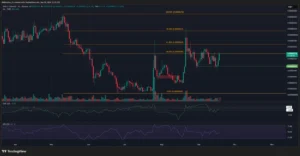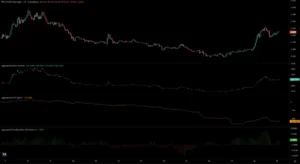
The strategic acquisition of Bitcoin (BTC) through Dollar-Cost Averaging (DCA) has long been heralded by financial analysts as the gold standard for retail investors seeking to mitigate the inherent volatility of digital asset markets. By committing a fixed amount of capital at regular intervals, regardless of the prevailing market price, investors can effectively smooth out their entry points over time. However, as Bitcoin transitions into a more mature asset class characterized by increased institutional adoption and higher price floors, the historical efficacy of DCA is undergoing a rigorous re-evaluation. Recent market data indicates that while DCA remains a robust defensive strategy, the era of exponential, easy gains from modest, sporadic investments is yielding to a more complex environment where market timing and project innovation play increasingly critical roles.
The Mechanics and Evolution of Dollar-Cost Averaging
At its core, DCA is a systematic approach designed to remove emotional bias from the investment process. By purchasing Bitcoin at fixed intervals—be it daily, weekly, or monthly—investors avoid the common pitfalls of "buying the top" or panic-selling during cyclical drawdowns. The objective is to accumulate a larger position during market corrections while maintaining exposure during bull runs, ultimately resulting in a lower average cost per coin.

For years, this strategy was arguably the most successful path for retail participants. During the 2017–2020 accumulation period, Bitcoin’s price volatility was such that consistent, small-scale buying allowed investors to accumulate significant amounts of BTC at prices that now appear negligible. However, as of 2025, the market landscape has shifted. With Bitcoin regularly testing and exceeding the $100,000 threshold, the "cheap entry" phase that defined the previous decade has largely concluded.
Comparative Performance Analysis: 2020 to 2025
A quantitative look at recent performance provides a stark contrast between early adopters and late-cycle participants. An investor who began a daily $5 DCA strategy in August 2024, at a time when Bitcoin was already trading at a high valuation, has realized a modest return of approximately 5% over a 12-month period. This stands in sharp contrast to the performance of institutional entities like Strategy (formerly MicroStrategy), which leveraged early, massive capital injections.
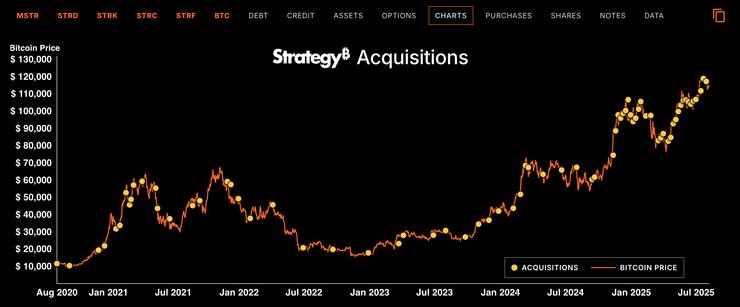
Strategy’s accumulation of 628,791 BTC—valued at roughly $72.1 billion—highlights the immense advantage of early-stage positioning. By front-loading their investment during the 2020 and 2022-2023 market lulls, they secured a cost basis that has allowed for a realized yield of approximately 25% on their holdings.

If one were to analyze the same $5 daily investment strategy starting from 2020, the results would be significantly different. An investment of $5 daily from 2020 until the present would represent a total capital outlay of approximately $9,130. Based on the historical price trajectory, this would have yielded roughly 0.275 BTC. With Bitcoin currently trading at approximately $114,800, that portfolio would be valued at $31,570—a total return of roughly 245%. Yet, a single, lump-sum investment in 2020 would have secured approximately 0.81 BTC, currently worth over $92,000, illustrating a 918% return.
The Shift Toward Layer-2 Utility and Technological Innovation
As the primary Bitcoin network continues to function as a store of value and a settlement layer, the limitations regarding transaction throughput—averaging only seven transactions per second—have become a bottleneck for mass adoption. This limitation has spurred the development of Layer-2 (L2) solutions, which aim to add utility, smart contract functionality, and increased speed to the Bitcoin ecosystem without compromising the network’s foundational security.
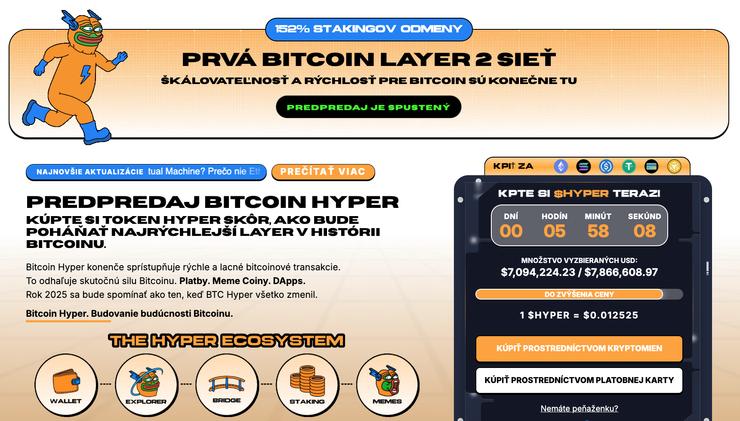
One of the most notable entrants in this space is Bitcoin Hyper (HYPER). By integrating the Solana Virtual Machine (SVM), the project aims to bridge the gap between the security of the Bitcoin blockchain and the high-performance execution of modern decentralized networks. The core value proposition of Bitcoin Hyper lies in its ability to facilitate decentralized applications (dApps) for DeFi, payments, and gaming, while utilizing a canonical bridge to lock native BTC, thereby ensuring that the underlying asset remains secure while its tokenized derivative gains utility.
Fact-Based Analysis of the Layer-2 Market
The expansion of Layer-2 solutions is not merely a theoretical exercise; it is an economic necessity for the long-term viability of the Bitcoin ecosystem. Currently, the collective market capitalization of Layer-2 and scaling solutions across various blockchain networks exceeds $14.9 billion. Bitcoin-specific scaling projects are attempting to capture a significant portion of this market by providing the infrastructure necessary for "Bitcoin-native" finance.
From a technical perspective, the integration of the SVM allows for a throughput increase of up to 1,000 times that of the base Bitcoin layer. For users, this means near-instant transaction finality and reduced costs, which are essential for high-frequency applications like decentralized exchanges or micro-payment services. The fact that the HYPER token presale has already surpassed $7 million in funding suggests a strong market appetite for projects that can effectively solve the "scalability vs. security" trilemma within the Bitcoin ecosystem.
Strategic Considerations for Modern Investors
For the modern investor, the dilemma remains: should one rely exclusively on the proven track record of Bitcoin DCA, or should one allocate a portion of their portfolio to emerging, high-growth Layer-2 ecosystems?
- Risk Mitigation through Diversification: While Bitcoin remains the "digital gold" standard, its capacity for 10x-50x growth is naturally dampened by its massive market capitalization. Diversification into infrastructure-level projects like Bitcoin Hyper provides exposure to the "picks and shovels" of the next phase of the Bitcoin cycle.
- The Role of Early-Stage Entry: Just as those who entered Bitcoin in 2020 benefited from the lack of mainstream awareness, early participation in Layer-2 projects during their presale phases allows for a lower entry price point. At the current presale price of $0.012525, the risk-to-reward ratio is fundamentally different from that of buying mature assets.
- Institutional Adoption of Layer-2: Just as institutional capital catalyzed Bitcoin’s growth in 2020, the current focus of developers and venture capital is shifting toward building the "Bitcoin Economy." Projects that provide seamless interoperability with existing liquidity are likely to become the primary beneficiaries of this shift.
Chronology of the Bitcoin Ecosystem Development
- 2009–2017: The Genesis era. Bitcoin establishes itself as a digital currency; limited retail interest.
- 2020–2022: The Institutional shift. Large-scale corporate treasury adoption (e.g., Strategy) begins, setting a new price floor.
- 2023–2024: The Era of Utility. Awareness grows regarding Bitcoin’s scalability limitations; surge in interest for Ordinals and BRC-20 tokens.
- 2025: The Layer-2 Expansion. Focus shifts to building robust, high-speed execution environments (such as Bitcoin Hyper) that leverage the Bitcoin security model while enabling complex dApps.
Conclusion: Future Implications
The narrative surrounding Bitcoin is evolving from a simple store-of-value proposition to a foundational layer for a broader financial system. While the traditional DCA strategy into Bitcoin remains an essential cornerstone for risk-averse investors, the changing market dynamics suggest that long-term outperformance now requires a more nuanced approach.
Investors must distinguish between the "monetary" value of Bitcoin and the "utility" value of the emerging ecosystem built atop it. As decentralized applications become more prevalent, the infrastructure that connects these applications to the Bitcoin network—such as the technology provided by Bitcoin Hyper—will likely experience significant demand. Whether through the steady accumulation of BTC or strategic positioning in L2 infrastructure, the overarching lesson remains consistent: the most substantial gains in the crypto-asset space continue to be realized by those who identify fundamental technological shifts before they reach mainstream adoption.
As the industry looks toward the latter half of 2025 and beyond, the convergence of Bitcoin’s security with the high-speed capability of technologies like the SVM represents perhaps the most significant structural change since the inception of the Lightning Network. For investors, the challenge lies in balancing the proven safety of the Bitcoin core with the growth potential offered by these next-generation protocols. Information regarding such projects is increasingly accessible through specialized portals and community channels like Telegram and X, allowing participants to perform the due diligence necessary for informed decision-making in an increasingly competitive market.