
Bitcoin has surged past the $81,000 mark, reaching its highest valuation since late January. This significant price appreciation, climbing from $79,000 at the close of U.S. trading on Monday, represents a robust 5.3% gain over the past week, signaling a potential breakout territory for the flagship cryptocurrency. The market is abuzz with Bitcoin news, as the digital asset once again commands significant attention. This upward momentum is occurring amidst a backdrop of strategic positioning by institutional trading desks, who had been accumulating exposure to potential upside through call ratio structures in options markets. The recent price action appears to have validated these anticipations, yet a notable divergence has emerged: the altcoin market has yet to mirror Bitcoin’s ascent with comparable vigor.
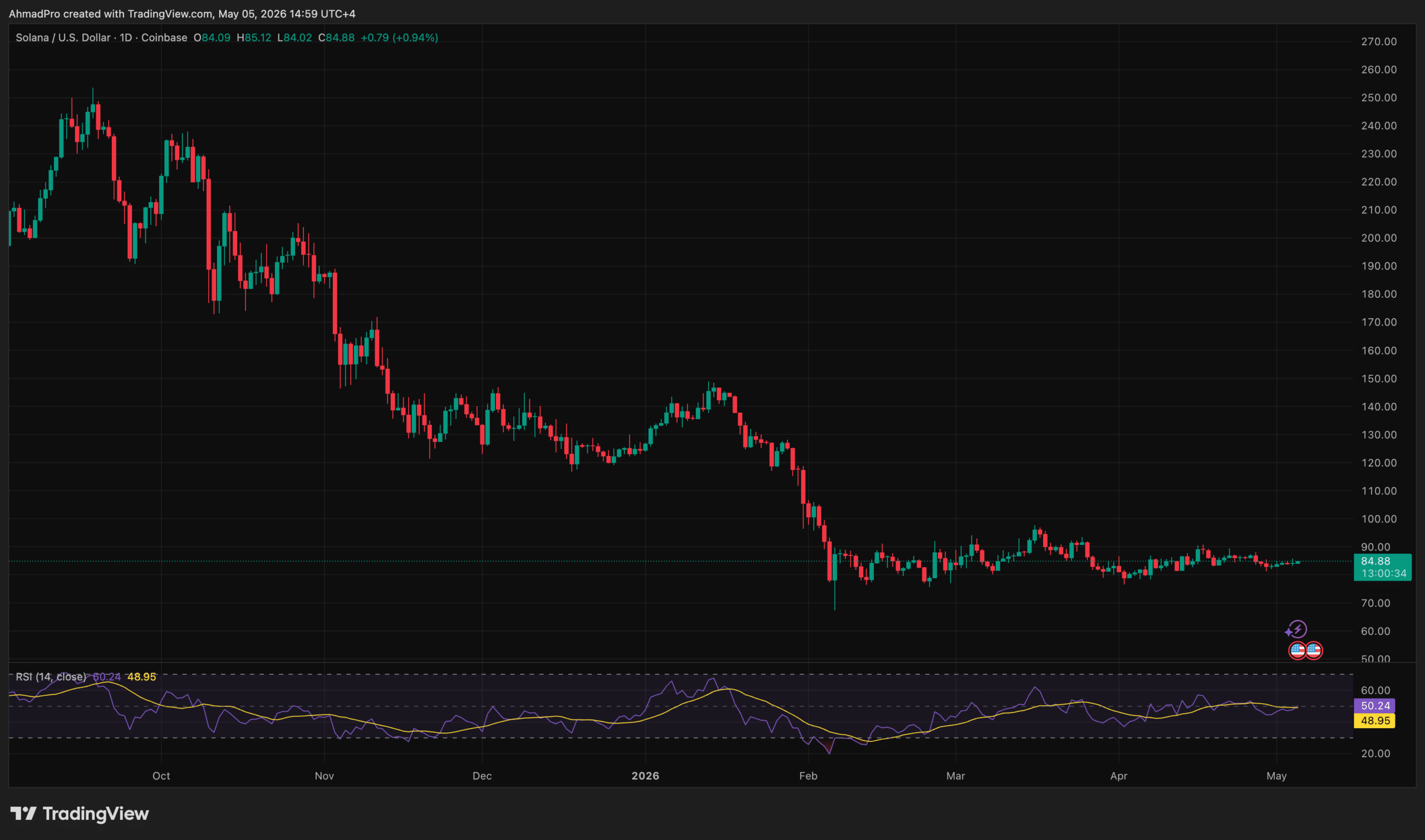
The broader cryptocurrency market presents a complex picture, with Bitcoin leading the charge while other major digital assets exhibit relative stagnation. Ether (ETH), for instance, hovered around $2,379, experiencing a marginal 0.1% dip on the day, despite a respectable 4.0% gain for the week. Solana (SOL) saw a 0.9% decline, settling at $84.84. Even Dogecoin (DOGE), which has shown resilience, gave back 1.0% to trade at $0.1117, a move that contrasts with its year-high open interest in futures contracts. This pronounced market divergence between Bitcoin’s impressive performance and the flat-to-negative trend in altcoins is not merely coincidental. It underscores a structural element in the current rally’s composition and raises a critical question for market participants: will this rally broaden to include the wider altcoin ecosystem, or will Bitcoin’s ascent remain an isolated phenomenon? The answer to this question is a primary driver of positioning strategies across institutional desks.
Prior analysis has highlighted the interplay between institutional and retail investor dynamics in Bitcoin’s recovery to the $80,000 level. Skepticism has often accompanied each attempt to surpass this psychological threshold. The trading activity and price action observed on Tuesday will serve as the first significant test of whether this latest breakout is sustainable.
The Engine Behind Bitcoin’s Surge: ETF Inflows and Strategic Options Plays
The recent price surge in Bitcoin is underpinned by a confluence of strong institutional demand and sophisticated derivative market strategies. Data from SoSoValue reveals that U.S. spot Bitcoin Exchange-Traded Funds (ETFs) recorded net inflows of $2.44 billion in April, marking the strongest monthly inflow since October of the previous year. Friday alone saw inflows reaching an impressive $630 million. This substantial institutional appetite absorbed significantly more Bitcoin than was produced through daily mining operations. According to data compiled by Capriole Investments, institutional investors acquired over 500% of the daily mined supply of Bitcoin. Historically, such a high ratio of institutional acquisition to daily issuance has often preceded significant price appreciation, with average gains of approximately 24% observed in the subsequent month.

On the derivatives front, Nomura’s market-making arm, Laser Digital, noted in a recent advisory that cryptocurrency options desks had been actively structuring "call ratio trades." This strategy involves purchasing call options with a strike price close to the current market value (near-the-money) and financing these positions by selling call options with higher strike prices (out-of-the-money). The appeal of this strategy lies in its minimal upfront cost and its profitability if Bitcoin experiences a steady upward trend without a precipitous, sharp spike. This quiet accumulation of relatively inexpensive upside exposure created a supportive base for the spot market’s upward movement. Laser Digital further indicated that a decisive break above the $80,000 level was anticipated to shift the Bitcoin risk reversal metric – a measure of the implied volatility difference between equidistant put and call options – from its recent negative territory into positive territory for the first time in weeks.
The transition of the risk reversal to positive territory is a significant indicator, as it signals a genuine shift in market sentiment rather than being solely a product of price action. This upward momentum was further amplified by a short squeeze. Over a 24-hour period, more than $18 million worth of Bitcoin short positions were liquidated, in stark contrast to just $1.19 million in liquidated long positions. Data from Binance futures highlighted a heavily skewed market sentiment, with a long/short ratio of 37.2% longs to 62.8% shorts, which amplified the price increase as short-sellers were compelled to cover their positions.
A daily closing price above $81,000 would solidify the breakout, potentially targeting the $82,500 to $85,000 range in the near term. If the current institutional absorption rates persist, an implied target of $96,000 could be within reach. A positive shift in the risk reversal would further corroborate this bullish trajectory.
Conversely, a failure to maintain a daily close above $80,000 would reintroduce the pattern of lower highs that characterized April, increasing the risk of a pullback towards the $77,500 level. A persistent supply overhang remains a concern, with long-term holders reportedly offloading an average of 12,000 BTC daily over the past 30 days.
Ethereum’s Stagnation Amidst Bitcoin’s Triumph: What the Numbers Reveal
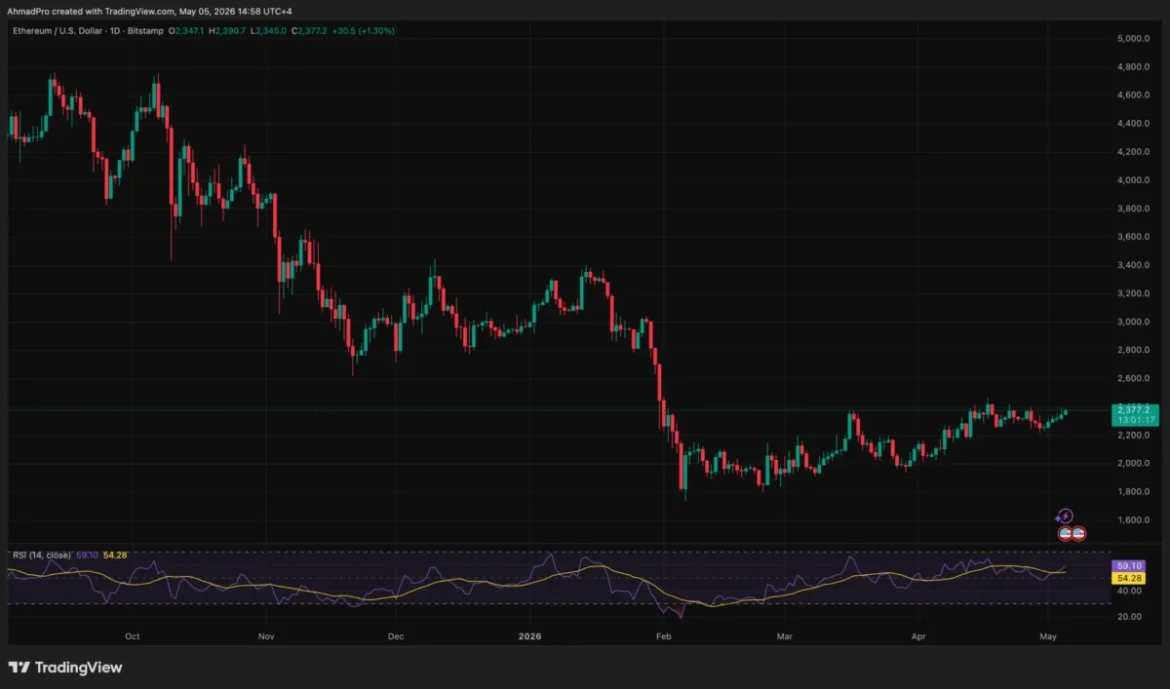
Ethereum’s 4.0% weekly gain, while appearing positive in isolation, paints a more nuanced picture when juxtaposed with Bitcoin’s performance. Measured against Bitcoin’s 5.5% rise and its actual day-on-day print of -0.1%, Ethereum’s weekly advance can be more accurately characterized as stagnation. The ETH/BTC trading ratio continues to compress, a trend largely attributed to the structural redirection of institutional capital. Flows into Bitcoin ETFs are reportedly diverting funds that might otherwise have been allocated to Ethereum.
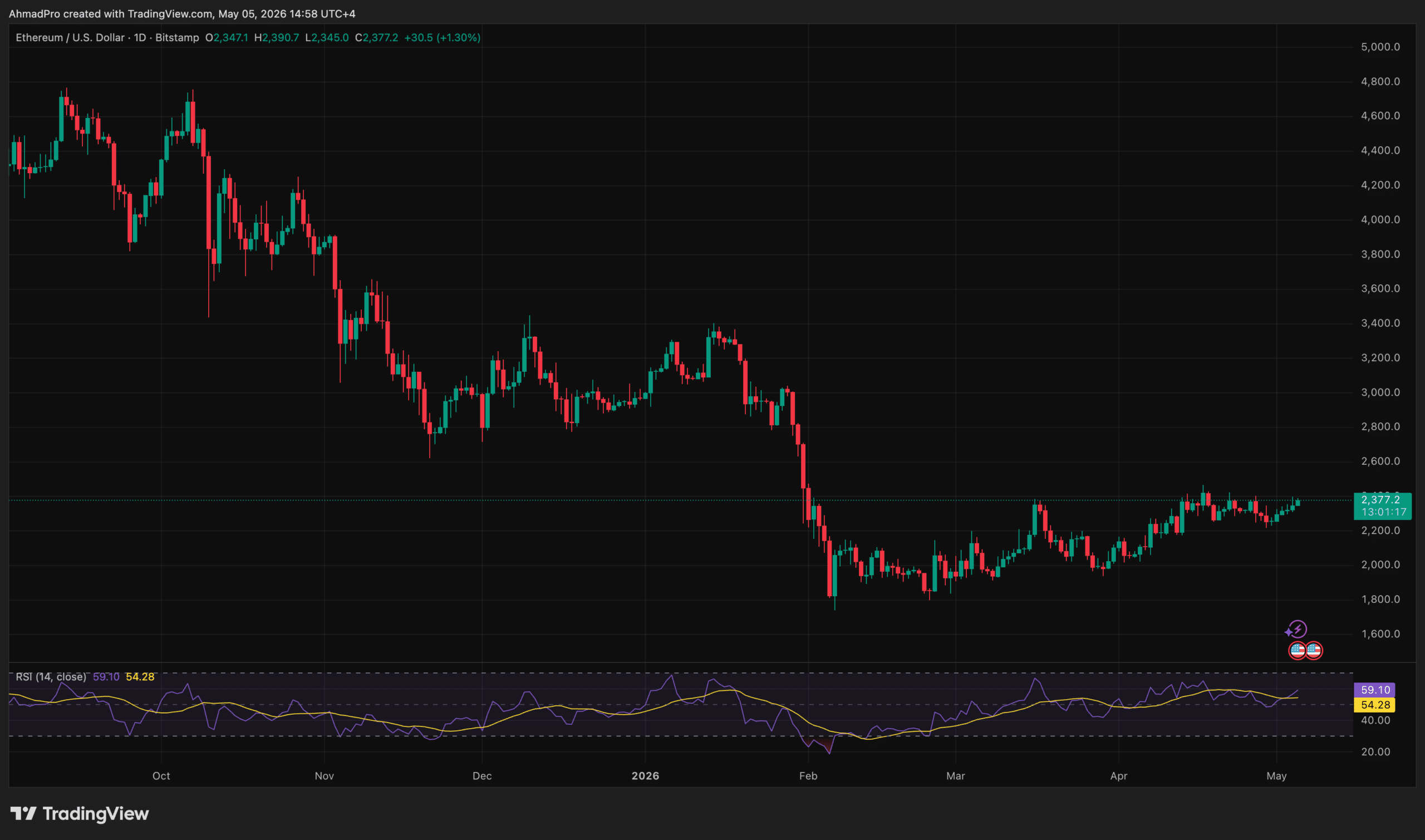
While Ethereum ETF products have experienced inflows, including a notable 10-day streak that has provided some price stabilization, the pace of these inflows lags significantly behind those of Bitcoin products. Furthermore, on-chain activity for Ethereum has not generated the kind of spot-driven demand that would validate a robust breakout, instead suggesting a more gradual upward drift. Data from Coinglass indicates a growing open interest in Ethereum derivatives without a corresponding increase in spot market accumulation. This divergence has been identified as a recurring pattern that often precedes failed rallies rather than confirmed upward trends.
Should Ethereum manage to sustain a price above $2,500, particularly if driven by a rotation of profits from Bitcoin holdings, it could signal the commencement of a traditional altcoin season. This scenario would likely be further validated by accelerated ETF inflows and a resurgence in decentralized finance (DeFi) activity. However, a breach below the $2,200 level on elevated trading volumes would suggest that the recent weekly recovery is corrective rather than impulsive, potentially reintroducing the April lows as a significant support level.
Solana and Dogecoin: Facing Structural Ceilings
Solana’s 0.9% dip to $84.84 is less significant as a daily metric than its position within a broader chart pattern. The supply zone between $90 and $94 has consistently acted as a ceiling for every substantial Solana rally since early spring. The current price remains below this resistance level, and there is no readily apparent catalyst to fundamentally alter this structural resistance.
While Solana’s ETF products, such as Bitwise’s BSOL, have attracted assets, the market capitalization constraint for SOL remains a significant factor. Institutional flows that can move Bitcoin by several percentage points have a less pronounced impact on Solana’s smaller float, even if the absolute dollar amount of investment appears substantial. This means that for SOL to break out of its current range, it would likely require a significantly larger influx of capital compared to Bitcoin.
Dogecoin’s situation, while structurally different from Solana’s, leads to a similar conclusion. DOGE experienced a 1.0% decline on the day, settling at $0.1117, despite retaining a 12.4% gain over the past seven days, making it the strongest performer among the major cryptocurrencies on a weekly basis. However, the Altcoin Season Index, a broader measure of altcoin market health, remains subdued. This indicates that Dogecoin’s recent weekly surge was primarily driven by its own momentum cycle rather than a widespread rotation of capital into altcoins.
Previous analysis of Dogecoin and the triggers for altcoin seasons has consistently identified Bitcoin dominance as the primary gating variable. With Bitcoin’s dominance climbing in the wake of the $81,000 breakout, Dogecoin, like other altcoins, faces a structural ceiling that limits the potential for rapid, significant upward moves, irrespective of its open interest levels. The true catalyst for an altcoin season, according to this analysis, is a confirmed and sustained breakout in Bitcoin that exhausts its own upward momentum, thereby compelling institutional capital to rotate down the risk curve into alternative assets. The market has not yet reached this critical juncture.
The current market dynamics highlight a period of intense scrutiny for institutional strategies and the broader health of the cryptocurrency ecosystem. While Bitcoin’s impressive ascent is generating considerable excitement, the lack of corresponding strength in altcoins raises pertinent questions about the sustainability and breadth of this rally. The coming days and weeks will be crucial in determining whether this is a temporary divergence or a fundamental shift in how institutional capital is being allocated within the digital asset space.
Disclaimer: Coinspeaker is committed to providing unbiased and transparent reporting. This article aims to deliver accurate and timely information but should not be taken as financial or investment advice. Since market conditions can change rapidly, we encourage you to verify information on your own and consult with a professional before making any decisions based on this content.
