The traditional narrative of global finance is currently undergoing a curious inversion, as the world’s most volatile digital asset finds itself in an uncharacteristic state of calm while the bedrock of the international financial system—the U.S. Treasury market—exhibits signs of genuine distress. Historically, Bitcoin has been viewed as a high-beta asset, one that should logically amplify the tremors felt in broader economic indicators. However, as of early 2025, market data reveals a striking decoupling: while bond market volatility has surged to its highest levels since March, Bitcoin options traders are pricing in a period of relative stability, marking a rare moment where the perceived risk in sovereign debt is outpacing that of the cryptocurrency sector.
A Surge in Sovereign Debt Uncertainty
The primary indicator of this shift is the MOVE Index (Merrill Lynch Option Volatility Estimate), which tracks the implied volatility of U.S. Treasury options. Over the past week, the index has climbed sharply, moving from a baseline of approximately 80 to levels near 104. This represents the highest volatility reading in the bond market since March 2024, signaling that professional investors are scrambling to hedge against an increasingly unpredictable interest rate environment.
The root of this nervousness lies in the macroeconomic triad currently weighing on the U.S. economy: persistent inflation concerns, climbing energy prices, and a palpable lack of clarity regarding the Federal Reserve’s future monetary policy path. When the yield on the 10-year U.S. Treasury briefly touched the 5.2% threshold, the shockwaves were felt across all asset classes. In a standard economic climate, such a rapid rise in yields—which serve as the "risk-free" benchmark for global pricing—would force a repricing of every other asset, including digital currencies. Yet, despite the pressure, Bitcoin’s expected volatility has remained remarkably subdued.
Bitcoin’s Uncharacteristic Stability
Contrasting the volatility in government bonds, the 30-day Bitcoin implied volatility index, known as BVIV and provided by Volmex, has been hovering near the 37 mark. This is exceptionally close to its 2026 low of approximately 35. To place this in perspective, the Cboe VIX—which measures expected volatility in the S&P 500—is also trading near its yearly lows around 14.
This creates a peculiar market environment where the traditional "safe-haven" asset is exhibiting higher levels of expected turbulence than the "risk-on" asset. For years, Bitcoin was defined by its rapid price swings, often reacting violently to even minor changes in macroeconomic data. The current divergence suggests a maturation of the Bitcoin market, or perhaps a temporary exhaustion of the speculative forces that typically drive its volatility. While Bitcoin’s rally did stall as bond yields climbed, the options market is not currently pricing in the kind of catastrophic downward pressure that would normally accompany such a significant shift in financial conditions.
The Macroeconomic Chronology and Yield Pressure
The timeline of this divergence can be traced back to the most recent fiscal policy announcements and the subsequent reaction in the bond market. Early in the week, as energy costs began to tick upward, traders began pricing in a more hawkish stance from the Federal Reserve. As bond prices fell and yields rose, liquidity tightened across the board.
In past market cycles, this tightening phase would have triggered a "risk-off" cascade, leading to a massive liquidation of crypto-assets. However, the current cycle has shown a weakened correlation between the MOVE index and Bitcoin’s implied volatility. Recent data suggests that the correlation between bond market stress and crypto price fluctuations has turned negative or drifted toward zero. This indicates that the participants in the Bitcoin market are currently operating under a different set of assumptions—or perhaps a different timeframe—than the institutional players heavily invested in Treasuries.
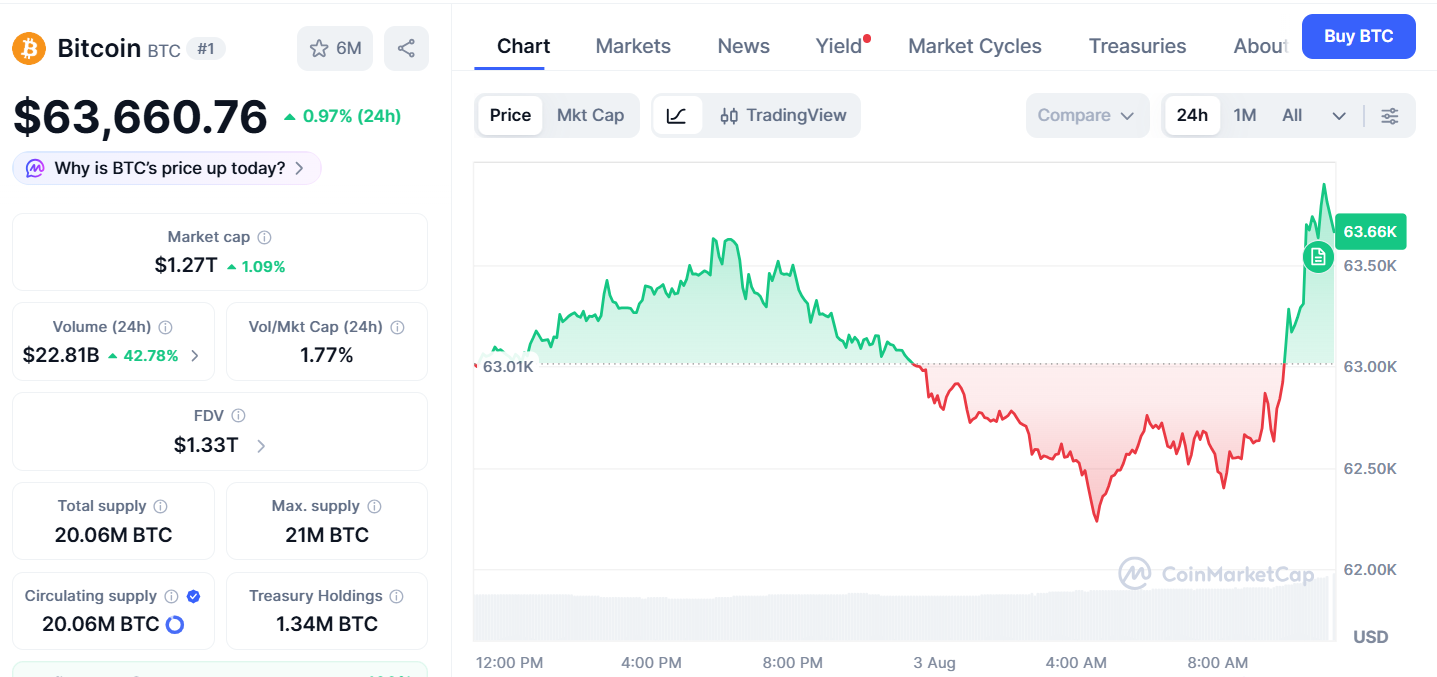
Analysis of the Decoupling
The lack of correlation between the bond market and Bitcoin does not imply that Bitcoin has suddenly become a "safe asset" in the traditional sense. Rather, it highlights a fundamental shift in market positioning. Analysts suggest that the bond market is currently grappling with structural issues: debt sustainability, the impact of federal deficits, and the shifting global demand for dollar-denominated debt. These are long-term, slow-moving crises that require intensive hedging.
Bitcoin, conversely, has been in a period of consolidation. After a series of rallies throughout the previous year, the asset is currently in a "wait-and-see" phase. Traders are essentially waiting for a clear catalyst—be it regulatory clarity, institutional adoption milestones, or a pivot in global liquidity—before committing to the next significant price move. Because this waiting period is shared across many large-scale holders, the options market is currently pricing in a "boredom" or a range-bound environment, rather than the high-octane speculative activity of the past.
Implications for Risk Management
For institutional investors, this divergence presents a complex challenge. Portfolio managers typically use Treasuries as a hedge against equity and crypto volatility. If the bond market remains volatile while the crypto market remains calm, the traditional hedging strategy—long bonds, long crypto—is failing to provide the expected protection.
If bond volatility continues to rise, the potential for a "spillover effect" remains a significant risk. If the Treasury market experiences a "liquidity crunch," forced selling could move into other asset classes regardless of their individual fundamentals. However, the current pricing in the options market suggests that traders are not yet pricing in a systemic event. They are viewing the bond market’s issues as isolated to the mechanics of government debt and the complexities of interest rate policy, rather than a broader market contagion.
The Role of Market Sentiment and Institutional Participation
The professionalization of the Bitcoin market, driven by the introduction of spot ETFs and increased participation from legacy financial institutions, has fundamentally altered the asset’s volatility profile. These institutional players tend to trade in a more calculated manner, utilizing complex options strategies that tend to dampen extreme price swings.
The contrast between the MOVE index and the BVIV index serves as a stark reminder of the current state of global markets. We are witnessing a transition where the bond market is struggling to reconcile the realities of high debt loads and uncertain interest rates, while the crypto market is in a phase of institutional digestion.
Conclusion
The current volatility divergence is a snapshot of a market in flux. While the U.S. Treasury market is currently the focal point of investor anxiety, Bitcoin is exhibiting an unusual, and perhaps temporary, sense of stability. This does not mean the digital asset is immune to macroeconomic forces; rather, it suggests that for the moment, the market’s attention is firmly fixed on the traditional financial system’s capacity to navigate a difficult interest rate environment.
As the year progresses, market participants will be watching closely to see if this decoupling persists. Should the bond market volatility stabilize, Bitcoin may resume its standard correlation with risk assets. However, if the current trend continues, it may force a fundamental re-evaluation of how digital assets are integrated into multi-asset portfolios. For now, the "volatile" asset remains calm, while the "safe" asset shows the strain of a complex global economic climate. Whether this is a sign of Bitcoin’s growing maturity or merely a lull before a larger market correction remains to be seen. The coming weeks, shaped by upcoming economic data and central bank commentary, will likely serve as the ultimate test of this surprising market divergence.