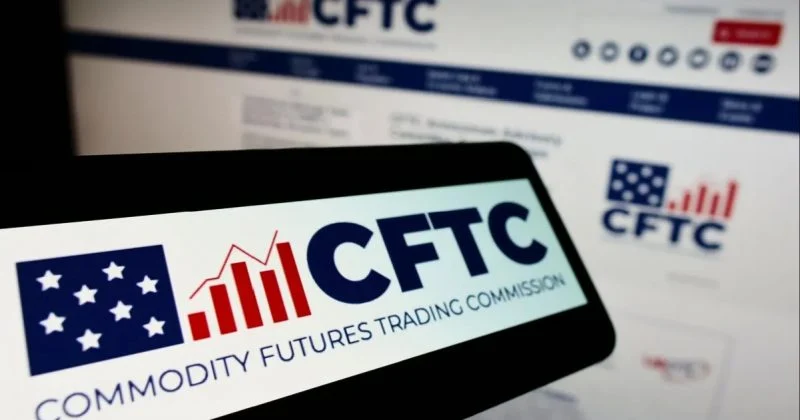
In a decisive move to establish federal oversight over digital assets without waiting for congressional consensus, the Commodity Futures Trading Commission (CFTC) has submitted a sweeping regulatory framework for crypto asset transactions and markets to the White House’s Office of Management and Budget (OMB). Federal records indicate that the OMB officially received the agency’s proposal on September 17, marking a critical milestone in the ongoing effort to integrate decentralized finance and digital commodities into the traditional U.S. financial regulatory perimeter.
The initiative represents a proactive strategy by federal financial regulators to assert jurisdiction over an industry that has long navigated a complex and uncertain legal landscape. By utilizing its existing statutory authorities under the Commodity Exchange Act (CEA), the CFTC aims to bypass legislative gridlock in Washington and create a customized compliance pathway for digital asset exchanges, market participants, and developers of financial technology.
Background and Regulatory Context
The impetus behind the CFTC’s aggressive rulemaking stems from years of legislative delays on Capitol Hill. While various congressional committees have debated comprehensive market structure bills—such as the stalled CLARITY Act in the U.S. Senate—lawmakers have struggled to reach a bipartisan consensus on how to divide regulatory authority between the CFTC and the Securities and Exchange Commission (SEC). This jurisdictional tug-of-war has historically left market participants vulnerable to enforcement-heavy regulation rather than clear, prescriptive rules.
In response to this legislative vacuum, CFTC leadership has pivoted toward administrative solutions. In August, CFTC Chairman Michael Selig outlined an ambitious innovation agenda during the inaugural meeting of the agency’s Innovation Advisory Committee. The agenda targets several fast-growing sectors, including crypto assets, artificial intelligence-related compute markets, and event-based prediction markets. Selig emphasized that establishing clear federal rules is an absolute necessity to prevent financial innovation from migrating to more hospitable foreign jurisdictions.
"I’ve directed the CFTC staff to begin exploring rules to codify a CFTC market structure for crypto assets using the agency’s existing authorities," Selig stated during the advisory committee meeting. "This could enable current registrants as well as non-registrant crypto exchanges to be designated by the CFTC as a type of DCM known as a crypto asset market and offer crypto asset trading on a leveraged or margined basis subject to purpose-fit rules under the CFTC’s regulatory oversight."
Mechanics of the Proposed Framework
At the core of the CFTC’s submission to the OMB is a mechanism designed to establish a novel category of designated contract market (DCM) specifically tailored for digital assets. Under the current regulatory regime, DCMs are subject to rigorous statutory requirements designed for traditional agricultural, energy, and financial futures contracts. The new framework seeks to adapt these standards to the unique technological and operational characteristics of blockchain-based assets.
If the proposal clears the OMB review process and subsequent rulemaking hurdles, it could permit both established institutional registrants and native crypto exchanges to operate under a unified federal umbrella. Crucially, the framework would allow these platforms to offer crypto asset trading on a leveraged or margined basis to retail and institutional customers alike, provided they adhere to purpose-fit risk management, customer protection, and anti-money laundering protocols.
Furthermore, the initiative intersects with the agency’s broader efforts to accommodate decentralized technologies. The CFTC recently extended no-action relief to qualifying providers of passive trading software. This specific relief allows developers and operators to connect users to regulated derivatives markets without registering as introducing brokers, provided they meet strict operational conditions designed to ensure they do not take custody of customer funds or actively solicit trades.
The emerging framework could eventually apply to a wide array of access points, including non-custodial crypto wallets and sophisticated trading interfaces that offer exposure to regulated derivatives, such as perpetual contracts, futures, and event-based prediction markets.
Chronology of Recent Regulatory Actions
The CFTC’s submission to the OMB is part of a broader, coordinated push by U.S. financial regulators to modernize their rulebooks in light of rapid technological advancements in digital assets. A chronological review of recent actions highlights the shifting regulatory posture:
- August: CFTC Chairman Michael Selig announces an expansive innovation agenda at the Innovation Advisory Committee, directing staff to explore administrative pathways for a crypto market structure.
- September 17: The White House’s Office of Management and Budget formally receives the CFTC’s proposed framework covering crypto asset transactions and markets.
- Early September: The CFTC extends no-action relief to qualifying providers of passive trading software, clarifying the legal status of developers connecting users to derivatives markets without acting as introducing brokers.
- September (Concurrent SEC Action): The SEC approves a five-year conditional exemption for select blockchain-based platforms, permitting them to facilitate tokenized securities trading through automated market makers (AMMs) and liquidity pools without undergoing traditional exchange registration.
Broader Implications for the Digital Asset Ecosystem
The concurrent actions by both the CFTC and the SEC signal a notable shift toward functional, accommodative regulation. While the SEC’s recent temporary exemption addresses tokenized traditional securities and automated liquidity pools, the CFTC’s initiative targets the foundational trading infrastructure of digital commodities and derivatives.
Industry stakeholders and legal experts have offered cautious optimism regarding the CFTC’s approach. For years, digital asset exchanges operating in the United States have faced a binary choice: register under ill-fitting traditional frameworks or face severe enforcement actions for operating unregistered platforms. By creating a dedicated "crypto asset market" designation under existing statutory authority, the CFTC is attempting to offer a viable compliance bridge.
However, the path to implementation remains lengthy. The proposal is currently undergoing internal review at the OMB, where federal agencies evaluate the economic impact, interagency coordination, and regulatory burden of proposed rules. Once the OMB completes its review, the framework will return to the CFTC commissioners for a formal vote.
If approved by a majority of the commission, the agency will publish the text in the Federal Register to solicit public comments from industry participants, academics, consumer advocates, and traditional financial institutions. Following the public comment period, staff will review the feedback, make necessary revisions, and draft a final rule that must once again win commission approval before taking legal effect.
Fact-Based Analysis of Market Impact
The potential implementation of the CFTC’s crypto market structure framework carries significant implications for market liquidity, regulatory compliance costs, and institutional adoption.
On the positive side, clear administrative rules developed under the CFTC’s purview would provide legal certainty for domestic exchanges and liquidity providers. By establishing clear standards for margin and leverage, the agency could bring a substantial volume of offshore derivatives trading back onshore, enhancing market depth and price discovery while simultaneously improving consumer protections. The integration of passive software providers and non-custodial wallet interfaces into the regulatory framework also demonstrates a pragmatic willingness to accommodate decentralized architectures.
Conversely, challenges remain. Compliance with DCM requirements, even adapted ones, demands significant capital, technological infrastructure, and legal overhead. Smaller decentralized protocols and emerging startups may find the regulatory compliance burden prohibitive, potentially consolidating market power among well-capitalized institutional exchanges. Furthermore, because these rules are being promulgated under existing statutory authorities without new legislation from Congress, they could remain susceptible to legal challenges from industry participants or state-level regulators who dispute the boundaries of the agency’s mandate.
As the OMB review process unfolds, market participants across the digital asset and traditional financial sectors will be closely monitoring the text of the proposal for specific details regarding capital requirements, custody standards, and the exact criteria required to secure a crypto asset market designation.