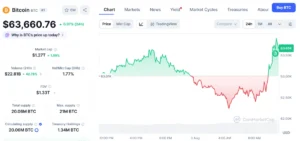
Bitcoin is currently exhibiting a profound contrarian signal, as on-chain data reveals that more than 10 million BTC are now held below their acquisition cost. This significant development places a growing portion of the market "underwater," a condition that has historically coincided with major market turning points and triggered intense debate among analysts and investors regarding whether the latest price decline is nearing a definitive bottom. The sheer volume of unrealized losses across the network underscores a period of heightened investor stress, yet simultaneously, it presents a scenario often associated with accumulation phases preceding market recoveries.
A Historic Threshold: 10 Million BTC in Unrealized Loss
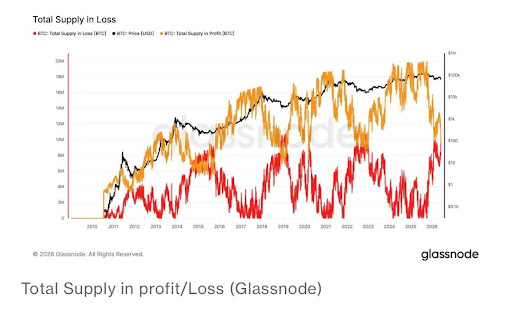
Recent on-chain observations, particularly highlighted by analyst Ali Martinez and corroborated by data from Glassnode, indicate a remarkable shift in Bitcoin’s market positioning. Glassnode’s "Total Supply in Loss" metric shows that approximately 10.46 million BTC are currently being held at an unrealized loss. Considering Bitcoin’s circulating supply, which hovers just under 19.7 million coins (out of a maximum 21 million), this figure represents roughly 53% of all coins currently in circulation. This means that for more than half of all circulating Bitcoin, the price at which they were last moved on-chain is higher than the current market price.
The significance of this threshold is amplified when viewed through the lens of Bitcoin’s historical market cycles. Previous major market bottoms have frequently materialized when the amount of BTC held at a loss climbed beyond the 10 million coin mark. Such conditions emerged during some of Bitcoin’s deepest corrections, including the protracted bear market of 2018, the swift capitulation event of March 2020 (the "COVID crash"), and the severe downturn of late 2022 following the collapse of FTX and Terra/Luna. In each of these instances, a substantial increase in the supply held at a loss preceded a period of consolidation, eventually giving way to prolonged and robust recoveries. The current situation, with over 10 million BTC underwater, mirrors these historical precedents, leading many to scrutinize whether the market is on the cusp of a similar reversal.
Understanding "Underwater Supply" and Acquisition Cost

To fully appreciate the implications of this data, it is crucial to understand what "supply in loss" signifies. In the context of on-chain analysis, the acquisition cost of a Bitcoin is typically determined by the price at which it was last transacted or moved from one wallet to another. When the current market price falls below this last transacted price, the holder is said to be "underwater" or holding an unrealized loss. These losses are only "realized" if the holder decides to sell their Bitcoin at the lower price.
The "Total Supply in Loss" metric aggregates all Bitcoin whose current market value is below their respective acquisition costs. This metric serves as a powerful indicator of market sentiment and potential selling pressure. A rising supply in loss suggests that a larger portion of investors are experiencing financial discomfort, which can lead to capitulation events where holders sell their assets at a loss. However, paradoxically, extremely high levels of supply in loss can also signal an impending bottom, as the incentive to sell diminishes for those already deeply underwater.
Chronology of Market Stress and Shifting Profitability
Bitcoin’s journey from its all-time highs above $73,000 in March 2024 to its current trading range around $63,000 has been marked by a significant recalibration of market profitability. As the price retreated, the number of coins held in profit contracted, while the amount of supply sitting at a loss expanded considerably. This shift is a natural consequence of market corrections, where newer entrants or those who bought near the peak find their holdings devalued.
The period leading up to the current observation saw Bitcoin’s price fall substantially from its cycle highs. Recent market data indicates BTC trading around $63,242, representing a decline of over 40% from its peak. This correction has been influenced by a confluence of factors, including macroeconomic uncertainties, persistent inflation concerns, shifts in monetary policy expectations, and specific crypto-related developments such as outflows from spot Bitcoin ETFs and regulatory pressures. These broader market dynamics help explain why such a large share of the network has slipped into unrealized losses, pushing the market into a zone historically associated with severe downturns and heightened investor stress.
Deeper Dive into On-Chain Metrics: NUPL and SOPR

Beyond the "Total Supply in Loss," other on-chain indicators provide further insights into the current market state:
-
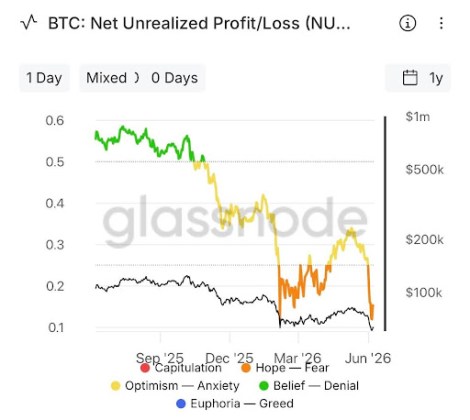
Net Unrealized Profit/Loss (NUPL): This metric measures the overall profit or loss status of the Bitcoin market. It is calculated by subtracting the total unrealized loss from the total unrealized profit. NUPL categorizes market sentiment into zones: "Greed," "Optimism," "Hope-Fear," "Capitulation," and "Fear." The latest Glassnode data reveals that Bitcoin’s NUPL indicator has recently fallen into the "Hope-Fear" zone. This follows a period where it had spent much of the previous year in more optimistic territory, reflecting a significant deterioration in overall market confidence. Historically, these lower NUPL ranges have reflected periods when confidence has been shaken, but crucially, they often precede recoveries rather than prolonged capitulation. The "Hope-Fear" zone indicates that while a significant portion of the market is in unrealized loss, a complete surrender by all market participants (true capitulation) has not necessarily intensified further. This suggests a phase where investors are grappling with uncertainty, torn between the hope of recovery and the fear of further declines.
-
Spent Output Profit Ratio (SOPR): This indicator measures whether coins are being spent (sold) at a profit or loss. A SOPR value above 1 indicates that, on average, coins are being sold for a profit, while a value below 1 suggests they are being sold at a loss. When SOPR consistently stays below 1, it often signifies a capitulation phase where investors are realizing losses. A sustained period of SOPR below 1, followed by a strong bounce above 1, can be a powerful signal of a market bottom and the beginning of a new uptrend. While not explicitly mentioned in the original article, the context of high supply in loss and falling NUPL often correlates with SOPR values dipping below or struggling to stay above 1, reinforcing the narrative of market stress.
These indicators, when viewed collectively, paint a picture of a market that has undergone a substantial correction, leading to widespread unrealized losses and a pervasive sense of apprehension among investors.
The Psychology of the Market: Diminishing Selling Pressure
This is where the discussion becomes particularly nuanced. Analyst Ali Martinez argues that elevated loss holdings can paradoxically reduce the intensity of selling activity. When a large number of investors are already deeply underwater, the incentive to liquidate positions often diminishes. Rather than locking in significant losses, many holders—especially long-term investors or those with strong conviction—choose to "HODL" (hold on for dear life) and wait for a recovery. This psychological shift can cause selling pressure to gradually weaken, as the pool of willing sellers at current prices shrinks.
The concept of "capitulation" is central to understanding market bottoms. Capitulation is the final phase of a bear market where investors, overwhelmed by fear and exhaustion, sell their holdings at any price, leading to a sharp, final price drop. However, when the majority of potential sellers have already exited, or are unwilling to sell at current depressed prices, the market can stabilize. The current situation, with over 10 million BTC in loss, suggests that a significant portion of the market may have already entered this "HODL" mentality, resisting further selling. This resilience among long-term holders is a critical factor in forming a market bottom.
Analyst Perspectives and Market Debate
The debate among market analysts regarding the current situation is robust. One school of thought, championed by analysts like Ali Martinez, posits that the confluence of high unrealized losses, weak sentiment (as indicated by NUPL), and a steep decline from previous highs has historically appeared near major market bottoms. This perspective suggests that the market may be in an "accumulation zone," where astute investors and institutions begin to acquire Bitcoin at what they perceive to be discounted prices, anticipating a future recovery. They might point to the "Hope-Fear" zone of NUPL as evidence that the worst of the emotional selling might be over, even if full capitulation wasn’t reached.
Conversely, some analysts might argue for caution, suggesting that while these signals are compelling, they do not guarantee an immediate reversal. They might emphasize that macroeconomic headwinds, such as persistent inflation, rising interest rates, or a broader economic downturn, could still exert downward pressure on risk assets like Bitcoin, potentially extending the period of consolidation or even leading to further dips. These analysts might look for clearer signs of institutional accumulation or a definitive shift in the macroeconomic landscape before declaring a bottom.
Despite these differing viewpoints, the consensus acknowledges that the scale of unrealized losses across the network indicates that Bitcoin is once again trading in a zone often associated with significant turning points. While a definitive bottom remains unconfirmed, the historical correlation between such high levels of underwater supply and subsequent market recoveries provides a compelling narrative for those seeking signs of an impending rebound.
Broader Economic and Market Implications
The current state of Bitcoin’s market has several broader implications:
- Investor Behavior: The prolonged period of unrealized losses tests the conviction of all investors. For new entrants, it can be a discouraging experience, potentially leading to a flight from riskier assets. For long-term holders, it reinforces the importance of a long-term investment horizon and the ability to weather significant volatility.
- Miner Profitability: Bitcoin miners, who are critical to the network’s security, are also impacted by price declines. When prices fall, their revenue (denominated in BTC) decreases, while their operational costs (electricity, hardware) remain relatively stable or even increase. This can lead to miner capitulation, where less efficient miners are forced to shut down, potentially impacting network hash rate and security in the short term, but ultimately strengthening the network by removing weaker players.
- Market Maturity: Each cycle of boom and bust contributes to the maturation of the Bitcoin market. As more data becomes available and more sophisticated analytical tools are developed, investors and institutions are better equipped to understand and navigate these cycles. The current situation, with its clear on-chain signals, is another chapter in Bitcoin’s journey towards becoming a more established asset class.
- Institutional Interest: While outflows from spot Bitcoin ETFs have recently been observed, a prolonged period of consolidation at these levels, especially if it coincides with signs of an impending bottom, could reignite institutional interest. Large-scale investors often seek entry points during periods of perceived undervaluation, making the current "accumulation zone" potentially attractive.
The combination of over 10 million BTC held at a loss, widespread weak sentiment, and a significant price decline from recent highs aligns with historical patterns observed near major market bottoms. While the exact timing of a reversal is inherently unpredictable, the current on-chain data presents a compelling case for Bitcoin being in a critical phase. The market is demonstrating resilience, with many holders opting to wait out the downturn rather than realizing losses, a behavior that often precedes a stabilization and eventual recovery. As the crypto community watches closely, the present conditions suggest that Bitcoin is trading in a territory that has, in the past, offered significant opportunities for accumulation and laid the groundwork for future bull runs.