Decentralized exchange (DEX) Uniswap has launched its inaugural permissioned liquidity pools on Uniswap V4, a strategic move aimed at integrating regulated financial assets into the burgeoning on-chain economy. This initiative, developed in collaboration with prominent tokenized asset issuers Securitize, Superstate, and Dowgo, marks a significant evolution for the DeFi giant, signaling a calculated pivot towards regulatory compliance within its inherently permissionless architecture. The deployment of these pools is designed to facilitate the secure and compliant trading of tokenized securities, addressing a critical barrier to institutional adoption and expanding the reach of decentralized finance into traditional financial markets.
The decision to introduce permissioned pools underscores Uniswap’s ambition to become a foundational infrastructure for a broader spectrum of on-chain assets. Hayden Adams, CEO of Uniswap, articulated the vision, stating, "Uniswap protocol is infrastructure for all onchain trading. Some regulated tokens and use cases require permissioned trading. Uniswap v4 can now more easily support these use cases through this new hook." This statement highlights the recognition that while open, permissionless access is a core tenet of DeFi, the integration of regulated assets necessitates a more controlled environment to meet stringent legal and compliance requirements.
The Strategic Pivot: Embracing Regulatory Compliance
The newly launched permissioned pools represent a deliberate architectural shift within Uniswap’s ecosystem. Unlike its traditional permissionless pools, which allow anyone to provide liquidity or swap tokens without restriction, these new pools will enforce an allowlist of approved wallets. This mechanism will govern swaps and liquidity provision for tokenized assets such as stocks and exchange-traded funds (ETFs). Crucially, any entity identified as sanctioned will be automatically flagged and blocked from participation, a fundamental requirement for adherence to global anti-money laundering (AML) and counter-terrorist financing (CTF) regulations.
This integration of compliance checks, while seemingly a step towards centralization for a portion of the DEX, is framed as a necessary measure to unlock the vast potential of regulated tokenized assets. It enables Uniswap to operate within existing legal frameworks, bridging the gap between the freewheeling nature of decentralized finance and the established protocols of traditional finance (TradFi). This approach allows institutions and accredited investors to engage with DeFi liquidity without compromising their regulatory obligations, thereby expanding the potential user base and capital flow into the decentralized ecosystem.
Uniswap V4 and the Power of ‘Hooks’
The implementation of permissioned pools is made possible by the innovative architecture of Uniswap V4, particularly its "hooks" feature. Uniswap V4, first unveiled in June 2023 and slated for full deployment in 2024, introduces a highly modular and customizable design. Hooks are external smart contracts that can be attached to liquidity pools, allowing developers to add custom logic that executes at various points during a pool’s lifecycle, such as before or after a swap, or when liquidity is added or removed.
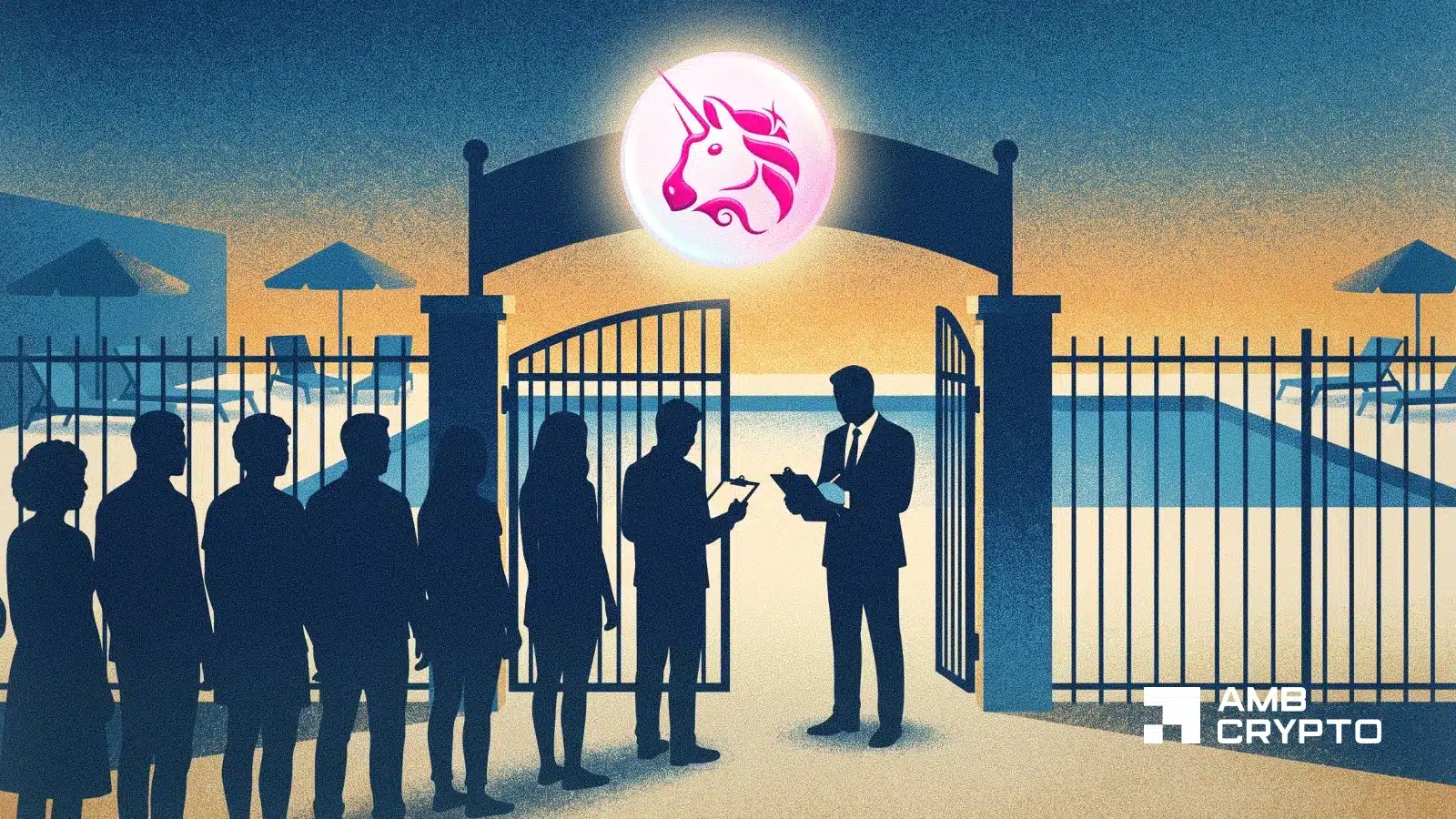
This modularity is critical for the permissioned pools. Instead of altering the core Uniswap protocol, which remains decentralized and permissionless, the compliance logic is encapsulated within specific hooks. These hooks can verify wallet addresses against an allowlist, perform sanction screenings, or integrate Know Your Customer (KYC) procedures, all before a transaction is allowed to proceed. This design ensures that the core Uniswap infrastructure retains its decentralized and open nature, while simultaneously offering the flexibility to create specialized, compliant environments for specific asset classes. The V4 architecture, therefore, positions Uniswap not just as a trading venue but as a highly adaptable platform capable of hosting a diverse range of financial applications, from fully permissionless to strictly regulated.
Partnerships Driving Innovation: Securitize, Superstate, and Dowgo
The success of Uniswap’s foray into regulated tokenized assets hinges on robust partnerships with established players in the tokenization space. Securitize, Superstate, and Dowgo are key collaborators in this initiative. Securitize is a leading digital asset securities firm, specializing in issuing and managing tokenized securities, including funds and private equity. Superstate focuses on bringing traditional financial products, like U.S. Treasury bills, onto the blockchain in a tokenized format. Dowgo is also involved in the tokenization of real-world assets, offering expertise in structuring and distributing these digital instruments.
These partnerships are crucial because they provide the necessary infrastructure and expertise for issuing, managing, and ensuring the compliance of the underlying tokenized assets. By integrating their offerings with Uniswap V4’s permissioned pools, these firms gain access to Uniswap’s deep liquidity and broad user base, while Uniswap benefits from their regulatory know-how and pipeline of tokenized securities. This synergy is essential for scaling the tokenization market, providing a compliant and efficient on-chain trading venue for assets that would otherwise remain siloed in traditional financial systems. The collaboration demonstrates a growing trend of established blockchain firms working hand-in-hand with DeFi protocols to build a more integrated financial future.
The Trillion-Dollar Horizon: Tokenization’s Untapped Potential
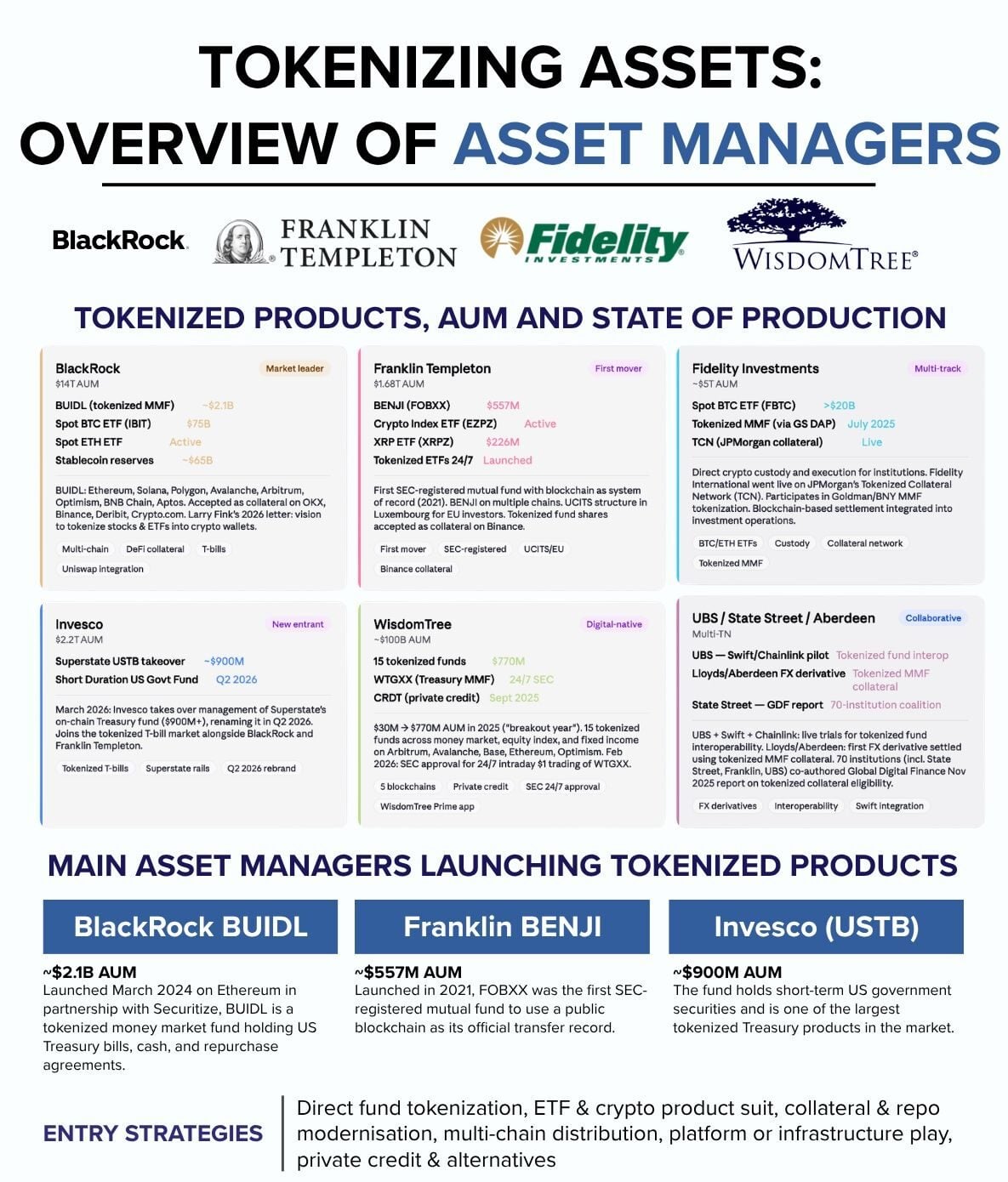
Uniswap’s strategic shift is driven by the immense projected growth of the tokenized assets market. Currently valued at approximately $36 billion, industry analysts widely anticipate this market to surge to an astonishing $11 trillion within the next four years. This exponential growth is underpinned by several compelling advantages that tokenization offers over traditional asset management.
Tokenization involves converting rights to an asset into a digital token on a blockchain. This process brings numerous benefits:
- Fractional Ownership: Making high-value assets (like real estate, fine art, or private equity) accessible to a broader investor base by allowing ownership of small fractions.
- Increased Liquidity: By breaking down assets into smaller, easily tradable units and making them available 24/7 on global blockchains, tokenization can significantly enhance liquidity, particularly for illiquid assets.
- Reduced Costs and Increased Efficiency: Automating processes like settlement, clearing, and record-keeping through smart contracts can drastically cut down on administrative costs and processing times.
- Enhanced Transparency and Auditability: All transactions are recorded on an immutable ledger, providing a transparent and auditable trail.
- Global Accessibility: Removing geographical barriers, allowing investors worldwide to participate in markets previously restricted by national borders and complex cross-border regulations.
Assets poised for significant tokenization include real estate, private equity, debt instruments, commodities, and even intellectual property. Firms like BlackRock and Citi have publicly acknowledged the transformative potential of asset tokenization, with BlackRock CEO Larry Fink referring to tokenization of securities as "the next generation for markets." Uniswap’s move positions it to capture a significant share of this anticipated growth by providing a compliant trading venue for these assets, attracting institutional capital that has, until now, largely remained on the sidelines due to regulatory uncertainty.
Navigating the Regulatory Landscape
The journey towards integrating regulated assets into DeFi is fraught with regulatory complexities. The U.S. Securities and Exchange Commission (SEC) maintains a "technology-neutral" stance on tokenized securities. This means that if an asset qualifies as a security under traditional legal definitions (like the Howey Test), it remains a security regardless of whether it’s traded on a blockchain. Consequently, all traditional disclosure requirements, market manipulation monitoring, and investor protection rules that apply to conventional securities also apply to their tokenized counterparts.
This regulatory posture has created significant tension between the inherently permissionless ethos of DeFi and the highly regulated nature of TradFi. The DeFi industry has often pushed for exemptions or limited legal liability for non-custodial platforms, arguing that their decentralized nature and lack of intermediaries should place them outside the scope of traditional financial regulations. However, these attempts have been met with strong opposition from traditional stock exchanges and major market operators like Citadel Securities. TradFi players argue that all legal responsibilities, including KYC/AML, investor protection, and market surveillance, must apply to anyone handling tokenized securities, irrespective of whether the platform is custodial or non-custodial. They advocate for a level playing field, emphasizing that the form factor (token vs. traditional share) should not dictate the regulatory burden.
Uniswap’s permissioned pools directly address these regulatory concerns. By implementing allowlists and sanction screening, Uniswap is proactively building a framework that can meet the stringent demands of regulators and traditional financial institutions. This strategic adaptation demonstrates a pragmatic approach by a leading DeFi protocol to navigate the complex legal environment, ensuring that it can participate in the tokenization boom without running afoul of existing laws. It’s an acknowledgment that for DeFi to truly go mainstream and attract institutional capital, it must sometimes compromise on absolute permissionlessness to achieve regulatory clarity and legitimacy.
Impact on Uniswap’s Ecosystem and UNI Tokenomics
The introduction of permissioned pools holds significant implications for Uniswap’s economic model and the value proposition of its native token, UNI. If Uniswap successfully captures even a fraction of the projected tokenization market, it could lead to a substantial increase in trading volume and, consequently, revenue for the protocol.
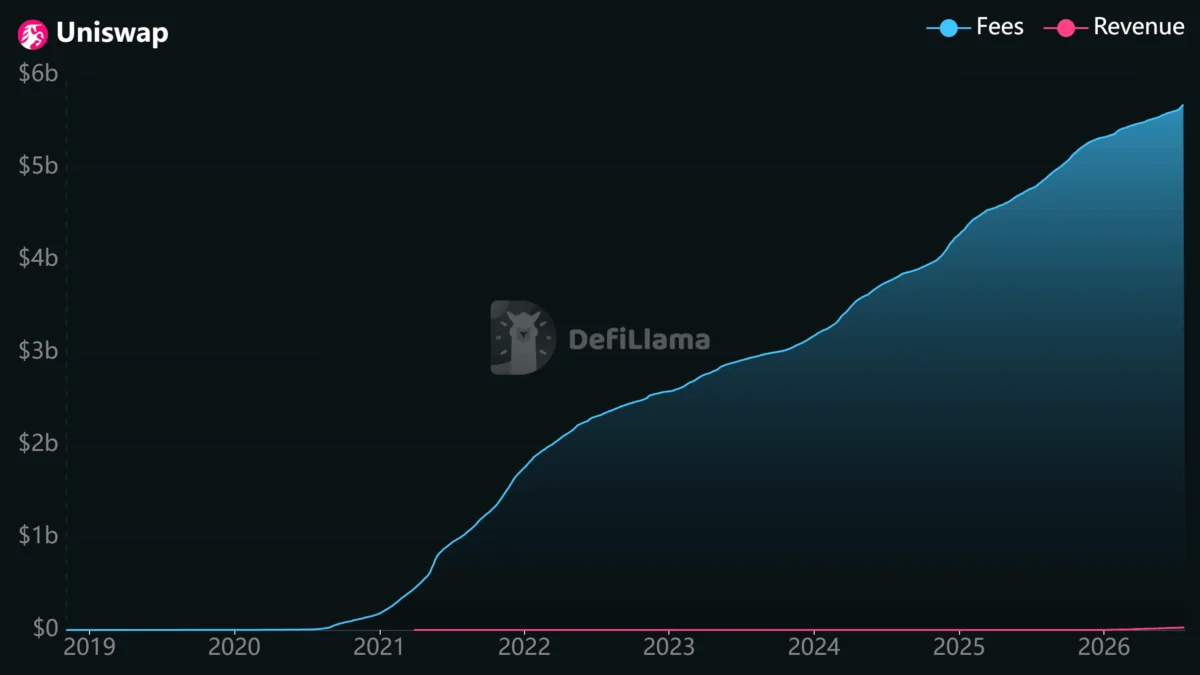
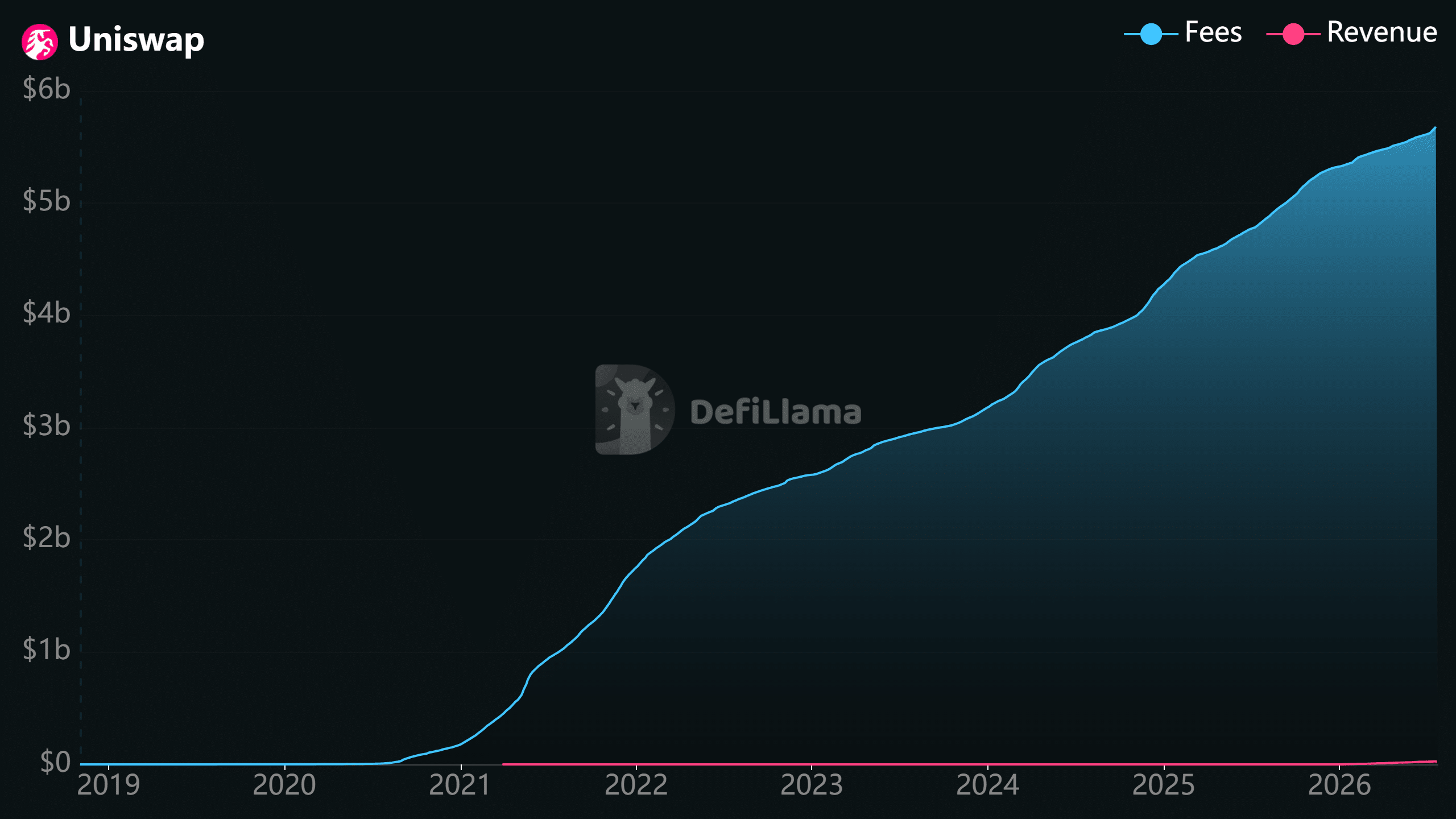
Uniswap has actively diversified its revenue streams in recent months by activating various protocol fees across different versions and chains. To date, the protocol has generated a cumulative $5.6 billion in fees, with the vast majority historically directed to liquidity providers (LPs). The protocol’s direct revenue, however, has remained relatively modest at approximately $27 million. The strategic push for protocol fees, especially those that could be shared with liquidity providers in compliant pools, is designed to drive more revenue directly to the protocol.
A portion of this increased protocol revenue could be channeled towards UNI buybacks and burns. This mechanism, where a portion of fees is used to repurchase UNI tokens from the open market and then permanently remove them from circulation, reduces the total supply of UNI, potentially increasing its scarcity and value. In 2026, Uniswap has reportedly burned between 6 to 8 million UNI tokens, averaging around 1 million UNI per month. A successful foray into regulated tokenized assets could significantly accelerate this burn rate, making UNI a more attractive asset for investors. This move could also bolster the treasury of the Uniswap DAO, providing more resources for ecosystem development and grants.
UNI’s Market Performance and Future Outlook
The market has shown glimpses of UNI’s potential in response to positive developments. Notably, recent traction on the Robinhood Chain fueled a significant rally in July, propelling UNI to surge by nearly 61% from its June lows. At press time, UNI was valued at $3.84 and was trading above its 200-day Moving Average (MA), a key technical indicator that often signals a bullish long-term market structure.
This strong technical posture suggests that UNI could extend its rally, potentially reaching the Q2 peak level of $4.17, which would imply an additional 12% upside potential. The successful implementation and adoption of permissioned pools for tokenized securities could provide a fundamental catalyst for sustained growth, attracting new capital and increasing demand for the token. However, traders remain cautious. A slip below the 200-day MA, currently positioned at $3.6, would invalidate this bullish setup, potentially triggering a pullback to the 50-day MA at $3.3. The long-term trajectory of UNI will largely depend on the tangible success of Uniswap’s strategic shift towards regulated assets and its ability to capture a meaningful share of the burgeoning tokenization market.
Broader Implications for Decentralized Finance
Uniswap’s venture into permissioned pools carries profound implications for the broader decentralized finance landscape. It represents a significant step in the ongoing evolution of DeFi, challenging the conventional understanding of "decentralization" and paving the way for a more integrated financial ecosystem.
- Evolving Definition of Decentralization: This move highlights that decentralization is not a monolithic concept. While the core Uniswap protocol remains permissionless, the ability to create permissioned "enclaves" within it demonstrates a flexible approach. This could lead to a re-evaluation within the DeFi community regarding what constitutes true decentralization and whether hybrid models are necessary for mainstream adoption.
- Rise of "Institutional DeFi": By making DeFi infrastructure compliant with traditional regulations, Uniswap is actively fostering the growth of "institutional DeFi." This segment aims to attract large financial institutions, corporations, and accredited investors who require stringent compliance, security, and legal certainty. Other DEXs and DeFi protocols may follow suit, developing their own compliant solutions to tap into this massive pool of capital.
- Blurring Lines Between TradFi and DeFi: The initiative further blurs the lines between traditional finance and decentralized finance. It indicates a future where blockchain technology underpins both permissioned and permissionless markets, with capital and assets flowing more seamlessly between them. This convergence could lead to hybrid financial products and services that leverage the best of both worlds – the efficiency and transparency of blockchain with the regulatory robustness of traditional markets.
- Setting a Precedent: As one of the largest and most influential DEXs, Uniswap’s move sets a significant precedent. Its success could encourage other DeFi protocols to explore similar compliance-focused strategies, accelerating the mainstream adoption of blockchain-based financial instruments.
- Challenges and Opportunities: While promising, this path is not without challenges. The integration of centralized compliance features into a decentralized protocol could spark ideological debates within the crypto community, with some viewing it as a betrayal of core DeFi principles. However, the opportunity to unlock trillions of dollars in traditional assets for on-chain trading presents a compelling case for this strategic evolution.
In conclusion, Uniswap’s launch of permissioned pools on V4 is a landmark development, signaling a mature and pragmatic approach to innovation within the decentralized finance space. By proactively addressing regulatory requirements and partnering with established tokenization firms, Uniswap is positioning itself at the forefront of the tokenized asset revolution. This strategic pivot not only promises to open new revenue streams and bolster the UNI token’s value but also plays a critical role in shaping the future of finance, bridging the gap between the permissionless innovation of DeFi and the regulated world of traditional financial markets.