CME Group, the world’s leading derivatives marketplace, officially announced on Tuesday its intention to broaden its cryptocurrency derivatives offerings by introducing futures contracts tied to Bitcoin Cash (BCH) and Uniswap (UNI). This strategic expansion, slated for launch on October 19, marks another milestone in the exchange’s ongoing effort to integrate digital assets into the traditional financial ecosystem. Pending final regulatory approval, these new offerings are designed to provide institutional market participants with sophisticated tools for hedging and price discovery, reflecting the growing maturity of the decentralized finance (DeFi) and broader crypto asset sectors.
Contract Specifications and Market Structure
The proposed futures contracts are structured to accommodate both large-scale institutional players and smaller, more agile market participants. According to the company’s official filing, Bitcoin Cash futures will be sized at 250 BCH per contract, while the Micro Bitcoin Cash futures will be set at a smaller threshold of 25 BCH. Similarly, for the Uniswap (UNI) ecosystem, the standard futures contract will cover 10,000 UNI, with the Micro Uniswap futures covering 1,000 UNI.
By offering these "Micro" alternatives, CME Group aims to lower the barrier to entry, allowing traders with smaller capital bases to manage risk without the liquidity constraints associated with standard-sized contracts. This tiered approach has been a hallmark of the company’s strategy since the successful introduction of Micro Bitcoin and Micro Ether futures in previous years, which were instrumental in drawing retail interest into a traditionally institutional-focused platform.
Strategic Context and Historical Chronology
The decision to list BCH and UNI futures follows a highly active year for CME Group in the digital asset space. The exchange has been on a rapid deployment trajectory throughout 2026, systematically adding assets that have demonstrated high market capitalization and significant daily trading volume.
The chronology of CME’s 2026 expansion reveals a clear intent to capture a diverse cross-section of the crypto market:
- Early 2026: CME initiated a surge in new product listings, prioritizing projects with high developer activity and established utility.
- Mid-2026: The exchange rolled out futures contracts tied to Cardano (ADA), Chainlink (LINK), and Stellar (XLM), signaling a shift toward smart-contract-enabled assets.
- Q3 2026: Further expansion included Avalanche (AVAX) and Sui (SUI), targeting the layer-1 infrastructure segment of the market.
- October 2026: The announcement of Bitcoin Cash and Uniswap marks the most recent phase, bridging the gap between established payment-focused blockchains and the burgeoning DeFi sector represented by decentralized exchanges like Uniswap.
This cadence of product launches indicates that CME Group is not merely reacting to market trends but is actively shaping the infrastructure of crypto-finance. By providing regulated, cash-settled futures, the exchange offers a level of security and oversight that is often absent in the fragmented, often volatile, offshore crypto exchanges.
Market Reaction and Price Volatility
The market response to the announcement was immediate and pronounced, highlighting the "CME effect"—a phenomenon where the endorsement of a major exchange often leads to positive price movement as investors anticipate increased liquidity and institutional adoption.
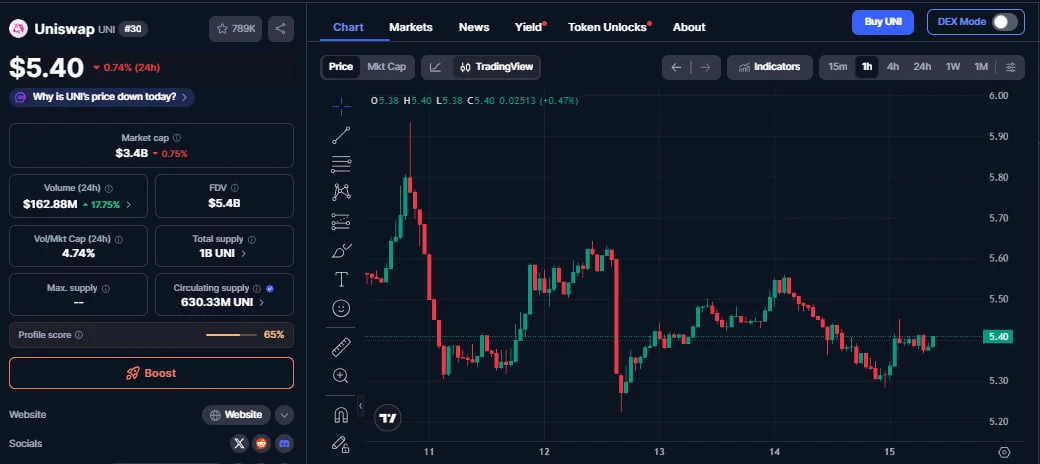
Following the Tuesday announcement, Bitcoin Cash (BCH) experienced a notable rally, climbing approximately 12% as its price moved from $270 to $303. Simultaneously, Uniswap (UNI) saw an 11% increase, rising from $8.70 to $9.70. While these gains reflect investor optimism, analysts suggest that the long-term impact of futures listings is typically more about sustained liquidity and price efficiency than short-term price spikes. The introduction of these contracts allows market participants to take short or long positions, which can actually serve to dampen extreme volatility over time by providing a mechanism for better price discovery.
Institutional Demand and Volume Metrics
CME Group’s push into new assets is underpinned by robust data from the first half of 2026. The company reported an average daily volume (ADV) of 279,800 contracts for its crypto suite during the first six months of the year, alongside an average open interest of 264,600 contracts. These figures represent a substantial portion of the company’s total trading activity, suggesting that institutional interest in crypto-linked derivatives has shifted from speculative curiosity to a core component of portfolio management.
In a press release accompanying the announcement, representatives from CME Group emphasized that the expansion is a direct response to client requests. Institutional fund managers, hedge funds, and family offices have increasingly sought exposure to digital assets but have been restricted by internal compliance mandates that prevent them from holding underlying tokens on unregulated exchanges. By utilizing CME’s regulated futures, these entities can gain synthetic exposure to BCH and UNI while operating within a familiar, high-compliance framework.
Broader Financial Implications
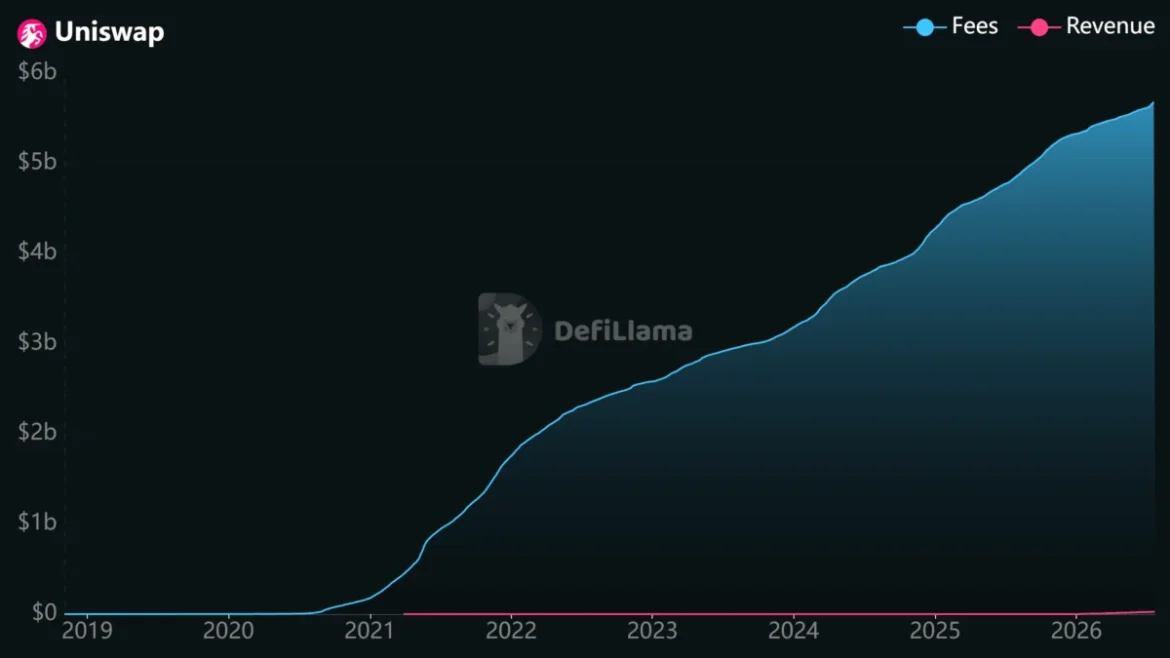
The integration of Uniswap futures, in particular, carries significant symbolic weight. Uniswap represents the backbone of decentralized finance, a sector that operates without intermediaries. By listing UNI futures, CME Group is essentially integrating the mechanics of decentralized finance into the centralized world of traditional finance. This convergence suggests that major exchanges view DeFi not as a competitor, but as a critical segment of the future financial infrastructure.
For the Bitcoin Cash network, the listing serves as a validation of its position as a primary medium of exchange. Despite the emergence of newer, more experimental chains, BCH remains a high-liquidity asset with a proven track record. The inclusion of BCH in the CME lineup likely aims to provide a reliable hedging tool for miners and large-scale holders who remain committed to the Bitcoin fork’s ecosystem.
Risk Management and Regulatory Oversight
One of the most vital aspects of the CME launch is the rigorous regulatory oversight provided by the Commodity Futures Trading Commission (CFTC). Unlike many crypto-native derivatives platforms that operate in jurisdictions with varying levels of transparency, CME products are subject to strict reporting and capital requirements.
This regulatory framework is designed to mitigate systemic risk. By requiring margin deposits and utilizing robust clearinghouse services, CME ensures that both the buyer and the seller of a contract can fulfill their obligations. For institutional investors, this reduces counterparty risk—the danger that one party in a trade will default on their commitment. As crypto markets continue to develop, this "institutional-grade" infrastructure is widely considered a prerequisite for the next wave of capital inflows from pension funds and sovereign wealth funds.
Future Outlook and Strategic Challenges
While the expansion is broadly viewed as a positive development, it is not without challenges. The crypto market remains characterized by rapid technological changes, and the regulatory environment in the United States and abroad remains fluid. CME Group must navigate these complexities while ensuring that its derivatives accurately reflect the underlying spot prices of the assets.
The exchange utilizes the CME CF Cryptocurrency Pricing Benchmarks, which aggregate data from multiple major spot exchanges to determine the settlement price of its futures. This methodology is designed to prevent price manipulation, a common concern in the digital asset space. As CME continues to add new assets, the challenge will be to maintain these rigorous standards while scaling their offerings to meet the demand for more exotic or niche tokens.
Looking forward, industry analysts expect CME Group to continue its aggressive expansion. The focus is likely to shift toward options on these new futures, as well as potential index-based products that allow investors to gain exposure to a basket of crypto assets rather than individual tokens.
Conclusion
The announcement that CME Group will list Bitcoin Cash and Uniswap futures on October 19 is a defining moment for the maturation of the digital asset industry. By providing high-quality risk management tools, the exchange is not only facilitating trading but is also legitimizing these assets within the global financial architecture. As institutional participation continues to grow, the infrastructure provided by traditional stalwarts like CME Group will likely become the bedrock upon which the future of digital finance is built. The positive price movement following the news underscores the market’s appetite for these products and sets the stage for a busy fourth quarter in the derivatives space.