Uniswap, the leading decentralized exchange (DEX) by trading volume, has officially submitted three significant governance proposals aimed at activating protocol fees across multiple blockchain networks and different versions of its platform. This move marks a pivotal moment for the protocol, potentially altering its economic model and the distribution of value within its ecosystem, particularly concerning its native UNI token.
Understanding Protocol Fees: A Fundamental Shift
To grasp the full implications of Uniswap’s proposals, it’s crucial to differentiate between swap fees and protocol fees. In decentralized finance (DeFi), users pay a small fee for each transaction (swap) on a DEX. Historically, the vast majority of these swap fees on Uniswap have been directed to liquidity providers (LPs) – individuals or entities who supply crypto assets to the exchange’s liquidity pools, enabling seamless trading. This model incentivizes LPs to provide the necessary capital, ensuring deep liquidity for traders.
Protocol fees, on the other hand, represent a percentage of these swap fees that are siphoned off and directed to the protocol itself, rather than solely to LPs. This revenue can then be used for various purposes, such as funding development, bolstering a treasury, or, as proposed by Uniswap, for a token burn mechanism. While the Uniswap protocol has long had the technical capability to activate these fees, their implementation requires a governance vote by UNI token holders. Previous discussions and attempts to activate protocol fees have been met with varied opinions, often balancing the need for protocol sustainability with the potential impact on LP profitability and overall competitiveness. The current proposals represent the most comprehensive effort yet to implement this structural change.
The Robinhood Chain Catalyst and Broad Expansion
A significant driver behind the timing and potential impact of these proposals appears to be the recent emergence and rapid adoption of a new Ethereum Layer-2 solution, referred to in the proposals as the "Robinhood chain." This nascent L2, which debuted earlier this month, has quickly attracted considerable attention and liquidity from major decentralized applications, including Uniswap. Within approximately ten days of its launch, Uniswap’s deployment on this new chain remarkably surpassed $1 billion in trading volume, unequivocally demonstrating its growing traction and the immense potential for fee generation.
The first of the three governance proposals specifically targets the activation of protocol fees for both Uniswap V2 and V3 deployments on this burgeoning "Robinhood chain." This strategic focus underscores the perceived value and volume potential emanating from this new Layer-2 environment.
Beyond the "Robinhood chain," the project also seeks to activate fees more broadly across its latest iteration, Uniswap V4. The second proposal encompasses V4 deployments across a wide array of prominent blockchain networks, including Ethereum’s mainnet, Base, Arbitrum, the aforementioned "Robinhood chain," BNB Chain, Polygon, and Optimism. This expansive reach highlights Uniswap’s ambition to standardize its revenue model across its multi-chain presence. Hayden Adams, CEO of Uniswap Labs, further confirmed that a third fee proposal, intended to cover remaining V4 chains not included in the initial submission, would be introduced in the near future, indicating a comprehensive long-term strategy.
Adams articulated the core purpose of these proposed fee activations, stating, "Both [proposals] direct all new protocol fees into the existing UNI burn mechanism. Based on current volumes, especially Robinhood, we expect the impact on UNI burn to be substantial." This statement emphasizes the team’s commitment to enhancing the deflationary characteristics of the UNI token, tying protocol success directly to token value.
Mixed Reactions: The LP Dilemma
Unsurprisingly, Uniswap’s fee proposals have elicited a spectrum of reactions across the DeFi community, particularly among liquidity providers. For LPs, who are the backbone of any AMM, swap fees represent their primary source of income. The introduction of protocol fees directly translates to a reduction in the percentage of swap fees they receive. This fundamental shift means a smaller slice of the pie for LPs, which could potentially impact their incentives to provide liquidity.
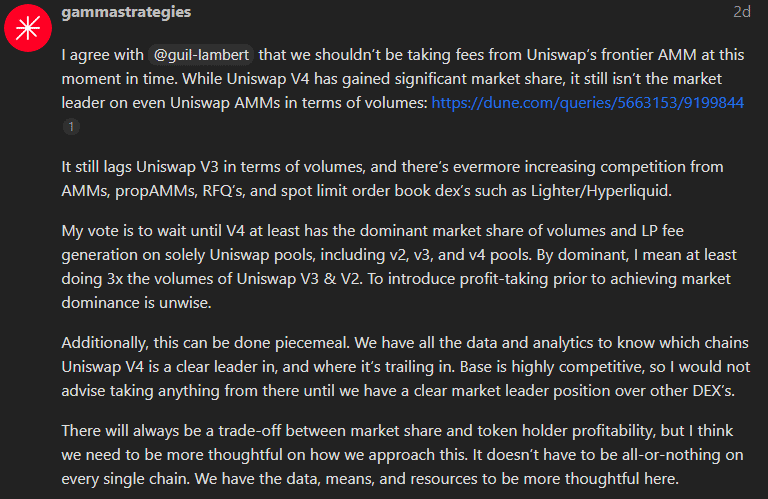
One vocal opponent of the V4 fee proposals has been Gamma Strategies, a prominent liquidity management protocol. Gamma Strategies voiced strong opposition, arguing that the activation of protocol fees on V4 at this stage could be detrimental to its competitiveness. Their rationale centers on the belief that Uniswap V4, despite its innovative features, has not yet achieved sufficient market dominance or competitive advantage to warrant a reduction in LP incentives.
Gamma Strategies elaborated on their concerns, stating, "It (V4) still lags Uniswap V3 in terms of volumes, and there’s evermore increasing competition from AMMs, propAMMs, RFQ’s, and spot limit order book DEX’s such as Lighter/Hyperliquid." This argument highlights the fiercely competitive landscape of decentralized exchanges. In a market where LPs have numerous options for deploying capital, any reduction in yield without a corresponding increase in other benefits (like security, features, or volume) could lead to liquidity migration to rival platforms. The implication is that if V4 is perceived as less profitable for LPs due to these fees, it could struggle to attract the deep liquidity necessary to compete effectively against established players and emerging innovators.
Balancing Act: Protocol Revenue vs. LP Rewards
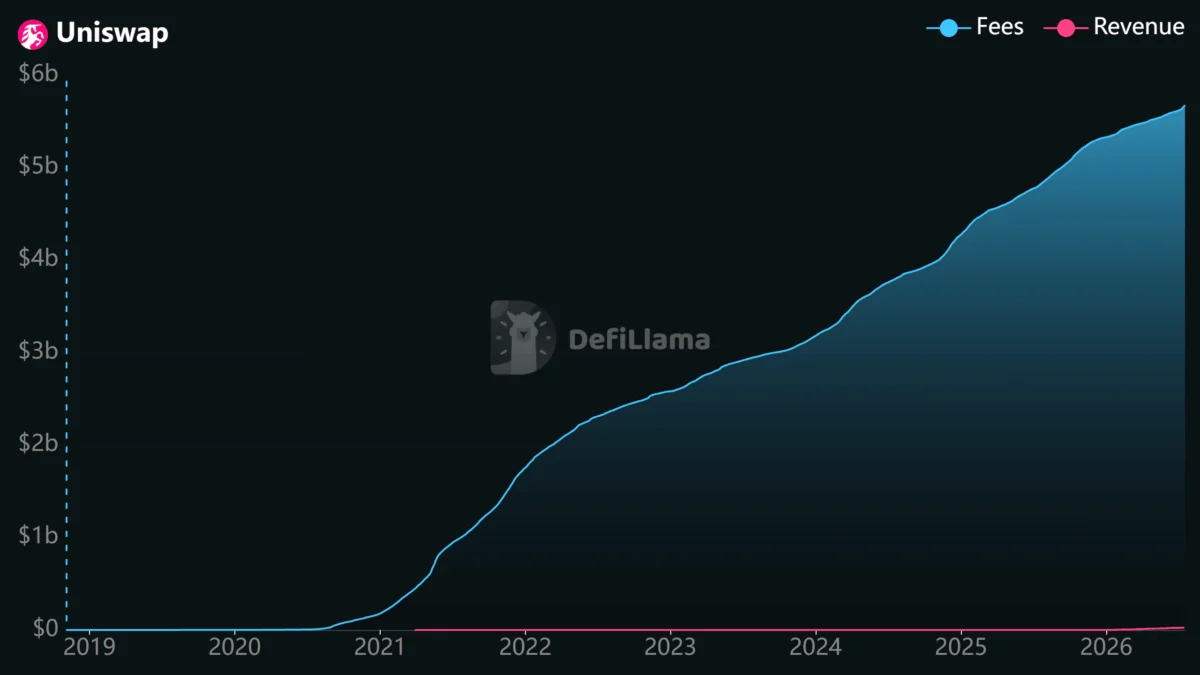
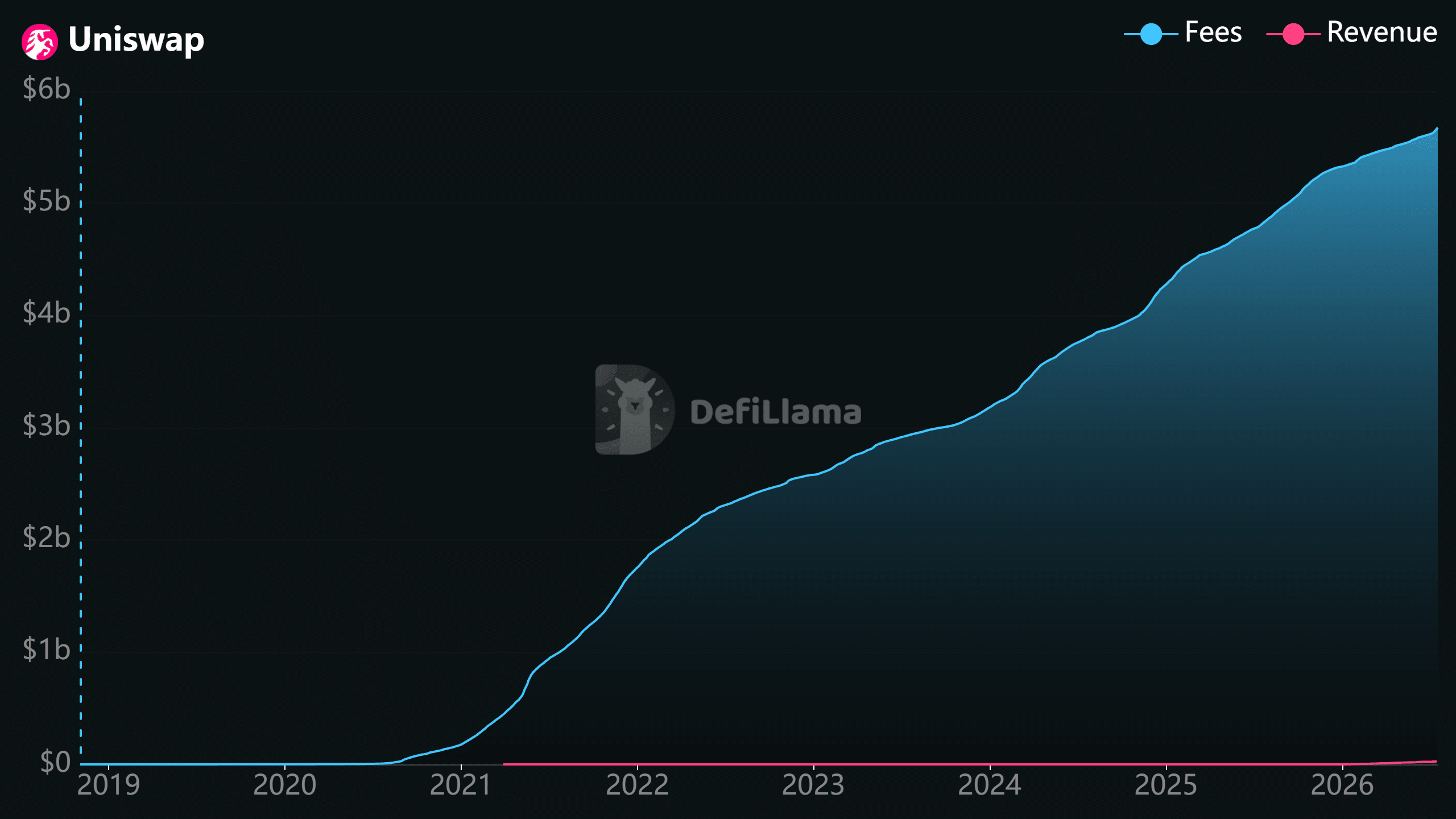
The proposed changes bring into sharp focus the long-standing tension between maximizing returns for liquidity providers and establishing a sustainable revenue model for the underlying protocol. Historical data illustrates this imbalance clearly: since its inception in 2018, Uniswap’s liquidity providers have collectively earned a staggering sum exceeding $5 billion in cumulative fees. In stark contrast, the Uniswap protocol itself has only accrued approximately $25 million in cumulative revenue over the same period.
This significant disparity underscores why the activation of protocol fees is a critical strategic move for Uniswap Labs and the UNI governance community. While LPs have enjoyed substantial rewards, the protocol itself has operated on a relatively lean revenue stream. Increasing protocol revenue could unlock new avenues for funding development, security audits, ecosystem grants, and further innovation, ensuring the long-term viability and competitiveness of Uniswap.
If these proposals are approved and successfully implemented without severely undermining Uniswap’s competitive edge, the projected increase in protocol revenue is expected to have a direct and substantial impact on the UNI token’s economics. As Hayden Adams noted, the new fees would be channeled into the existing UNI burn mechanism. This mechanism involves permanently removing UNI tokens from circulation, effectively reducing the total supply. A higher burn rate, fueled by increased protocol revenue, is inherently deflationary, which typically bodes well for the token’s value by making each remaining UNI token scarcer.
Implications for UNI Tokenomics
The current state of UNI tokenomics provides further context for these proposals. To date, a total of 107.49 million UNI tokens have been burned, demonstrating a commitment to supply reduction. The recent weeks have already seen a noticeable uptick in the UNI burn rate, with a reported threefold increase from approximately $51,000 to over $160,000 in value burned. This surge is likely a direct consequence of increased network activity and trading volume, potentially on new deployments like the "Robinhood chain," even before the formal activation of new protocol fees. If the proposals pass, and a percentage of swap fees are indeed redirected to the burn mechanism, this rate could accelerate significantly, potentially leading to a more pronounced deflationary effect on the UNI supply.
For UNI token holders, the prospect of increased burn rates and enhanced protocol revenue is generally viewed positively. It suggests a more robust value accrual mechanism for the token, moving beyond its utility primarily as a governance token. This shift could attract more investors seeking long-term value appreciation, provided the market perceives Uniswap’s ability to maintain liquidity and competitiveness despite the fee changes.
Market Response and Future Outlook
The market has already shown some preliminary reactions to Uniswap’s expansion, particularly the integration with the "Robinhood chain." Traders appear to have "front-run" the news, anticipating positive developments for UNI. In July, the price of Uniswap’s native token, UNI, experienced a significant rally, surging by 41% from $2.70 to $3.80. This price action clearly indicates investor optimism surrounding Uniswap’s ecosystem growth and potential for increased value capture.
However, the initial bullish momentum has somewhat eased, with the UNI price currently stalling below its 200-day Moving Average (MA), a key technical indicator often used to gauge long-term trend direction. This suggests that while the market is attentive to positive news, it is also exercising caution. The price could either consolidate sideways above the $3.50 mark or potentially retrace to around $3.00 if the momentum from the "Robinhood chain" integration stabilizes without further catalysts.
The next sustained upward move for UNI could be triggered by several factors. Continued strong performance and volume growth on the "Robinhood chain" would undoubtedly fuel further optimism. Crucially, the outcome of the governance proposals will be a major determinant. If the proposals pass and effectively drive a substantial increase in the UNI burn rate without detrimental effects on liquidity, it could provide the necessary catalyst for UNI to break past resistance levels and extend its July rally. The market will be closely watching for voting results and the subsequent impact on protocol metrics.
The Broader DeFi Landscape
Uniswap’s decision to pursue widespread protocol fee activation is not isolated; it reflects a broader trend within the DeFi ecosystem where protocols are increasingly exploring sustainable revenue models. Many decentralized applications have historically relied on venture capital funding or token inflation to support development. As the industry matures, the imperative to generate organic revenue becomes more pronounced.
However, this pursuit of revenue must be carefully balanced with the core tenets of decentralization and user/LP incentives. The debate sparked by Uniswap’s proposals will serve as a case study for other DEXs and DeFi protocols contemplating similar moves. It will highlight the delicate equilibrium between providing attractive yields for liquidity providers, maintaining competitive trading costs for users, and ensuring the financial health and longevity of the protocol itself. The success or failure of Uniswap’s strategy could set precedents for how decentralized autonomous organizations (DAOs) manage their economic policies and navigate the evolving landscape of blockchain governance and value accrual.
In conclusion, Uniswap’s submission of these governance proposals marks a significant juncture in its evolution. By seeking to activate protocol fees across multiple chains and versions, the protocol aims to bolster its revenue, enhance the deflationary nature of its UNI token through burning, and secure its long-term sustainability. While the move is met with enthusiasm by UNI token holders and proponents of a stronger protocol treasury, it also raises valid concerns among liquidity providers regarding potential impacts on their profitability and Uniswap’s competitive standing in an increasingly crowded DEX market. The coming weeks, as these proposals move through the governance process, will be critical in shaping Uniswap’s future trajectory and its role as a pioneer in the decentralized finance space.