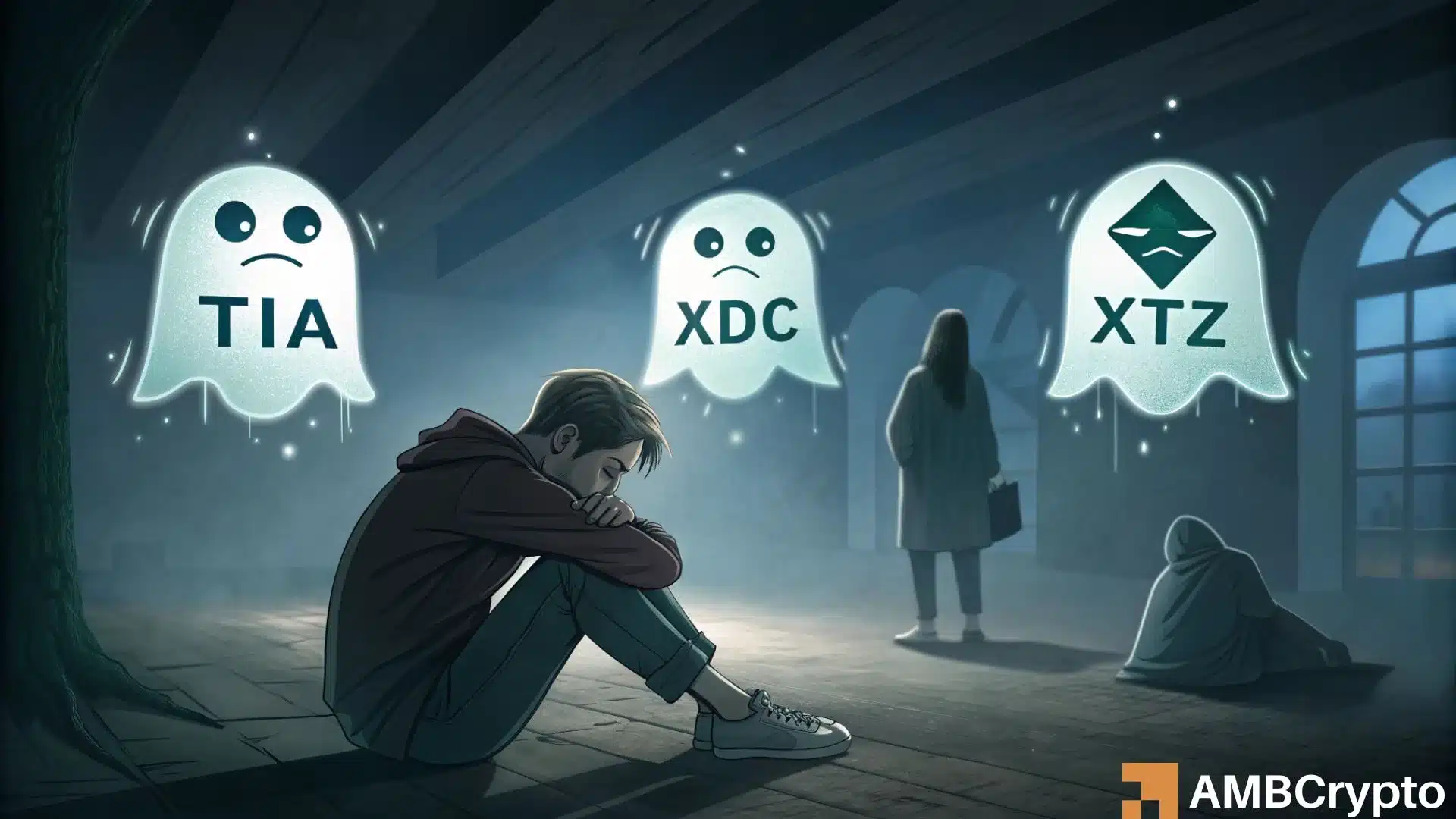
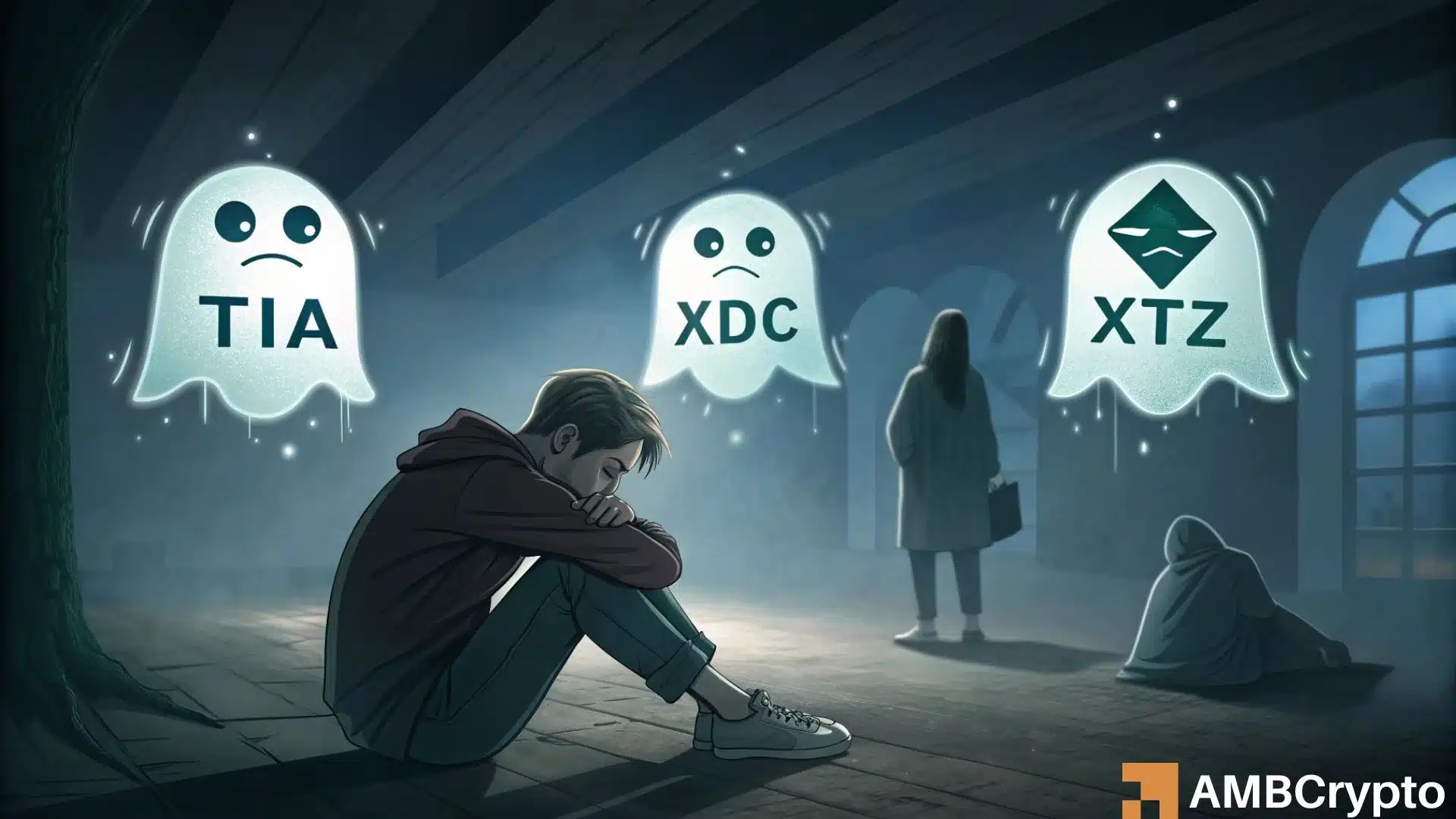
The contemporary blockchain landscape has undergone a period of aggressive expansion, fundamentally altering the way developers and investors perceive decentralized infrastructure. According to data from industry tracker DefiLlama, the ecosystem has ballooned to encompass over 500 distinct blockchain networks. While this proliferation signals a democratization of distributed ledger technology, it has simultaneously introduced a significant paradox: a massive disparity between high market capitalizations and genuine, consistent network utility. As the industry matures, analysts are increasingly distinguishing between chains that command meaningful ecosystem participation and those that have devolved into "ghost chains"—networks that maintain significant market valuations despite a precipitous decline in active user bases and transactional throughput.
The Evolution of the Blockchain Proliferation Phase
The current surge in network development is largely attributed to the maturation of Layer-2 scaling solutions and modular blockchain architectures. In the early stages of the industry, Ethereum acted as the singular hub for decentralized applications (dApps). However, the demand for lower transaction costs and higher throughput led to a "multi-chain" thesis, where developers sought to launch bespoke chains tailored to specific industries, such as gaming, supply chain management, or high-frequency finance.
By 2023 and early 2024, this led to an influx of capital into new chains, each promising superior scalability or unique consensus mechanisms. Yet, as the initial fervor subsided, the market began to consolidate. Of the hundreds of chains tracked by platforms like Alchemy, only a fraction—roughly 64 networks—have managed to retain a substantial market capitalization while maintaining a verifiable, active ecosystem. This consolidation highlights a critical juncture for investors: market cap is no longer a reliable proxy for long-term network health or sustainable growth.
XDC Network: A Case Study in Declining Engagement
The XDC Network serves as a prominent example of a project struggling to reconcile its legacy valuation with current network activity. Historically marketed as an enterprise-grade blockchain designed for trade finance and institutional use cases, XDC enjoyed significant hype during the 2021 market cycle. At its peak, the network fostered a vibrant community and a high volume of daily active addresses.
However, the longitudinal data provided by analytics firms like Token Terminal paints a sobering picture. The network’s Daily Active Addresses, which once hit a high of approximately 288,000, have experienced a staggering contraction of over 84%, bottoming out at roughly 45,000. In recent months, that figure has dipped further to approximately 16,000. The correlation between this decline in network participation and the price performance of the native XDC token is undeniable. With the token witnessing an annualized decline of 62.5%, the narrative surrounding the network has shifted from one of enterprise utility to one of stagnant liquidity. The primary challenge for the XDC ecosystem remains the bridge between its institutional architecture and the actual volume of trade finance transactions being settled on-chain.
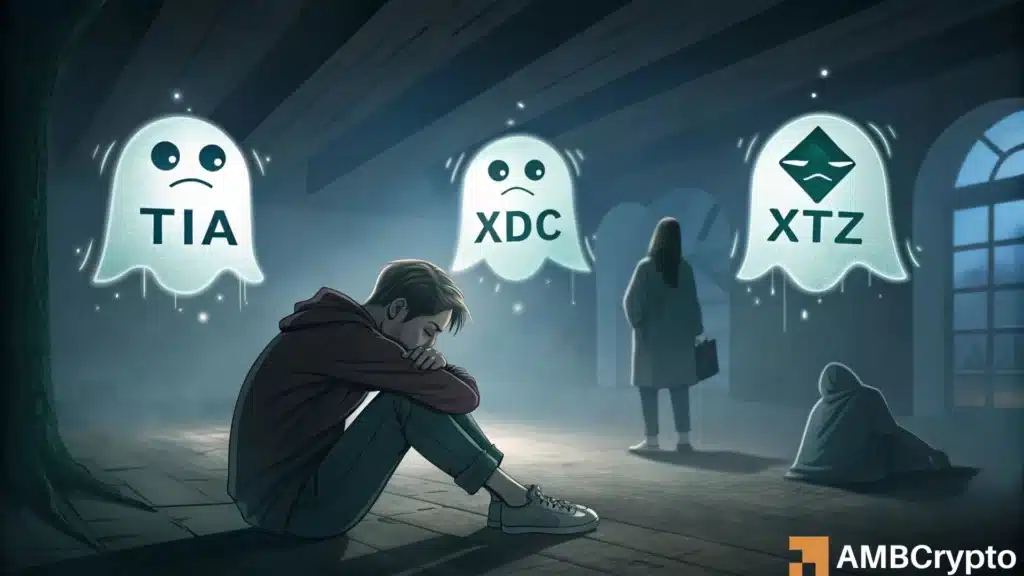
Celestia and the Risks of Modular Architecture
The narrative surrounding Celestia (TIA) presents a different, albeit equally concerning, set of circumstances. As a pioneer in the modular blockchain space, Celestia was designed to provide the data availability layer for other networks to build upon. Given its technical significance, TIA initially captured significant market attention, leading to a peak in usage in 2024, with active addresses reaching 36,000.
However, the subsequent decline has been sharp and rapid. Active addresses on the network have plummeted by nearly 97% from their 2023 peak, falling to roughly 1,200 at the time of writing. This contraction is emblematic of the "modular risk"—the reliance on external developers to build and maintain activity on top of the base layer. If the broader ecosystem of roll-ups and application-specific chains does not see sufficient growth, the underlying infrastructure provider suffers the consequences. The market’s reaction has been severe; TIA has seen a 98.2% decline from its all-time high, currently oscillating around the $0.35 mark. This massive devaluation suggests that the market is re-pricing the asset based on current utility rather than speculative potential.
Tezos and the Sustainability Crisis
The Tezos (XTZ) network represents another archetype of the "legacy" chain struggling to find its footing in a crowded market. Despite commanding a market capitalization exceeding $400 million, Tezos has seen its foundational metrics—specifically network fees and total revenue—decline by 68% over the past year, according to data from Artemis.

In the blockchain economy, fees and revenue serve as the "profit and loss" statement for a network. They reflect the amount of value users are willing to pay for block space. A sustained, year-over-year decline in these metrics is a clear indicator that the network is no longer being utilized for high-value decentralized finance (DeFi) activities or NFT transactions at previous levels. This drop in usage has had a direct, cascading effect on the XTZ token, which has plummeted 95% from its historical peak. The situation for Tezos highlights a fundamental risk: without a clear value proposition that differentiates it from newer, more performant competitors, even established networks can face an existential crisis of liquidity and user retention.
Analytical Perspectives: The Direct Correlation
When evaluating the health of a blockchain, industry analysts often point to the "Active User/Market Cap" ratio as a key diagnostic tool. A high market cap paired with a declining active user base suggests that the token is being held primarily for speculative purposes rather than utility. This creates a fragile market structure where the token is susceptible to extreme volatility, as there is little underlying "demand floor" provided by network activity to support the price.
Conversely, networks that demonstrate consistent growth in active addresses—even during bear market conditions—often show more resilience in their token price. The current data strongly suggests that the crypto-asset market is moving toward a more sophisticated era of evaluation. Investors are increasingly looking beyond social media sentiment and marketing whitepapers, focusing instead on verifiable on-chain metrics.

Broader Implications for the Blockchain Industry
The decline of these networks does not necessarily signal the end of blockchain technology, but it does signal a shift in the investment landscape. Several broader implications can be observed:
- The "Flight to Quality": As capital becomes more discerning, funds are flowing toward established "L1" ecosystems with massive developer mindshare, such as Ethereum and Solana, or specific Layer-2s that have successfully solved the user experience bottleneck.
- The Death of the "General Purpose" Myth: Many chains launched with the intent of being "everything to everyone." The current data suggests that niche-focused chains or those providing unique infrastructure services are more likely to survive, provided they can secure a specific market vertical.
- Regulatory Scrutiny: As ghost chains continue to see their market caps diverge from their utility, regulators may increasingly view these tokens as purely speculative assets, potentially subjecting them to stricter classification and oversight.
- The Importance of Ecosystem Grants: Networks that fail to incentivize developers to build sustainable applications are seeing their user bases migrate. Sustainability is now defined by the quality of dApps available on the chain, not just the speed of the consensus layer.
Conclusion and Future Outlook
The divergence between market capitalization and network activity is perhaps the most significant trend in the blockchain sector as of 2026. While the blockchain boom created an unprecedented number of chains, the current reality is one of harsh correction. Networks like XDC, Celestia, and Tezos are currently navigating a difficult period where their native tokens are being pressured by a lack of network engagement.
For the industry to mature, it must move away from the "if you build it, they will come" mentality that characterized the 2020-2022 era. The chains that ultimately succeed will be those that prioritize user acquisition, dApp diversity, and transparent, high-throughput utility. Until then, the ghost chain phenomenon will continue to serve as a stark reminder of the risks associated with speculative investment in decentralized infrastructure. Investors should anticipate continued volatility as the market continues to differentiate between networks that provide genuine value and those that merely provide a ledger for dormant assets.