The landscape of digital ownership has undergone a radical transformation over the past several years, driven largely by the proliferation of Non-Fungible Tokens (NFTs) and emerging token standards like BRC-20. For visual artists, musicians, developers, and digital creators alike, the ability to tokenize their work offers an unprecedented level of autonomy. By leveraging blockchain technology, creators can bypass traditional intermediaries, secure provable digital provenance, and monetize their creations directly on a global scale. Beyond individual artwork, NFTs have evolved into dynamic instruments capable of cultivating dedicated communities, granting exclusive access to physical and virtual events, and serving as decentralized fundraising mechanisms.
However, entering the realm of digital asset creation requires more than creative vision; it demands a functional understanding of blockchain mechanics, smart contracts, and associated financial obligations. Navigating decentralized ecosystems involves careful risk management, awareness of regulatory shifts, and technical preparedness. This comprehensive report explores the fundamental nature of NFTs, examines the broader implications of digital asset tokenization, and provides a rigorous, step-by-step walkthrough for deploying a smart contract and minting an NFT collection on the Ethereum network using decentralized infrastructure.

Understanding Non-Fungible Tokens and Their Market Evolution
To comprehend the mechanics of tokenization, one must first distinguish between fungible and non-fungible digital assets. Cryptocurrencies such as Bitcoin and Ethereum are fungible, meaning each unit is identical in value and interchangeable on a one-to-one basis. A single Bitcoin is equivalent to any other Bitcoin, much like standard fiat currency. Conversely, Non-Fungible Tokens are cryptographically unique digital certificates of authenticity and ownership tied to specific items or content. Because of their distinct metadata and unique identifiers, NFTs cannot be exchanged on a direct, equal-value basis.
The underlying architecture of NFTs relies heavily on smart contracts—self-executing code stored on a blockchain that automatically enforces the terms of a transaction or agreement. While initial iterations of NFTs gained massive mainstream traction primarily through digital art and collectibles, the technology has since expanded into virtual real estate, gaming assets, intellectual property rights, and real-world asset (RWA) tokenization. Major platforms like OpenSea, alongside Ethereum-compatible layer-2 scaling solutions and alternative networks such as Binance Smart Chain and Polygon, have lowered the technical barrier to entry, enabling millions of users worldwide to participate in the decentralized economy.

Chronology and Historical Context of Digital Tokenization
The conceptual origins of non-fungible digital assets trace back to early blockchain experiments, including Bitcoin’s "Colored Coins" initiative in 2012 and the Namecoin protocol, which sought to register domain names on a decentralized ledger. However, the true foundation for modern NFTs was established with the launch of the Ethereum blockchain in 2015, which introduced Turing-complete smart contract capabilities.
In 2017, the introduction of the ERC-721 token standard by Dieter Shirley provided the definitive technical framework for unique, non-fungible digital assets on Ethereum. This standard powered early cultural phenomena such as CryptoPunks and CryptoKitties, the latter of which famously congested the Ethereum network due to unprecedented transaction demand. Following these early experiments, the ERC-1155 standard emerged, introduced by Enjin developers in 2018, allowing for the creation of both fungible and non-fungible tokens within a single smart contract. This significantly optimized gas efficiency and opened doors for multi-edition digital art and gaming items.
The defining watershed moment for the NFT market occurred between 2020 and 2022, characterized by explosive retail adoption, multi-million-dollar digital art auctions at traditional auction houses like Christie’s, and the integration of mainstream brands into the Web3 ecosystem. Although the subsequent macroeconomic tightening and broader cryptocurrency market corrections led to a significant contraction in trading volumes from historic peaks, the underlying infrastructure continued to mature. Development shifted away from speculative hype toward utility, interoperability, and robust developer tooling, paving the way for sustainable, institutional-grade digital asset management.
Preparing for Tokenization: Wallets, Networks, and Financial Considerations
Before initiating the minting process, creators must establish the foundational infrastructure required to interact with decentralized applications (dApps). This begins with the selection and setup of a secure Web3 cryptocurrency wallet, such as MetaMask, Coinbase Wallet, or any other EVM-compatible (Ethereum Virtual Machine) provider. The wallet serves as the user’s digital identity and secure vault, holding both the private keys required to authorize transactions and the digital assets themselves.
Securing a wallet requires stringent operational security measures, notably the safe storage of the 12- or 24-word recovery seed phrase offline. Once the wallet is configured, users must fund it with the native cryptocurrency of the chosen network—typically Ether (ETH) in the case of the Ethereum mainnet—to pay for transaction fees, commonly referred to as "gas."
Gas fees compensate network validators for executing smart contracts and processing transactions on the blockchain. These fees fluctuate dynamically based on network congestion, meaning transaction costs can vary significantly throughout the day. Creators are advised to monitor network activity and select optimal windows for deployment to minimize overhead costs. Furthermore, understanding the permanence of blockchain transactions is vital: once a smart contract is deployed and an asset is minted, the core data cannot be altered or deleted, underscoring the importance of rigorous pre-launch testing.
Step-by-Step Guide to Deploying a Smart Contract and Minting an NFT on OpenSea
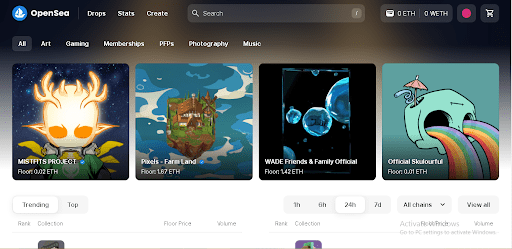
To illustrate the technical workflow of creating digital assets, this guide utilizes OpenSea, one of the pioneering decentralized marketplaces built on the Ethereum blockchain. OpenSea provides an intuitive interface for users to discover, purchase, sell, and mint digital collectibles through its integrated studio tools.
Step 1: Connecting Your Web3 Wallet
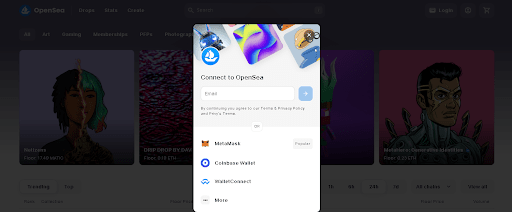
Navigate to the official OpenSea website and locate the authentication prompt, typically labeled "Login" or "Connect Wallet," situated in the upper right-hand corner of the user interface. Select your preferred Web3 wallet provider from the list of compatible options. Approve the connection request within your wallet extension to securely link your digital identity to the platform.
Step 2: Accessing the Creator Studio
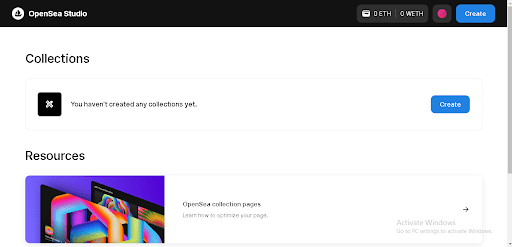
Once your wallet is successfully connected, click on your user profile icon located at the top right of the OpenSea dashboard. From the resulting drop-down menu, select the "Studio" option. This specialized environment grants creators the administrative tools required to deploy customized smart contracts and manage digital collections.
Step 3: Initiating the Creation Process
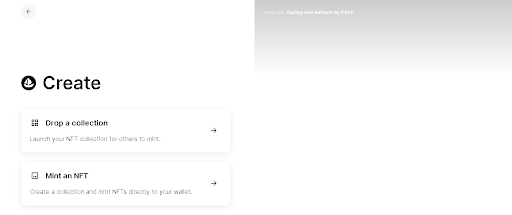
Within the OpenSea Studio interface, locate and select the primary "Create" button positioned in the top right corner. The platform will present two distinct pathways: dropping an entire collection or minting an individual NFT. Selecting the option to create an NFT allows you to mint items directly to your connected wallet.
Step 4: Establishing a New Collection and Deploying a Smart Contract
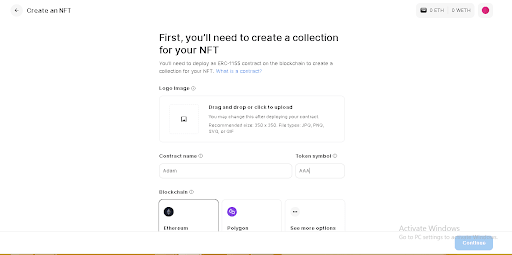
If you are utilizing OpenSea Studio for the first time, you will need to establish a new collection to serve as the parent container for your digital assets. Click on "Create a new collection" to begin the smart contract deployment process.
Customizing your smart contract requires defining several key parameters:
- Logo Image: A visual identifier representing the collection.
- Contract Name: The official title of your NFT series.
- Token Symbol: A concise ticker abbreviation (e.g., ART orCOL).
- EVM Blockchain Selection: Choosing the target network where the contract will reside.
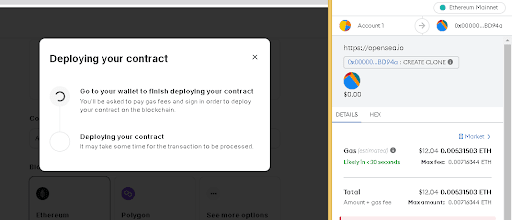
After inputting these details, click "Continue." This action triggers a transaction signature request within your Web3 wallet, requiring you to approve and pay the associated gas fees for smart contract deployment. Upon network confirmation, you will receive a verification message signaling that your smart contract is active on the blockchain.
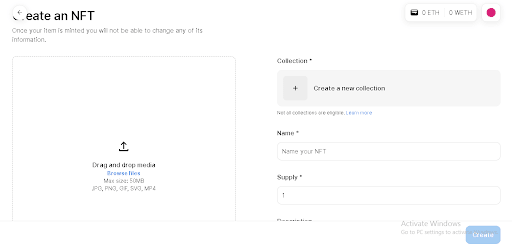
Step 5: Uploading Media and Minting the ERC-1155 Token
With your smart contract successfully deployed, you are ready to mint your digital asset. In this workflow, you will be utilizing the ERC-1155 standard, which allows for the creation of both single editions (one-of-ones) and multiple identical copies of the same item.
- Upload Media: Upload the digital file representing your artwork, music, video, or collectible. Ensure the file format adheres to platform specifications.
- Select Collection: Choose the newly created smart contract collection in which the NFT will reside.
- Define Metadata: Input a descriptive title for the item and specify the item supply. Setting the supply to "1" creates a unique, one-of-a-kind token, whereas a higher integer generates a multi-edition series.
- Execute Minting: Click the "Create" button. A loading sequence will initiate as the metadata is processed. Approve the final minting transaction prompt inside your Web3 wallet.
Upon successful confirmation, the platform will display a congratulatory message, confirming that your new digital asset has been permanently minted and transferred to your wallet.
Broader Economic Implications and Industry Analysis
The democratization of digital asset creation carries profound implications for the global creative economy. By leveraging blockchain technology, artists and creators are no longer entirely dependent on centralized galleries, publishing houses, or streaming platforms to validate and distribute their work. Smart contracts enable programmable royalty structures, ensuring that original creators can receive secondary-market residuals automatically whenever their work is resold—a feature largely absent in traditional physical art markets.
However, the broader adoption of NFTs and tokenized standards is not without systemic challenges. Environmental concerns surrounding energy-intensive consensus mechanisms have prompted major networks, most notably Ethereum’s transition to a Proof-of-Stake (PoS) consensus model via "The Merge," to reduce their carbon footprints drastically. Additionally, regulatory clarity remains an evolving frontier. Tax authorities, securities regulators, and intellectual property lawyers worldwide continue to evaluate how existing legal frameworks apply to decentralized digital assets, smart contract liabilities, and cross-border transactions.
From an institutional perspective, the underlying technology driving NFTs is increasingly being integrated into traditional finance and enterprise logistics. Beyond speculative art markets, tokenization is proving valuable for supply chain provenance, digital identity verification, ticketing systems, and the fractional ownership of real-world assets such as real estate and commodities. As developer tooling matures and user experience barriers diminish, the boundary between physical and digital ownership will continue to blur, cementing blockchain-based tokens as a permanent pillar of the modern digital infrastructure.