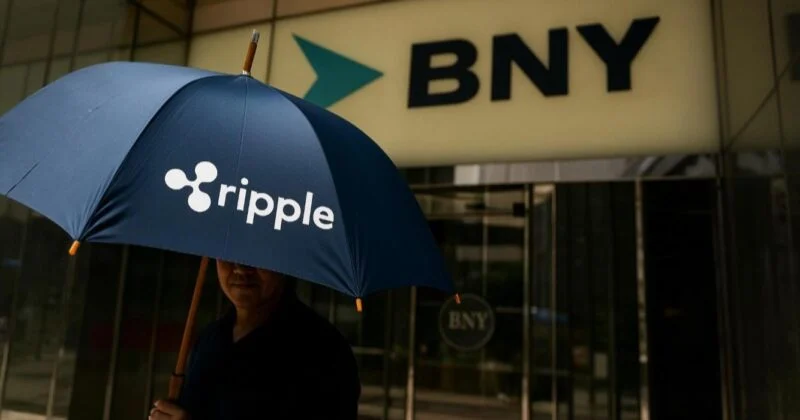
BNY, the world’s largest custodian bank, has officially expanded its strategic partnership with Ripple to encompass a comprehensive suite of digital asset services. This development marks a significant shift in how institutional financial infrastructure interacts with blockchain technology. Under the newly announced framework, BNY will provide custody support for XRP and Ripple’s forthcoming USD-pegged stablecoin, RLUSD. Furthermore, the collaboration aims to revolutionize the trade finance sector by leveraging the XRP Ledger (XRPL) to tokenize receivables, streamline settlement processes, and offer BNY clients direct minting and redemption capabilities for RLUSD.
A Strategic Evolution in Institutional Finance
This expansion builds upon an existing relationship between the two entities, which previously focused on the custody of RLUSD reserves and integration with Ripple Prime. By incorporating XRP and RLUSD directly into its Digital Asset Custody platform, BNY is signaling a robust commitment to integrating decentralized ledger technology (DLT) into its core operational architecture.
For BNY, which manages over $52 trillion in assets under custody and administration, the move represents a deliberate effort to mitigate the inefficiencies inherent in traditional trade finance. Tokenized trade finance—a process by which trade receivables, letters of credit, and other debt instruments are represented as digital assets on a blockchain—offers the potential to reduce friction, enhance transparency, and increase liquidity for global supply chains.
Chronology of the Ripple-BNY Partnership
The trajectory of this collaboration reflects the broader industry trend of traditional financial institutions moving from a state of cautious observation to active participation in the digital asset space.
- Initial Engagement: The relationship began with BNY providing custody services for the reserves backing Ripple’s RLUSD stablecoin, ensuring that the assets underpinning the digital token were held within a regulated, institutional-grade environment.
- Expansion into Ripple Prime: The partnership subsequently evolved to include custody arrangements via Ripple Prime, the company’s enterprise-grade liquidity and custody platform.
- The Current Milestone: On Tuesday, the firms announced a definitive expansion. This phase introduces custody for XRP—the native asset of the XRPL—and establishes a roadmap for the integration of tokenized trade finance workflows.
- The Future Roadmap: The companies have committed to exploring institutional use cases for XRPL, specifically targeting payment, settlement, and collateral management, with a pilot initiative involving the working-capital platform C2FO.
Market Context and Supporting Data
The global trade finance market is characterized by high levels of manual intervention and paper-based processes. According to data from the Asian Development Bank, the global trade finance gap—the difference between the requests for trade financing and the actual financing provided—has historically hovered around $2.5 trillion.
By migrating these processes to a distributed ledger, BNY and Ripple are targeting a reduction in the time it takes to settle receivables. Traditional trade finance cycles can take weeks to finalize due to the involvement of multiple intermediaries, including banks, logistics firms, and customs agencies. Blockchain-based solutions allow for near-instant verification and settlement, potentially freeing up billions of dollars in trapped working capital.
The inclusion of RLUSD is equally significant. Stablecoins are increasingly viewed as the "on-chain" settlement layer for global finance. By allowing its clients to mint and redeem RLUSD directly, BNY is essentially providing a bridge between the traditional banking system (fiat currency) and the digital asset ecosystem. This capability is expected to lower the cost of cross-border transactions, which currently average 6% to 7% for retail and significant percentages for institutional wire transfers, depending on the corridor.
Perspectives from Stakeholders
Monica Long, President of Ripple, has framed this development as a pivot toward utility. In recent statements, Long emphasized that the industry is transitioning away from a "crypto-only" narrative toward one focused on the functional application of tokenization. "Financial institutions are increasingly focused on using tokenized assets for payments and collateral, rather than simply issuing them on blockchain networks," Long noted.
For BNY, the incentive is centered on risk management and client demand. Institutional clients, particularly hedge funds, family offices, and corporate treasurers, have increasingly requested access to digital assets that are held within the security of a regulated banking framework. By adding XRP and RLUSD to its custody portfolio, BNY addresses the primary concern of institutional investors: counterparty and custody risk.
The Role of C2FO and Trade Finance Innovation
The partnership’s focus on C2FO provides a clear use case for how this technology will function in practice. C2FO operates a working-capital platform that connects large enterprises with their suppliers. By tokenizing the approved receivables—invoices that have been verified but are not yet paid—BNY and Ripple can allow investors to purchase these receivables as digital tokens.
This creates a new asset class for investors seeking short-term, yield-bearing instruments while providing suppliers with immediate cash flow. The XRP Ledger, known for its high transaction throughput and low energy consumption, serves as the ideal infrastructure for these high-frequency, low-latency financial transactions.
Broader Implications for the Digital Asset Ecosystem
The BNY-Ripple partnership serves as a bellwether for the "institutionalization" of crypto. As regulatory frameworks such as the Markets in Crypto-Assets (MiCA) regulation in Europe and ongoing legislative efforts in the United States clarify the landscape for stablecoins and digital custody, legacy institutions are finding more stable ground upon which to build.
- Standardization of Custody: BNY’s entry into XRP custody validates the asset’s role in institutional portfolios. When a Tier-1 bank adds an asset to its custodial roster, it provides a "seal of approval" that can catalyze adoption among other institutional players.
- Stablecoin Utility: The ability for a bank to mint and redeem RLUSD suggests that stablecoins are moving toward a model of bank-backed or bank-integrated issuance. This reduces the systemic risk associated with independent stablecoin issuers and increases the reliability of the assets for use in settlement.
- Efficiency Gains: If the pilot programs with C2FO prove successful, the model of tokenized trade finance could become the industry standard. The transition from T+2 or T+3 settlement to near-real-time settlement would effectively increase the velocity of money in global trade, impacting balance sheets across the globe.
Analysis of Technical Integration
The XRP Ledger’s architecture is particularly well-suited for these types of institutional applications. Unlike Proof-of-Work blockchains that require significant energy and time to achieve consensus, the XRPL utilizes a unique Federated Consensus mechanism. This allows for transactions to be finalized in seconds at a fraction of the cost of traditional interbank messaging systems like SWIFT.
Furthermore, the integration of RLUSD provides a native stablecoin that can move across the ledger with the same speed as XRP. By controlling the minting and redemption process, BNY can ensure that every RLUSD token is backed 1:1 by high-quality, liquid assets, thereby maintaining the integrity of the stablecoin throughout its lifecycle.
Challenges and Future Outlook
Despite the optimism surrounding this partnership, challenges remain. The legal and regulatory status of XRP in various jurisdictions continues to evolve, and the adoption of blockchain-based trade finance requires a critical mass of participants to achieve network effects. Furthermore, interoperability between different ledgers remains a hurdle for a truly global, decentralized financial system.
However, the collaboration between a legacy institution like BNY and a blockchain innovator like Ripple represents a bridge between two worlds. As BNY continues to integrate these services into its existing platforms, the focus will likely shift from "exploratory" initiatives to "production-grade" financial services.
The success of this endeavor will be measured by the adoption rates among BNY’s institutional clients and the expansion of the tokenized trade finance pilot. Should these efforts yield the anticipated efficiency gains, the model may well be replicated across other asset classes, including bonds, equities, and real estate, further cementing the role of the XRP Ledger as a foundational layer for the next generation of financial market infrastructure.
In summary, the expansion of the Ripple-BNY partnership is a significant indicator of the maturation of the digital asset industry. By addressing the fundamental needs for secure custody, liquidity, and operational efficiency, the two firms are building the essential plumbing for a modern, digital-first global economy. As the financial world moves toward a future of tokenized assets, the intersection of institutional banking and decentralized technology will likely define the competitive landscape for decades to come.