The cryptocurrency sector currently faces a significant regulatory pivot as global authorities intensify their scrutiny of privacy-enhancing technologies. What began as a period of unprecedented growth for privacy-focused digital assets in 2025 has transitioned into a complex, high-stakes confrontation with federal oversight. As U.S. policy shifts toward stringent anti-money laundering (AML) and know-your-customer (KYC) enforcement, assets such as Zcash (ZEC) and Monero (XMR) are encountering unprecedented market headwinds, leading to widespread exchange delistings and significant capital outflows.
The Evolution of the Privacy Market
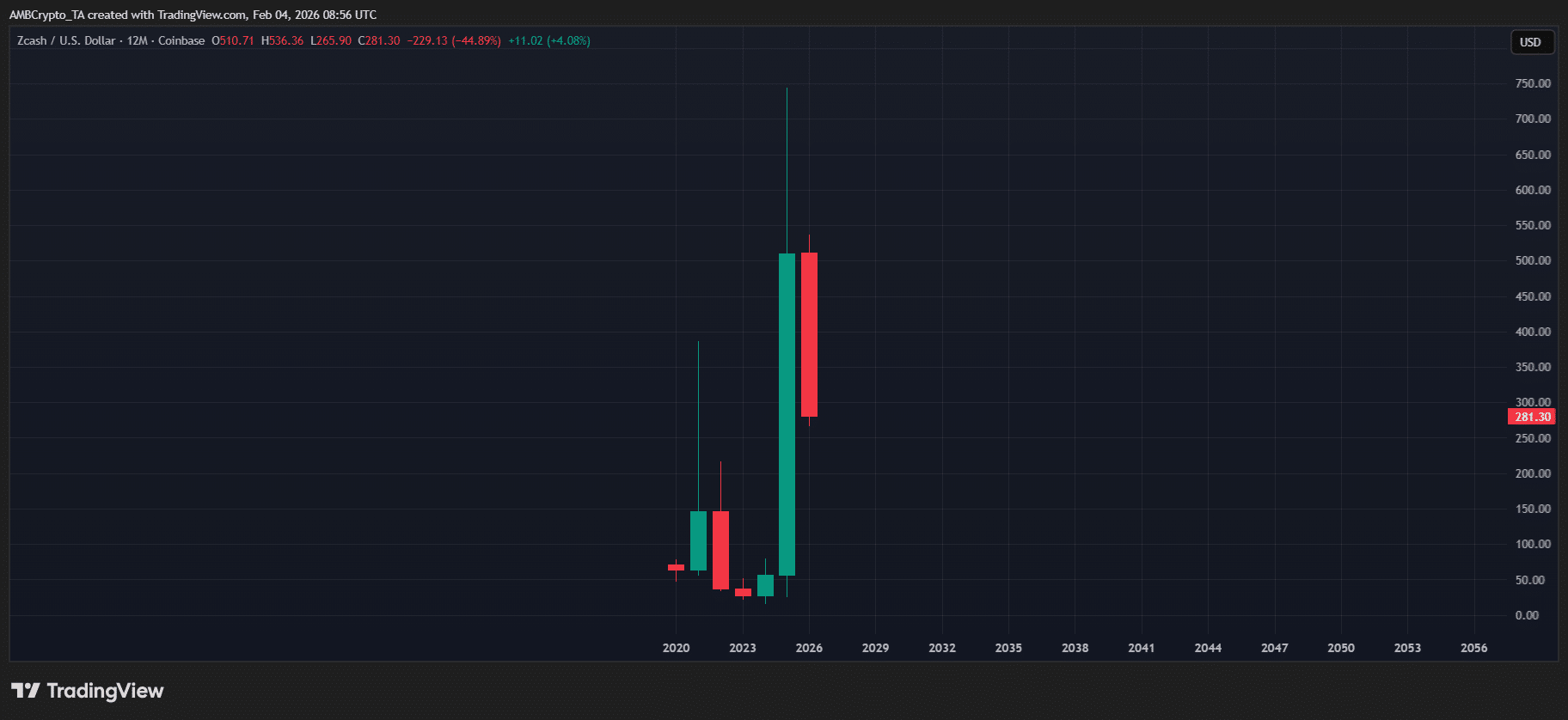
To understand the current crisis, one must examine the trajectory of privacy coins over the past eighteen months. Throughout 2025, privacy-focused assets experienced a massive resurgence. Investors, increasingly wary of the surveillance capabilities of traditional financial networks and the public transparency of the Bitcoin ledger, flocked to protocols offering shielded transactions. Zcash, for instance, recorded an 800% rally during this period, signaling a robust market appetite for financial sovereignty.
This growth, however, placed these assets directly in the crosshairs of global regulators. The fundamental value proposition of these coins—the ability to conduct transactions without revealing sender, receiver, or amount—is inherently at odds with the regulatory frameworks established by agencies such as the Financial Crimes Enforcement Network (FinCEN) in the United States and similar bodies globally.
Regulatory Chronology and Policy Shifts
The current crackdown is the result of a multi-year effort by governments to bring the decentralized finance (DeFi) ecosystem under the purview of existing banking regulations. Under the administration of U.S. President Donald Trump, the appointment of David Sacks as a dedicated "crypto czar" has signaled a move toward a more structured, albeit restrictive, regulatory environment.
The policy shift is not occurring in a vacuum. It follows a broader trend of legislative action against stablecoin issuers and privacy-preserving protocols. The recent legislative move to curtail stablecoin rewards, which drew sharp criticism from industry leaders like Circle’s CEO, served as a precursor to the current focus on privacy coins. While the stablecoin debate focused on systemic banking risks, the discourse surrounding privacy coins is centered squarely on the prevention of illicit activities, money laundering, and the financing of terrorism.
By early 2026, the regulatory climate shifted from "monitoring" to "enforcement." FinCEN and other international watchdogs have begun mandating that any entity acting as a virtual asset service provider (VASP) must implement rigorous identity verification protocols. For privacy coins, this creates an existential technical dilemma: to comply with AML/KYC requirements, these projects would effectively have to strip away the very anonymity that defines them.
Market Impact and Exchange Responses
The financial impact of these regulatory pressures has been swift and unforgiving. The primary consequence has been the systematic delisting of privacy-centric assets from centralized exchanges. Following the lead of major global platforms, exchanges in regions such as India have begun removing support for Zcash and other similar tokens. This trend severely limits the liquidity of these assets, forcing them into less regulated or decentralized venues, which further invites scrutiny from authorities.

Technical analysis of the market indicates that investors are reacting to these developments with significant caution. ZEC has seen a correction of approximately 45% from its cycle highs, while Monero has shed more than $1 billion in market capitalization within a single week in February 2026. These declines reflect not just a temporary dip, but a structural reassessment of the viability of privacy coins in a world of pervasive regulatory oversight.
Market data from platforms like CoinMarketCap underscores the severity of the decline, with many privacy tokens retreating to price levels not seen since the fourth quarter of 2025. The shift is reflective of a "de-risking" process where institutional and retail participants alike are exiting positions to avoid potential exposure to future legal complications or restricted access to capital.
The Conflict Between Anonymity and Compliance
The tension between user privacy and regulatory compliance is rooted in the "Travel Rule," a requirement established by the Financial Action Task Force (FATF). This rule necessitates that financial institutions share sender and receiver information for transactions over a certain threshold. Privacy coins, which utilize advanced cryptographic techniques like zk-SNARKs (Zero-Knowledge Succinct Non-Interactive Arguments of Knowledge) or Ring Signatures, are mathematically designed to obfuscate this information.
From the perspective of regulators, this creates a "black box" that facilitates illicit financial flows. Conversely, privacy advocates argue that financial privacy is a fundamental human right, necessary for protecting individuals from corporate data harvesting and state-level financial censorship.

The current administration’s stance, championed by David Sacks, emphasizes that the digital asset industry must be integrated into the broader financial system to achieve mass adoption. This integration, however, comes at the cost of the "cypherpunk" ideals that fueled the early privacy coin movement. The consensus among policymakers appears to be that anonymity is a luxury the current financial system can no longer afford in the context of global security.
Implications for the Broader Crypto Ecosystem
The potential for a "full-on ban" of privacy coins remains a subject of intense debate. While an outright prohibition on the underlying software is difficult to enforce due to the decentralized nature of these blockchains, the "chokepoint" strategy—targeting the off-ramps and on-ramps—is proving highly effective. If individuals cannot easily convert privacy coins into fiat currency via regulated exchanges, the utility of these coins for the average investor is severely diminished.
Furthermore, this regulatory trend serves as a cautionary tale for the rest of the crypto industry. The success of the current crackdown on privacy coins suggests that regulators have successfully established a blueprint for bringing other, more "transparent" assets into alignment with traditional financial norms.
The implications extend beyond just the price of specific tokens. Developers of privacy-focused projects are now faced with a choice: pivot toward "compliance-friendly" versions of their protocols—which would essentially function as standard, transparent ledgers—or remain committed to anonymity at the risk of becoming pariahs in the mainstream financial system.
Future Outlook
Looking ahead, the privacy coin sector is likely to see a bifurcation. One path involves the emergence of "permissioned privacy," where protocols implement selective disclosure mechanisms that allow users to reveal transaction details to regulators or auditors while maintaining privacy from the general public. This middle-ground approach may satisfy the requirements of the Trump administration’s regulatory framework while preserving some utility for users who prioritize personal data protection.
However, the more radical wing of the industry will likely migrate toward fully decentralized, peer-to-peer (P2P) trading platforms. As centralized exchanges continue to buckle under the pressure of federal compliance mandates, the volume of trading for these assets will increasingly shift to platforms that do not require custodial services or identity verification.
Ultimately, the events of early 2026 mark the end of the "wild west" era for privacy-enhancing digital assets. As the sector matures, it is becoming increasingly clear that the future of cryptocurrency will be defined by its ability to navigate the delicate balance between the desire for anonymity and the legal necessity of accountability. Whether privacy coins can survive this transition as viable investment assets, or whether they will be relegated to a niche segment of the technological underground, will be determined by the resilience of their underlying cryptography and the willingness of the global community to defend the principle of financial privacy against the growing reach of regulatory surveillance.
As the situation develops, market participants are advised to monitor the actions of the Treasury and FinCEN closely, as further guidance on the classification of these assets is expected to arrive in the coming months. The era of unchecked anonymity is drawing to a close, replaced by a new, more rigid era of financial transparency that will continue to challenge the core tenets of the decentralized finance movement for the foreseeable future.