The landscape of cryptocurrency investment has undergone a profound transformation over the last five years, shifting from a retail-driven speculative market to a mature asset class anchored by institutional giants and complex technical infrastructures. Central to this evolution is the strategy of Dollar-Cost Averaging (DCA), a method of consistent, periodic investment that has served as a primary vehicle for both individual and corporate accumulation of Bitcoin (BTC). While the historical performance of DCA has been bolstered by the asset’s explosive growth cycles, the current market climate—characterized by record-breaking price levels and heightened institutional participation—demands a more nuanced understanding of how such strategies impact portfolio returns today compared to earlier years.
Historical Context and the Evolution of DCA
The core premise of Dollar-Cost Averaging is the systematic mitigation of market volatility. By investing a fixed amount at regular intervals, an investor acquires more units when prices are low and fewer when prices are high, effectively smoothing out the average cost basis over time. In the early stages of Bitcoin’s adoption, particularly between 2017 and 2021, the volatility of the asset allowed disciplined DCA investors to accumulate significant positions during cyclical downturns, resulting in substantial returns as the network matured and global liquidity increased.

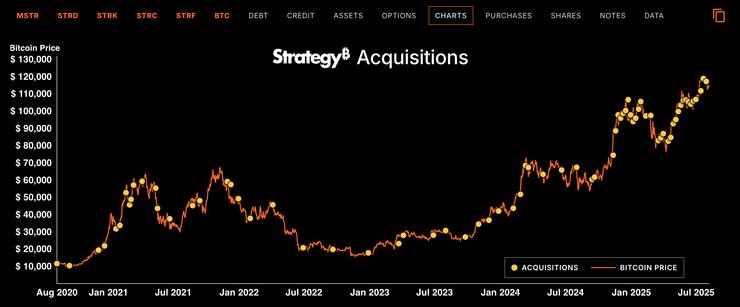
However, the current market environment is defined by a higher baseline price for Bitcoin, frequently oscillating above the $100,000 threshold. For a retail investor today, the math behind DCA is fundamentally different. Data tracking a 323-day period of consistent $5 daily investments reveals a modest return of approximately 5%. This contrasts sharply with the performance metrics of institutional entities, such as Strategy, which has leveraged massive capital injections to amass a reserve of over 628,000 BTC. The disparity between these outcomes underscores the "time-in-market" advantage; while the retail investor is operating within a high-price environment, the institutional giants secured the bulk of their holdings during lower-valuation cycles, specifically the periods spanning 2020 and the 2022-2023 crypto winter.
Chronology of Accumulation: The 2020 Pivot
A longitudinal analysis of investment timing provides the clearest view of the impact of market entry. An investor who committed $5 daily to Bitcoin starting in 2020 would have invested a total of $9,130, resulting in the accumulation of approximately 0.275 BTC. At a contemporary price of $114,800, that portfolio would be valued at roughly $31,570—a gain of approximately 245%.
Conversely, had that same capital been deployed as a single, lump-sum investment in 2020, the investor would have secured 0.81 BTC, currently worth over $92,000, representing a return of 918%. This historical data highlights a critical tension in modern crypto-finance: while DCA remains the most effective tool for risk management and emotional stability, the magnitude of returns is inversely correlated with the maturity of the asset. As Bitcoin continues its path toward institutional integration, the explosive growth of the past becomes increasingly difficult to replicate through simple accumulation strategies, leading investors to seek out new, high-growth opportunities within the broader blockchain ecosystem.

Technological Shifts: The Rise of Layer 2 Solutions
As Bitcoin approaches a potential status as a global reserve asset, the limitations of its base layer—specifically regarding transaction throughput and smart contract capability—have necessitated the development of Layer 2 (L2) solutions. These protocols are designed to offload transaction volume from the main chain while inheriting the security and decentralization of the Bitcoin network.
One of the most notable entrants in this space is Bitcoin Hyper (HYPER), a project that integrates the Solana Virtual Machine (SVM) into the Bitcoin ecosystem. The significance of this integration cannot be overstated. The Bitcoin blockchain, by design, is a secure, slow-moving ledger capable of processing approximately seven transactions per second. In contrast, the SVM is optimized for high-frequency, low-latency applications, capable of handling throughput levels orders of magnitude higher. By utilizing a "canonical bridge" mechanism, Bitcoin Hyper allows for the trust-minimized movement of BTC onto a high-performance environment, enabling developers to build decentralized applications (dApps), DeFi protocols, and payment systems that were previously unfeasible on the base layer.
Fact-Based Analysis of the L2 Market
The total market capitalization of Layer 2 solutions across various blockchain networks has ballooned to nearly $15 billion, reflecting a broader industry consensus that scalability is the primary hurdle to mass adoption. The entry of Bitcoin Hyper into this segment represents a shift toward "modular" blockchain design, where the security of the primary chain is decoupled from the execution of dApps.
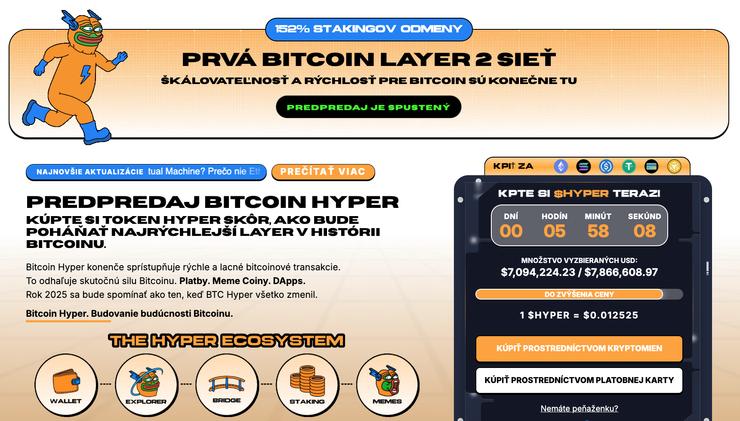
From an investor’s perspective, the interest in projects like Bitcoin Hyper stems from the desire to capture early-stage growth in protocols that solve fundamental bottlenecks. The project’s ongoing presale, which has reportedly exceeded $7 million in funding, highlights the market’s appetite for utility-driven tokens. With a current presale price point of $0.012525, the project is positioning itself as a foundational layer for future Bitcoin-based applications. The use of multichain wallets, such as Best Wallet, to facilitate these early-stage entries reflects the growing sophistication of the retail investor base, who are increasingly utilizing decentralized tools to gain exposure to pre-market assets.
Implications for Portfolio Management
The divergence between traditional Bitcoin accumulation and investment in emerging L2 infrastructure suggests a two-pronged approach for modern investors. First, the core position remains anchored in Bitcoin, utilizing DCA to ensure long-term stability and exposure to the asset’s appreciation as a store of value. Second, there is an increasing trend toward allocating a portion of capital to "ecosystem-enabling" tokens—assets like HYPER that provide the infrastructure necessary for the next phase of blockchain utility.
This strategy mimics the venture capital approach: while the primary asset (Bitcoin) provides a hedge against inflation and a baseline for growth, the secondary, higher-risk assets (L2 tokens) provide exposure to the rapid innovation occurring at the application layer. However, this approach requires rigorous due diligence. Unlike the established, transparent history of Bitcoin, new L2 projects carry inherent smart-contract risks, regulatory uncertainties, and the volatility associated with early-stage development.
Conclusion: A Maturing Market
The landscape of cryptocurrency in 2025 is significantly more complex than in the early 2010s. The transition from a "get-rich-quick" retail environment to a sophisticated market dominated by institutional capital and institutional-grade infrastructure is complete. For the individual investor, the path forward requires a balance between the proven reliability of Bitcoin and the high-growth potential of emerging technologies that address its limitations.
As the industry moves toward 200,000-dollar price targets for Bitcoin, the role of Layer 2 protocols will become increasingly vital. Whether these protocols—and the tokens that power them—will achieve the same level of widespread adoption as their parent chains remains to be seen. What is clear, however, is that the era of passive accumulation yielding outsized returns is being replaced by an era of strategic, thesis-driven investment, where understanding the technical architecture of the network is just as important as the entry price itself. Investors are advised to maintain a long-term view, prioritize security, and remain cognizant of the shift from simple asset holding to participating in the development of a more scalable, functional, and global blockchain economy.