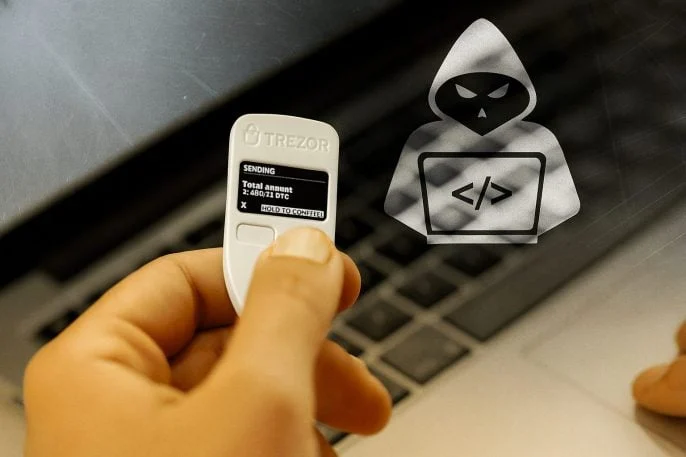
Hardware wallet manufacturer Trezor has confirmed that a data security incident involving its third-party logistics provider, ShipMonk, was significantly more extensive than initially reported. The company announced today that an additional 67,000 customers in the United States have been impacted by the breach, which exposed sensitive personal information related to orders placed between November 2019 and August 2021. This revelation marks a major expansion of a security event that has raised critical questions regarding third-party data management and the vulnerability of supply chain logistics in the cryptocurrency sector.
A Chronology of the Security Incident
The initial disclosure of the breach occurred last month, when Trezor alerted its user base to a security failure at ShipMonk, a third-party service provider responsible for the fulfillment and shipping of hardware wallets. At that time, the scope of the incident was estimated to affect 13,689 customers. Of those, 11,742 individuals suffered full exposure of their provided contact information, while 1,947 individuals experienced partial exposure.
The compromised records from the original disclosure included names, email addresses, phone numbers, shipping addresses, and order numbers. While the initial report suggested a somewhat limited geographic spread—impacting customers across the United States, the United Kingdom, Sweden, Colombia, Brazil, Italy, and Portugal—the new figures reveal that the breach was deeper and more entrenched within the provider’s historical data archives than previously understood.
Trezor stated that it has already initiated contact with all newly identified affected customers via email. The company emphasized that if a customer has not received a direct notification from Trezor, they are not part of this additional group of 67,000 affected individuals. The timeline of the exposure covers a nearly two-year window, underscoring the persistence of the data within the third-party infrastructure.
The Role of Third-Party Vendor Oversight
A significant point of contention in this incident is the discrepancy between the contractual agreements and the actual state of data retention at ShipMonk. Trezor maintains that it had sought and received written assurances from ShipMonk on multiple occasions that customer information had been securely deleted, in strict adherence to the terms of their service agreement.
The discovery that this data remained active within ShipMonk’s systems, despite these repeated confirmations, has led to a stated sense of disappointment from the hardware wallet manufacturer. This situation highlights the inherent risks of data outsourcing. Even when companies implement robust internal cybersecurity protocols, the safety of their users remains tethered to the compliance and operational integrity of their vendors.
From an industry perspective, this event serves as a case study in "data residue." Organizations often believe that once a service contract concludes, the associated data is purged. However, technical debt, legacy backups, and inadequate internal auditing at the vendor level can leave sensitive data exposed for years. Trezor’s experience highlights the necessity for more rigorous, third-party audits of vendors, rather than relying solely on written assurances or contractual clauses regarding data disposal.
The Nature of the Compromised Information
While the breach is serious, it is important to delineate what was and was not affected. Trezor’s internal infrastructure, the proprietary firmware powering its devices, and the private keys stored on its hardware wallets remain entirely secure and uncompromised. The breach was confined to the shipping and logistics layer, which handles the customer’s identity and delivery coordinates.
However, the implications of exposing names, email addresses, phone numbers, and physical addresses should not be understated. In the world of digital assets, this information is highly valuable to threat actors. The primary risk associated with this breach is not the theft of cryptocurrency directly, but the increased susceptibility of users to social engineering, phishing, and physical targeting.
The correlation between a hardware wallet purchase and a specific physical address provides bad actors with a roadmap of high-value targets. An attacker possessing this data can craft highly personalized phishing emails, posing as customer support representatives or security experts, to trick users into disclosing their 24-word recovery seeds. Furthermore, the combination of a home address and the knowledge that an individual owns a hardware wallet creates a potential risk for physical extortion or targeted burglary, a threat profile that is well-documented in the cryptocurrency community.
Mitigating the Risks: Recommendations for Affected Users
In the wake of this disclosure, Trezor has urged its customers to exercise heightened vigilance. The company is advising users to be skeptical of any unsolicited communications, whether they arrive via email, SMS, or traditional mail. Key defensive measures include:
- Strict Seed Phrase Security: Users must never input their recovery seed phrase—the 12 to 24 words generated during the initial setup of the wallet—into any website, application, or software interface. Legitimate hardware wallet companies will never ask for this information.
- Verification of Communications: If a user receives a communication purportedly from Trezor, they should verify the sender’s identity through official channels, such as the company’s verified social media profiles or the official support portal, rather than clicking links provided in the suspicious message.
- Monitoring for Phishing: Users should be wary of emails claiming that their hardware wallet is "outdated" or that there is a "security breach" requiring the user to "re-sync" their wallet by entering their recovery phrase. These are classic indicators of a phishing attempt.
- Physical Awareness: Given that physical addresses were exposed, users should be mindful of unexpected visitors or suspicious packages, though such risks are generally lower than digital threats.
Broader Industry Implications and Future Outlook
This incident is reflective of a broader trend in the cryptocurrency hardware industry, where companies are increasingly moving toward privacy-first logistics. Trezor has explicitly stated that, in response to this breach, it is working to implement anonymous delivery options for future orders. This shift toward "zero-knowledge" shipping—where the merchant does not store unnecessary personal information, or utilizes blind shipping methods—is becoming an industry standard as companies attempt to insulate their users from the fallout of vendor-side security lapses.
For the wider ecosystem, the ShipMonk incident is a reminder that privacy is a multi-layered requirement. Protecting the private keys is only the first step; protecting the metadata—the information that links a person to their assets—is the second. As hardware wallet manufacturers continue to scale their operations, the demand for privacy-focused supply chain management will likely increase.
Moreover, the regulatory landscape regarding third-party data liability is evolving. Jurisdictions such as the European Union, through the General Data Protection Regulation (GDPR), have strict requirements for data processors. While this breach involves US customers, the global nature of the crypto industry means that firms are increasingly expected to uphold high standards of data stewardship regardless of where their logistics partners operate.
Conclusion
The expansion of the ShipMonk data breach to include 67,000 additional customers is a significant development that necessitates immediate attention from those who ordered Trezor products between late 2019 and 2021. While the core security of Trezor’s hardware remains intact, the exposure of personal contact information presents a tangible risk of social engineering and targeted cyberattacks.
By acknowledging the breach and providing clear guidance to its users, Trezor is attempting to mitigate the damage. However, the event serves as a stark reminder of the limitations of relying on third-party compliance. As the crypto industry matures, the focus on securing the "last mile" of the user experience—delivery and data retention—must become just as rigorous as the development of the cryptographic protocols themselves. Users affected by this breach are encouraged to remain vigilant, ignore unsolicited requests for sensitive information, and prioritize the security of their recovery seeds above all else. For future transactions, the industry trend toward anonymous shipping offers a promising path forward in protecting the digital and physical security of the cryptocurrency community.