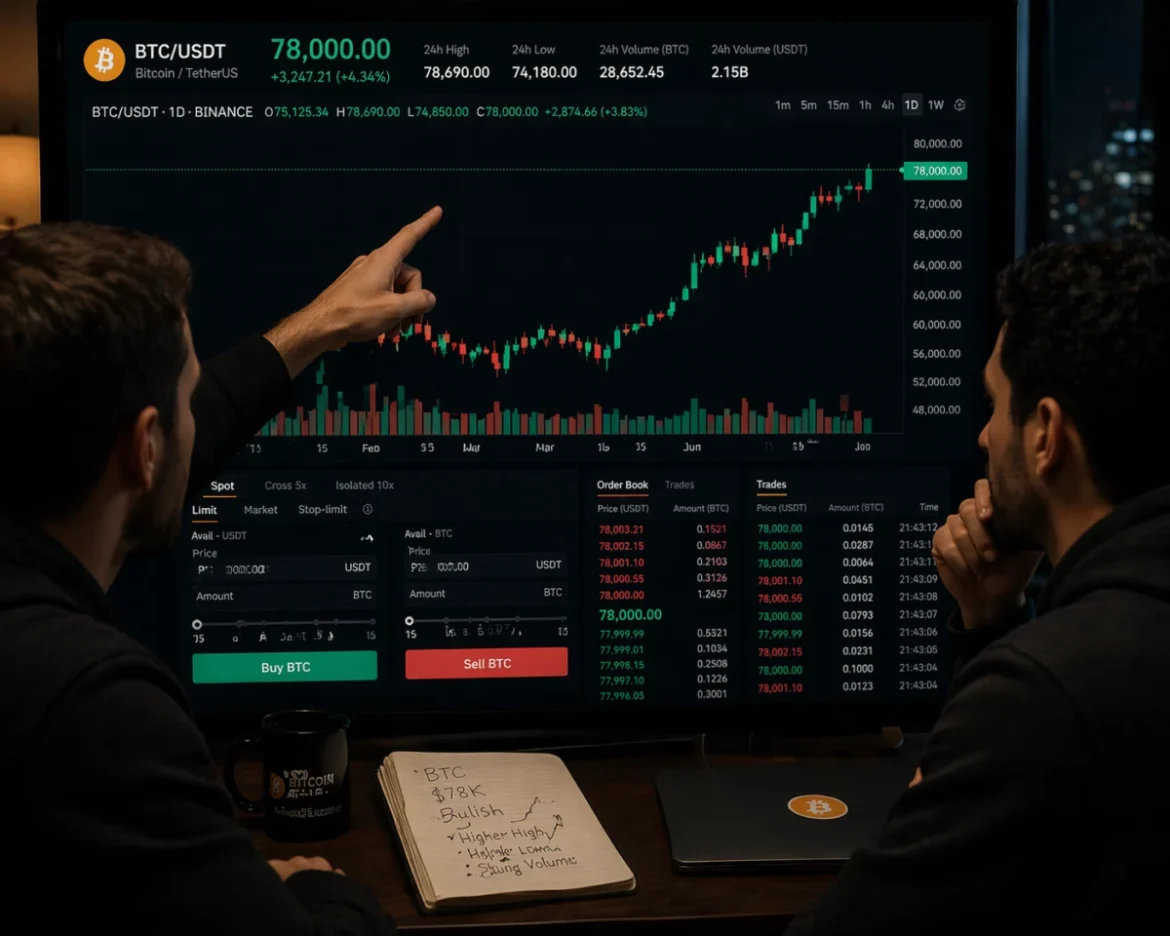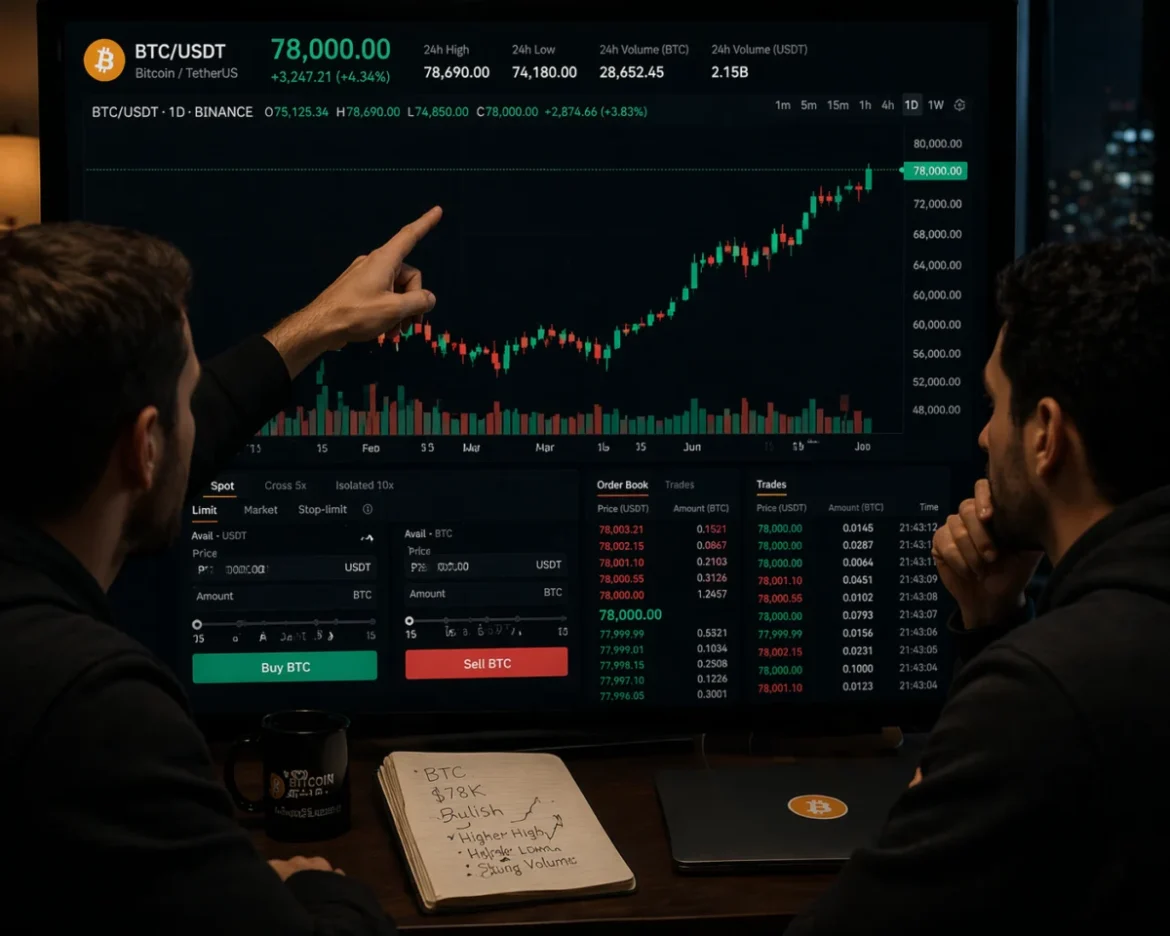
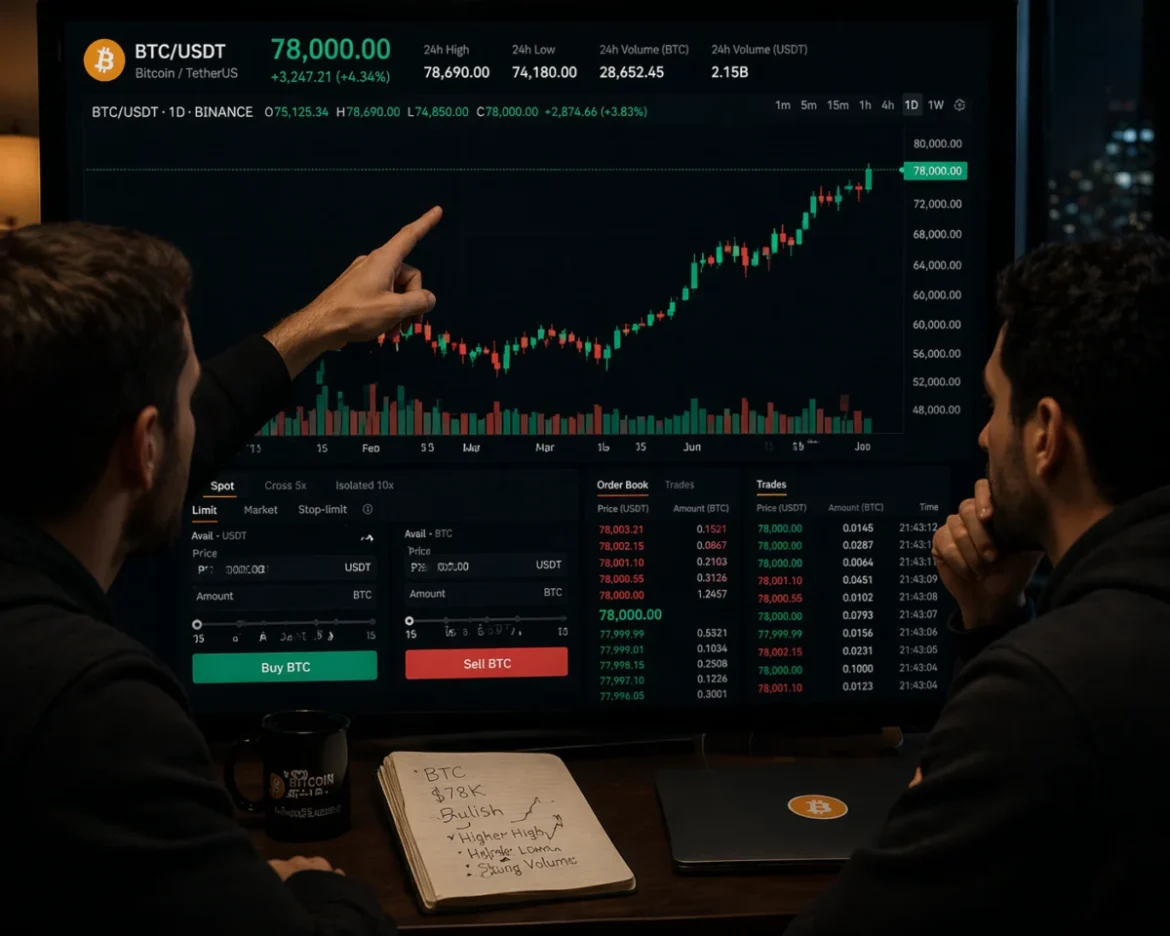
Bitcoin extended its robust weekly performance on Wednesday, comfortably trading above the $78,000 threshold following a significant 6% market-wide rally. The world’s leading cryptocurrency reached an intraday high of $78,452, marking its strongest price valuation since February 3. This upward trajectory was catalyzed by a combination of geopolitical developments in the Middle East and a massive liquidity injection by the United States Treasury.
While institutional demand through Bitcoin spot Exchange Traded Funds (ETFs) experienced a temporary cooldown, broader macroeconomic tailwinds have injected a renewed sense of optimism among digital asset traders. Market participants are increasingly viewing the intersection of shifting monetary policy maneuvers and tense geopolitical negotiations as a critical inflection point for risk assets.
Geopolitical Catalysts: The US-Iran Ceasefire Extension
The primary driver behind the midweek risk rally stems from late Tuesday announcements out of Washington. United States President Donald Trump confirmed the extension of a vital two-week ceasefire agreement, which had originally been scheduled to expire on April 22. The diplomatic extension was granted following a formal request from Pakistan, serving as an intermediary while Washington awaits a unified, comprehensive peace proposal from Tehran.
Despite the diplomatic reprieve, geopolitical tensions remain elevated. President Trump emphasized that the stringent US naval blockade of Iranian seaports will remain strictly enforced until a permanent resolution is formally codified. Nonetheless, the averted escalation in direct hostilities provided immediate relief to global financial markets. Equities, commodities, and risk-on digital assets experienced swift buying pressure as the immediate threat of a wider regional conflict subsided.
For the cryptocurrency market, which has increasingly correlated with macroeconomic and geopolitical stability, the news acted as a springboard. Traders quickly pivoted back into growth-oriented and alternative assets, propelling Bitcoin decisively past previous resistance levels.
The US Treasury’s $15 Billion Buyback Plan and Market Liquidity
Compounding the positive sentiment generated by the geopolitical truce, the US Treasury is poised to execute one of the largest debt buyback operations in modern financial history. The Treasury announced plans to purchase $15 billion of its own debt, matching the largest single buyback operation ever recorded.
This financial maneuver is expected to inject substantial liquidity into the broader financial ecosystem. In economic environments defined by significant capital injections, liquidity-driven assets like Bitcoin historically thrive. Excess capital searching for yield and high-beta exposure frequently finds its way into alternative stores of value, insulating digital assets from traditional fixed-income stagnation.
Market analysts note that the influx of liquidity arrives at an opportune time for the digital asset ecosystem, potentially offsetting any lingering macroeconomic headwinds. As central bank and treasury policies oscillate toward localized easing measures, Bitcoin continues to assert its role as a premier beneficiary of expanding fiat liquidity pools.

Institutional Inflows and Cautious Investor Sentiment
Despite the aggressive price appreciation, institutional participation through spot Bitcoin ETFs displayed a marked divergence on Tuesday. Spot Bitcoin ETFs recorded modest net inflows of just $11.84 million, representing a sharp contraction compared to the $238.37 million influx recorded at the beginning of the week.
This deceleration in institutional capital allocation highlights a degree of underlying caution among legacy financial institutions and corporate treasuries. Market makers attribute the cautious stance to lingering uncertainties surrounding the durability of the US-Iran peace talks and the final terms of any prospective diplomatic framework.
Financial analysts emphasize that while retail-driven momentum and macroeconomic liquidity are currently dictating short-term price discovery, sustained long-term institutional backing remains crucial for defending higher valuation brackets. A resurgence in spot ETF inflows in the coming trading sessions could provide the necessary volume to challenge psychological resistance milestones.
Technical Analysis: Bullish Momentum and Key Price Levels
From a technical perspective, the BTC/USD 4-hour chart maintains a firmly established near-term bullish bias. Bitcoin’s current price action comfortably hovers above both its 50-day and 100-day Exponential Moving Averages (EMAs), which are currently positioned at $72,345 and $75,368, respectively.
Momentum indicators further validate the current buyer-controlled environment. The Relative Strength Index (RSI) remains in constructive territory well above the centerline, while the Moving Average Convergence Divergence (MACD) indicator continues to print positive histogram bars, signaling persistent buying pressure without immediate exhaustion signals.
Upside resistance levels are clearly defined by market technicians. The immediate hurdle sits near the 50% Fibonacci retracement level at $78,962. A decisive break above this threshold would clear the path toward the psychological $80,000 milestone, followed by the 200-day EMA positioned at $82,769.
Conversely, should macroeconomic sentiment shift or profit-taking accelerate, initial downside support is anticipated near the prior channel top at $75,680. Deeper structural cushions are reinforced by the 100-day EMA at $75,368 and the 38.2% Fibonacci retracement level at $74,487. Major foundational support rests at the 50-day EMA near $72,345, with the lower boundary of the prevailing trading channel offering a final macro defense line near $62,950.
Broader Market Implications and Forward Outlook
The convergence of geopolitical stabilization in the Middle East and expansive fiscal liquidity highlights the complex interplay between traditional macroeconomic policy and digital asset valuations. As central banks and treasuries navigate complex debt management strategies, cryptocurrencies are increasingly demonstrating their dual nature as both risk-on growth vehicles and decentralized macroeconomic hedges.
Looking ahead, market participants will closely monitor incoming diplomatic updates from Washington and Tehran, alongside scheduled data releases concerning liquidity flows and Treasury auction results. While institutional adoption pauses for breath, the technical and fundamental framework supporting Bitcoin above the $78,000 level remains robust, setting the stage for a volatile yet potentially lucrative second quarter for digital asset investors.