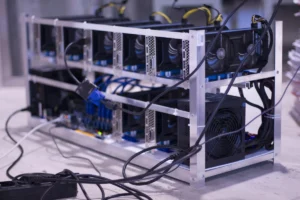
The long-awaited Ethereum Merge fundamentally transformed the architecture of the world’s second-largest cryptocurrency, shifting its consensus mechanism from energy-intensive Proof-of-Work (PoW) to Proof-of-Stake (PoS). While this monumental upgrade successfully reduced Ethereum’s energy consumption by an estimated 99.95%, it simultaneously triggered an unprecedented crisis for the global community of GPU cryptocurrency miners. Overnight, millions of specialized graphics processing units (GPUs) were rendered obsolete for the Ethereum network, forcing a massive migration of computational power—known as hashrate—onto alternative PoW networks. This sudden influx has overwhelmed remaining GPU-mined assets, causing network difficulties to skyrocket and profitability margins to plummet deeply into the negative. As electricity costs outpace rewards, the viability of traditional hardware-based mining is facing its most severe existential threat in the history of digital assets.
To understand the severity of the current crisis, one must examine the fundamental mechanics of Proof-of-Work blockchains. Unlike Proof-of-Stake systems, which rely on validators staking capital in the form of native tokens, PoW networks require miners to dedicate physical computing power to solve complex cryptographic puzzles. In exchange for securing the network and validating transactions, miners are rewarded with newly minted coins and transaction fees. To maintain a steady and predictable rate of block production regardless of how many miners join or leave the network, PoW blockchains incorporate an automated mechanism called mining difficulty adjustment. When hashrate increases, the difficulty of the cryptographic puzzles automatically scales upward, making it harder for individual miners to discover blocks unless they scale up their computing power proportionally.

Before the Merge, Ethereum stood as the undisputed titan of GPU mining. Its market capitalization, daily trading volume, and robust ecosystem supported a hashrate of unprecedented proportions. In contrast, alternative GPU-mineable coins—such as Ethereum Classic (ETC), Ravencoin (RVN), Ergo (ERG), and Beam—operated on a fraction of that computational scale. Industry analysts had warned for months leading up to the transition that alternative chains lacked the market capitalization and liquidity necessary to absorb the colossal tidal wave of displaced Ethereum miners. When the network successfully completed its transition on September 15, 2022, these pre-merge warnings materialized instantly. A vast majority of the global GPU mining apparatus was abruptly cast adrift, searching desperately for profitable alternatives to keep hardware operations running.
Data extracted from prominent crypto mining profitability tracking platforms, such as WhatToMine, vividly illustrates the immediate devastation wrought by the hashrate migration. Across virtually every major GPU-mineable cryptocurrency, operational costs have completely eclipsed revenue generation. Ethereum Classic, which emerged immediately following the Merge as the primary destination for displaced ETH miners, experienced a staggering 280% surge in its network hashrate within days. However, this massive influx of computational power triggered a corresponding explosion in mining difficulty. Consequently, miners operating standard mid-tier hardware—such as a rig equipped with three AMD RX 480 graphics cards—found themselves facing net losses of approximately -$0.78 per hour, calculated against a standard residential electricity cost of $0.10 per kilowatt-hour (kWh). Even elite, high-end consumer hardware like the NVIDIA GeForce RTX 3090 Ti fared no better, registering hourly losses hovering around -$0.50.
Faced with mounting utility bills and plummeting revenues, miners have been forced into a difficult triad of choices: liquidate hardware assets at depressed market values, temporarily idle operations in hopes of a market rebound, or continue mining at a net financial loss while speculating on the long-term appreciation of alternative PoW tokens. Secondary markets for graphics cards have already witnessed an influx of used GPUs as commercial and hobbyist miners alike attempt to salvage residual value from rigs that are no longer economically viable. Meanwhile, hardware manufacturers that previously profited immensely from the mid-pandemic crypto mining boom are bracing for a prolonged contraction in demand for high-end gaming and data processing cards.

Industry stakeholders, mining pool operators, and macroeconomic analysts have offered varied perspectives on the long-term ramifications of this structural shift. Proponents of Proof-of-Stake argue that the Merge represents an unavoidable maturation of the blockchain industry, eliminating redundant energy expenditure and positioning the asset class for broader institutional adoption. Conversely, traditionalist factions within the mining community maintain that Proof-of-Stake centralizes governance and monetary control among wealthy capital holders, undermining the decentralized ethos originally championed by Bitcoin. Representatives from major mining pools have noted that while some smaller PoW networks may eventually optimize their difficulty algorithms or experience price surges that restore profitability, the sheer scale of the displaced Ethereum hashpower means that the era of accessible, profitable desktop and small-scale GPU mining may be permanently concluded.
The macroeconomic backdrop has compounded the pressure on the digital asset ecosystem. At the time of the Merge, the broader cryptocurrency market was navigating a persistent macroeconomic bear market driven by aggressive central bank tightening, inflationary pressures, and risk-off sentiment across global financial markets. Ethereum’s native token, Ether (ETH), was trading around the $1,400 threshold, marking a notable decline of approximately 6% over the preceding week. The confluence of declining asset prices and skyrocketing operational expenditures has squeezed profit margins to razor-thin tolerances, leaving little room for operational inefficiency within the remaining mining sector.
Looking forward, the implications of the post-Merge landscape extend far beyond individual balance sheets, influencing energy markets, hardware manufacturing, and the ideological evolution of decentralized networks. As graphics card-based mining transitions from a lucrative commercial enterprise into a deeply unprofitable endeavor for the vast majority of participants, the geographical distribution of hashrate and the technological development of alternative consensus mechanisms will face intense scrutiny. Whether a new Proof-of-Work asset will eventually scale to absorb the dormant GPU infrastructure remains an open question, but for now, the digital asset mining industry has officially crossed a permanent historical divide.