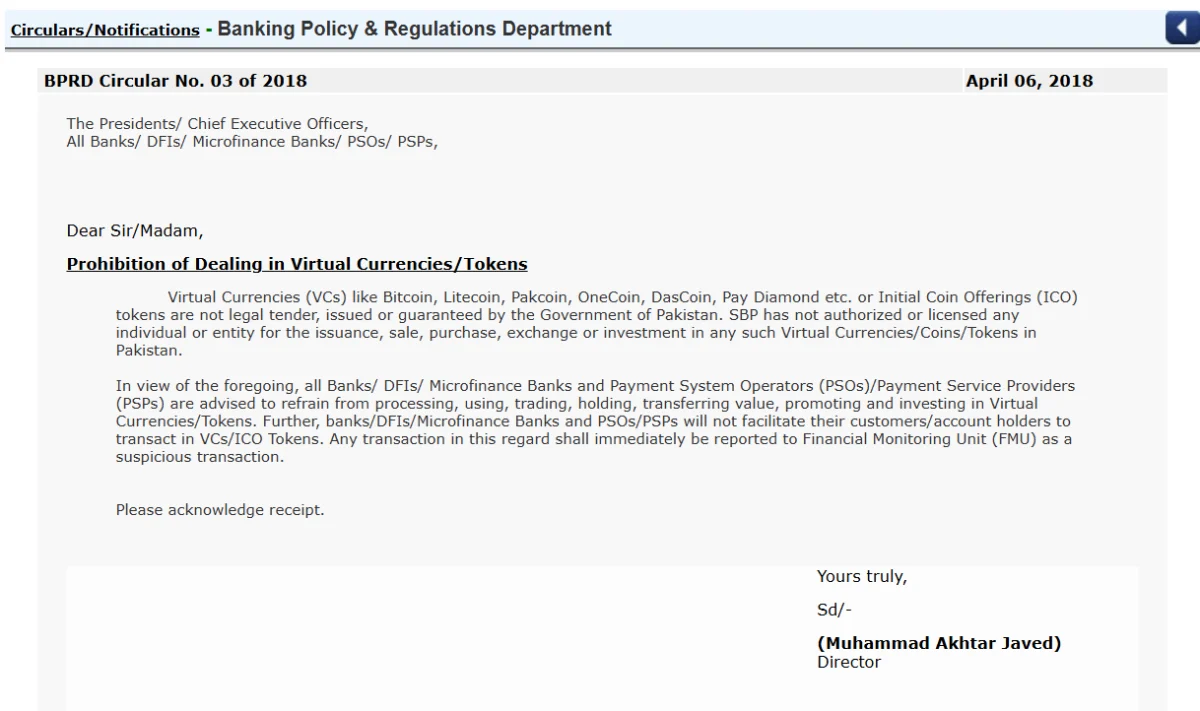
The State Bank of Pakistan (SBP), the nation’s central monetary authority, has officially reversed its long-standing prohibition on virtual currencies, signaling a transformative shift in the country’s financial landscape. According to a recently issued regulatory notice, the SBP has authorized commercial banks and other regulated financial institutions to provide banking services to licensed Virtual Asset Service Providers (VASPs). This move effectively dismantles the restrictive regime established in 2018, which had previously barred banks from engaging in any transactions involving virtual currencies, tokens, or initial coin offerings (ICOs).
The policy reversal comes as part of a broader national strategy to formalize the digital asset sector, integrate it into the regulated economy, and mitigate the risks associated with the burgeoning underground crypto market. By allowing licensed VASPs to access the traditional banking system, Pakistan aims to bring transparency to a sector that has operated in the shadows for nearly a decade, while simultaneously fostering innovation in the domestic fintech space.
The New Regulatory Landscape: Rules of Engagement
The SBP’s decision is not an unconditional endorsement of virtual assets but rather a highly controlled "onboarding" framework. Under the revised guidelines, banks are permitted to open accounts for VASPs that have secured a formal license from the newly established Pakistan Virtual Asset Regulatory Authority (PVARA).
A cornerstone of this new framework is the mandatory establishment of Client Money Accounts (CMAs). These accounts are designed to ensure the total segregation of a VASP’s operational funds from the funds belonging to its customers. By requiring banks to maintain these separate pools of capital, the SBP aims to protect consumers from the risks of commingling, which has been a primary cause of failure in several high-profile global crypto exchange collapses.
The SBP has outlined several stringent conditions for these accounts:
- Denomination: All accounts must be denominated in Pakistani Rupees (PKR).
- Interest-Free Nature: These accounts are strictly non-interest-bearing, preventing them from being used as yield-generating vehicles within the traditional banking system.
- Prohibition of Cash: To ensure a clear audit trail, cash deposits and withdrawals are strictly prohibited. All movements of funds must occur through verifiable electronic channels.
- No Collateralization: These accounts cannot be used as collateral for any form of credit or financing from the bank.
Furthermore, the SBP has made it clear that banks themselves are prohibited from using their own proprietary funds or customer deposits to invest in, trade, or hold virtual assets. The central bank’s stance remains one of cautious facilitation: banks are providers of the "rails" for the industry, but they are not permitted to become market participants themselves.
Chronology of Pakistan’s Crypto Evolution
The journey toward legalization has been marked by years of regulatory friction and explosive grassroots adoption.
April 2018: The Blanket Ban
The SBP issued BPRD Circular No. 3, which prohibited all banks, microfinance banks, and payment system operators from processing, using, trading, or investing in virtual currencies. The central bank warned the public that crypto assets were not legal tender and carried significant risks of fraud and volatility.
2019–2021: The Underground Surge
Despite the ban, Pakistan emerged as one of the fastest-growing markets for cryptocurrency adoption globally. According to reports from the Federation of Pakistan Chambers of Commerce and Industry (FPCCI), peer-to-peer (P2P) crypto activity surged by over 700% during this period. Without access to formal banking, users turned to informal "Digital Hundi" networks and P2P marketplaces on global exchanges like Binance.
2022–2023: Judicial and Legislative Pressure
The Sindh High Court played a pivotal role during these years, frequently questioning the federal government’s stance on crypto. The court urged the government to find a middle ground that protected investors while allowing for technological progress. This period saw the formation of several high-level committees tasked with drafting a regulatory framework.
Early 2026: The Virtual Assets Act
The legislative breakthrough occurred with the enactment of the Virtual Assets Act of 2026. This law established the PVARA as the primary watchdog for the sector and provided the legal definition of virtual assets, paving the way for the SBP’s recent policy update.
Supporting Data: The Scale of Pakistan’s Crypto Market
The SBP’s decision is largely a pragmatic response to the sheer scale of the domestic crypto market. Estimates from various blockchain analytics firms and the FPCCI suggest that over 20 million Pakistanis have interacted with digital assets in some capacity.
The FPCCI’s research highlighted that by the end of 2021, Pakistanis held an estimated $20 billion in crypto assets—a figure that at the time rivaled the country’s official foreign exchange reserves. Because these assets were held on offshore exchanges or in private wallets, the Pakistani government was unable to tax the transactions or monitor them for potential money laundering or terror financing.
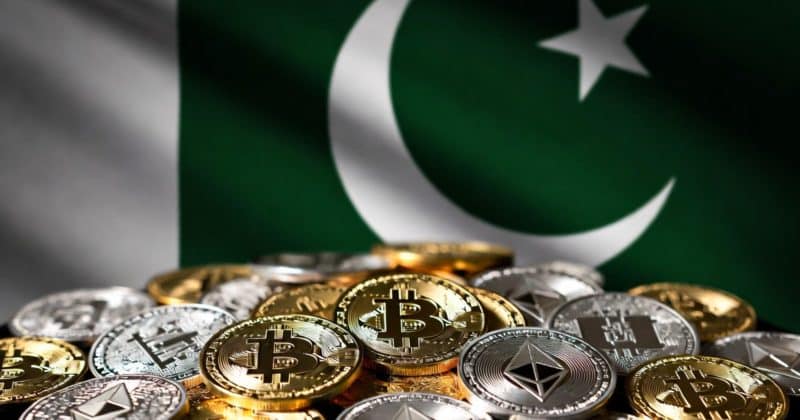
The rise of Binance in the country also serves as a critical data point. Pakistan consistently ranked in the top 15 of the Global Crypto Adoption Index by Chainalysis, driven by a young, tech-savvy population looking for hedges against inflation and the devaluation of the rupee. By formalizing the sector, the government hopes to redirect this capital into the documented economy.
Enhanced Due Diligence and AML/CFT Compliance
One of the primary drivers behind the SBP’s cautious approach is the need to comply with international standards set by the Financial Action Task Force (FATF). Pakistan has historically faced scrutiny regarding its Anti-Money Laundering (AML) and Countering the Financing of Terrorism (CFT) frameworks.
Under the new rules, banks must perform "Enhanced Due Diligence" (EDD) before onboarding a VASP. This goes beyond standard "Know Your Customer" (KYC) protocols. Banks are required to:
- Conduct a deep-dive analysis of the VASP’s business model and ownership structure.
- Evaluate the VASP’s own AML/CFT internal controls and their ability to comply with the "Travel Rule" (the requirement to share transaction data between financial institutions).
- Perform continuous transaction monitoring to identify suspicious patterns that might suggest illicit activity.
- Profile the risk of the VASP’s customer base, including their geographic exposure and the nature of their transactions.
The SBP has emphasized that the responsibility for regulatory compliance rests solely with the banks. Even if a VASP is licensed by the PVARA, a bank can refuse to provide services if it deems the risk to be outside its internal risk appetite.
Official Responses and Stakeholder Reactions
While official statements from the Ministry of Finance have been measured, there is a sense of optimism among the country’s burgeoning tech community. A spokesperson for the PVARA noted that the authority’s primary goal is "investor protection and market integrity," adding that the new law "seeks to unlock innovation through controlled environments like regulatory sandboxes and dedicated virtual asset zones."
Financial analysts suggest that this move could improve Pakistan’s standing with international investors. By creating a clear legal framework, the country is signaling that it is ready to participate in the "Web3" economy.
"The SBP has recognized that a ban is not a policy; it is merely an abdication of oversight," said a Karachi-based fintech consultant. "By bringing VASPs into the banking fold, the state gains visibility. They can see where the money is coming from and where it is going. This is a win for national security and a win for the digital economy."
Broader Impact and Future Implications
The legalization of banking services for VASPs is expected to have several long-term implications for Pakistan’s economy:
1. Reduced Reliance on Informal Channels:
By providing a legal path for on-ramping and off-ramping funds, the government expects a significant reduction in "Hundi" and "Hawala" activities. This could stabilize the demand for the Pakistani Rupee in the open market, as users will no longer need to rely on black-market currency exchanges to fund their crypto accounts.
2. Taxation and Revenue Generation:
A regulated crypto sector provides a new revenue stream for the cash-strapped government. Through the PVARA licensing fees and potential capital gains taxes on crypto transactions, the state could recoup significant funds that were previously lost to the shadow economy.
3. Fintech Innovation and Tokenization:
The Virtual Assets Act of 2026 specifically mentions support for "tokenized financial systems." This opens the door for the tokenization of real-world assets (RWA) such as real estate, government bonds, and corporate debt. If successful, this could democratize access to investment opportunities for the average Pakistani citizen and increase liquidity in the local markets.
4. Integration with Global Exchanges:
Major global players like Binance and OKX, which already have massive user bases in Pakistan, will now have a clear path to becoming fully compliant, locally licensed entities. This would likely result in better localized support, enhanced security for users, and the potential for direct PKR-to-crypto trading pairs on these platforms.
In conclusion, the State Bank of Pakistan’s decision to authorize banking services for licensed VASPs marks the end of an era of isolation and the beginning of a new chapter of regulated integration. While the SBP’s "strict compliance" requirements reflect a deep-seated caution, the framework provides the necessary infrastructure for Pakistan to safely navigate the complexities of the global digital asset economy. The success of this initiative will ultimately depend on the effective coordination between the SBP, the PVARA, and the banking sector in balancing the scales between innovation and financial stability.