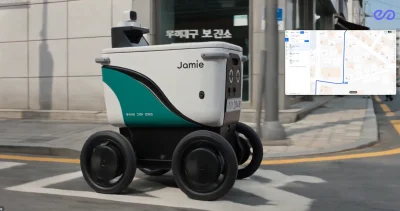
Peaq has announced a significant advancement in the integration of autonomous systems with decentralized finance, showcasing a simulated robotic delivery system capable of processing onchain payments. This groundbreaking demonstration, executed through robotic.sh, peaq’s marketplace built on its peaqOS operating system, marks a pivotal moment in the development of real-world decentralized physical infrastructure networks (DePIN). The system allows for autonomous decision-making and financial transactions by machines, eliminating the need for human intervention in the payment process.
The demonstration vividly illustrated a simulated workflow involving a delivery robot from Serve Robotics. This virtual robot navigated the bustling streets of Seoul, leveraging the sophisticated mapping capabilities of NAVER Maps. The crucial aspect of the demonstration was the robot’s ability to autonomously settle payments in Tether (USDT) directly on the blockchain, facilitated by Tether’s Wallet Development Kit (WDK) operating on the Solana network. This seamless integration signifies a leap forward in enabling machines to not only perform physical tasks but also engage in verifiable, onchain financial settlements.
According to peaq, the showcased workflow empowers robots to access essential digital services, such as real-world mapping and navigation data. The system then allows these machines to make autonomous decisions regarding their operational path and execute blockchain-based payments for these services without any human oversight. The company emphasized that all transaction records, wallet activities, and settlement processes are transparent and verifiable on the blockchain, fostering an unprecedented level of trust and accountability in machine-to-machine transactions.
Expansion of Machine-Accessible Services on robotic.sh
The integration with NAVER Maps is now a live offering for any machine operating on peaqOS, accessible through the robotic.sh marketplace. This marketplace, which officially launched this week, is designed to host a diverse array of machine-accessible services. Currently, robotic.sh supports a growing list of functionalities crucial for autonomous systems, including AI inference tools, sophisticated search and data platforms, cloud-based analytics, CAPTCHA solving services, and decentralized storage solutions. This comprehensive suite of services aims to provide a robust ecosystem for machines to interact with and leverage digital resources autonomously.
Peaq’s vision extends to a universal platform where any mobile robot, autonomous vehicle, drone, or humanoid robot operating on peaqOS can seamlessly access these services. A key feature of this accessibility is its blockchain-agnostic nature; machines can utilize these services irrespective of the specific blockchain network they are connected to. This interoperability is fundamental to peaq’s mission of creating a scalable and inclusive DePIN infrastructure.
Background and Chronology of the Development
The genesis of this advancement can be traced back to peaq’s ongoing commitment to building the infrastructure for the decentralized economy of machines. The development of peaqOS, a specialized operating system designed for the Internet of Machines, has been a core focus. This operating system provides the foundational layer for machines to connect, communicate, and transact securely.
The integration of real-world mapping services like NAVER Maps into robotic.sh represents a significant milestone. NAVER Maps, developed by the South Korean tech giant NAVER, is a widely used and highly accurate mapping service, particularly prevalent in Asia. Its incorporation into the peaq ecosystem allows delivery robots and other autonomous systems to benefit from precise, real-time navigation data, a critical component for efficient and safe operation.
The choice of Tether (USDT) and Solana for payment settlement is also strategic. Tether is the largest stablecoin by market capitalization, offering price stability essential for financial transactions. Solana, known for its high transaction throughput and low fees, provides a suitable blockchain environment for the rapid and cost-effective settlement of payments required by real-time robotic operations. The utilization of Tether’s Wallet Development Kit further streamlines the integration process for developers and machines.
The simulated demonstration, which occurred on May 22, 2026, as indicated by the Twitter post from peaq, served as a proof-of-concept for the system’s capabilities. The tweet itself, posted by peaq, highlighted the "showcase: a simulated workflow for a @ServeRobotics delivery robot navigating Seoul on NAVER Maps, settling onchain through @WDK_tether on Solana." The accompanying message, "A robot accessing a real-world digital service, making a real-time decision, and getting paid for it. No human in the loop," succinctly captures the essence of this technological leap.
Serve Robotics, a prominent player in the autonomous delivery space, was featured in the demonstration. The company specializes in developing and deploying sidewalk robots for last-mile delivery, making their inclusion a logical choice for showcasing a realistic delivery scenario. Their involvement underscores the practical applications of peaq’s technology in addressing tangible industry needs.
Supporting Data and Industry Context
The DePIN sector, which peaq is actively shaping, is experiencing rapid growth. DePIN refers to networks of decentralized physical infrastructure, powered by blockchain technology and token incentives, that reward participants for contributing resources like computing power, storage, or connectivity. This paradigm shift aims to create more efficient, resilient, and user-owned infrastructure compared to traditional centralized models.
According to various market analyses, the DePIN market is projected to grow significantly in the coming years. While specific figures vary, estimates often place the market size in the billions of dollars, with substantial annual growth rates. This growth is fueled by the increasing demand for decentralized solutions across various industries, including logistics, energy, telecommunications, and data storage.
Peaq’s platform positions itself as a foundational layer for this burgeoning ecosystem. With over 60 applications already deployed and supported across more than 20 industries, peaq has demonstrated its ability to foster a diverse range of DePIN projects. The network’s capacity to integrate millions of machines and devices highlights its scalability and potential to become a central hub for the machine economy.
The specific use case of autonomous robotic delivery taps into the massive global logistics market. The last-mile delivery segment, in particular, is ripe for disruption by autonomous solutions due to its high costs and operational complexities. By enabling robots to independently manage navigation and payments, peaq’s technology can significantly reduce operational overhead and improve delivery efficiency.
Analysis of Implications and Future Potential
The implications of peaq’s simulated robotic delivery system are far-reaching. Firstly, it represents a significant step towards true machine autonomy. By enabling robots to access services, make decisions, and execute financial transactions without human intervention, peaq is paving the way for a future where machines can operate as independent economic agents. This could unlock new business models and efficiencies across various sectors.
Secondly, the successful integration of onchain payments for machine-executed services strengthens the credibility and utility of DePIN. Verifiable onchain transactions ensure transparency and accountability, which are crucial for building trust in decentralized systems. This demonstration showcases how blockchain technology can be applied to solve real-world problems in tangible ways, moving beyond theoretical applications.
The ability for machines to access a diverse range of services through a decentralized marketplace like robotic.sh also points to a future of interconnected and intelligent autonomous systems. Robots could potentially "rent" AI processing power for complex tasks, access vast datasets for analysis, or utilize decentralized storage for their operational data, all managed and paid for autonomously.
The broader impact on the logistics industry could be transformative. Autonomous delivery robots, empowered by such systems, could operate 24/7, handle increased delivery volumes, and reduce delivery times, especially in urban environments. The cost savings associated with reduced human labor and optimized operations could translate into more affordable delivery services for consumers and businesses alike.
Furthermore, this development could accelerate the adoption of robots in various service industries beyond delivery. Imagine autonomous maintenance robots that can order parts and pay for their services, or agricultural robots that autonomously procure seeds and fertilizers, all facilitated by onchain transactions.
Official Responses and Perspectives
While direct statements from Serve Robotics or NAVER were not included in the initial announcement, their participation in the demonstration implies a level of engagement and interest in the potential of this technology. Companies operating in advanced robotics and mapping services are actively exploring how blockchain and decentralized technologies can enhance their offerings and operational efficiency.
Peaq’s leadership has consistently articulated a vision for a decentralized future where machines play a central role. The company’s focus on building robust DePIN infrastructure is driven by the belief that this model will lead to more equitable, efficient, and sustainable systems. The success of this demonstration validates their strategic direction and technological development.
The broader blockchain community is likely to view this development as a positive indicator of the maturity of DePIN solutions. The ability to demonstrate a clear, real-world application with significant economic implications can attract further investment, development, and adoption within the DePIN space.
Challenges and Future Outlook
Despite the promising outlook, several challenges remain for the widespread adoption of such systems. Scalability of blockchain networks, regulatory frameworks surrounding autonomous machines and their financial activities, and the security of machine-to-machine communication are critical areas that will require continued attention and development.
Ensuring the secure and reliable operation of autonomous systems in complex, real-world environments is paramount. The simulation provides a strong proof-of-concept, but live deployment will necessitate rigorous testing and adherence to safety standards.
The interoperability between different blockchain networks and machine operating systems will also be a key factor in the long-term success of platforms like peaq. The commitment to blockchain-agnostic service access is a significant step in this direction.
Looking ahead, peaq’s continued development of peaqOS and the expansion of robotic.sh are poised to drive further innovation in the Internet of Machines. The successful integration of autonomous decision-making and onchain payments for physical tasks represents a foundational element for a future economy powered by intelligent, interconnected machines. This advancement not only demonstrates technical prowess but also signals a significant shift in how machines will interact with the digital and physical worlds, creating new possibilities for efficiency, automation, and economic participation.