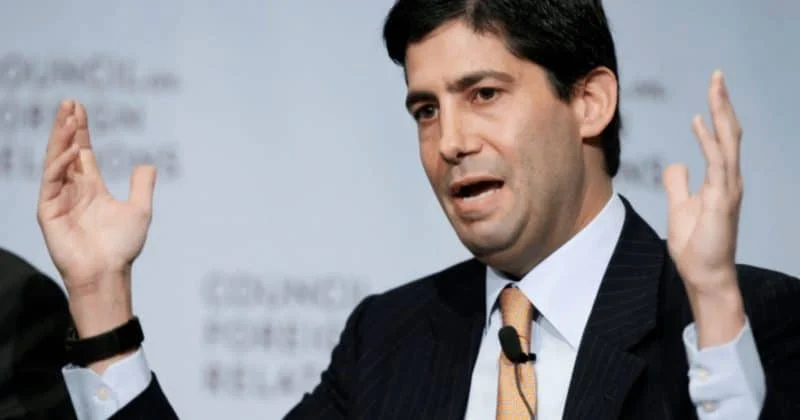
Kevin Warsh, President Donald Trump’s nominee to lead the Federal Reserve, has submitted a comprehensive financial disclosure revealing a net worth estimated between $131 million and $209 million, characterized by a sophisticated portfolio heavily weighted toward the frontiers of technology, decentralized finance, and aerospace. The filing, required as part of the Senate confirmation process, offers an unprecedented look into the private financial interests of a potential central bank leader, showcasing a deep personal involvement in the very industries—artificial intelligence, cryptocurrency, and private space exploration—that are currently reshaping the global economy.
The disclosure marks a significant departure from the traditional investment profiles of previous Federal Reserve chairs, who have historically favored conservative bond holdings, index funds, or real estate. Warsh’s holdings suggest a career spent at the intersection of high-level monetary policy and aggressive private-sector venture capital. With direct stakes in Elon Musk’s SpaceX and the prediction market platform Polymarket, as well as a myriad of early-stage startups, Warsh’s financial alignment reflects a "pro-innovation" stance that aligns with the broader economic agenda of the Trump administration.
A Portfolio Built on Future Technologies
According to the documents filed with the Office of Government Ethics, a substantial portion of Warsh’s wealth is managed through institutional vehicles and advisory roles. Specifically, the statement lists more than $100 million in exposure through Juggernaut Fund LP. These positions are closely tied to his advisory work with the Duquesne Family Office, the investment firm led by legendary hedge fund manager Stanley Druckenmiller. This connection is notable, as Druckenmiller has been a vocal critic of recent Federal Reserve policy, often advocating for a more disciplined approach to the money supply and a greater appreciation for market signals.
Beyond the institutional funds, Warsh’s personal investments through DCM Investments 10 LLC reveal a granular interest in the "Web3" and "Fintech" ecosystems. The disclosure identifies dozens of smaller positions, each valued at under $500,000, representing a diversified bet on the infrastructure of the future digital economy. Among these are:
- Tenderly: An Ethereum-based development platform that provides tools for smart contract testing and monitoring.
- Polymarket: A decentralized prediction market that gained massive mainstream attention during the 2024 election cycle for its high-volume betting on political outcomes.
- Recraft and Delphi AI: Ventures focused on generative artificial intelligence and machine learning applications.
- Outpace Bio: A biotechnology firm specializing in protein engineering.
- Lemon Cash and Stashfin: Fintech platforms targeting emerging markets in Latin America and Asia, respectively.
This diverse array of investments suggests that Warsh possesses a technical understanding of the "plumbing" of modern finance—knowledge that could prove pivotal as the Federal Reserve navigates the rise of stablecoins and the potential implementation of a Central Bank Digital Currency (CBDC).
Chronology of Kevin Warsh’s Rise in Financial Policy
Kevin Warsh’s journey to his current nomination is one defined by rapid ascent and high-stakes crisis management. To understand the implications of his potential chairmanship, it is necessary to examine the timeline of his career:
- 2002–2006: Warsh served as a key economic advisor to President George W. Bush, holding the position of Special Assistant to the President for Economic Policy and Executive Secretary of the National Economic Council. During this period, he was a central figure in coordinating the administration’s response to domestic and international economic challenges.
- 2006: At the age of 35, Warsh was appointed to the Federal Reserve Board of Governors, making him the youngest person ever to hold the position. His appointment was initially met with skepticism by some who viewed him as too young or politically connected, but he quickly gained respect for his work during the ensuing financial turbulence.
- 2008–2009: During the height of the Great Recession, Warsh served as the Fed’s primary liaison to Wall Street. He worked closely with then-Chair Ben Bernanke and Treasury Secretary Hank Paulson to architect the emergency liquidity facilities that prevented a total collapse of the banking system.
- 2011: Warsh resigned from the Federal Reserve, citing concerns over the long-term inflationary risks of the Fed’s second round of quantitative easing (QE2). His departure signaled his emergence as a "hawk" who favored more traditional, rules-based monetary policy.
- 2011–2024: Following his time at the Fed, Warsh joined the Hoover Institution at Stanford University as a Distinguished Visiting Fellow. He also served as a consultant for the Duquesne Family Office and sat on several corporate boards, including UPS and Courier.
- November 2024: President-elect Donald Trump officially named Warsh as his choice to succeed Jerome Powell, whose term as Chair expires in 2026.
The "Pro-Bitcoin" Fed Chair?
One of the most discussed aspects of Warsh’s nomination is his perceived openness to digital assets. Michael Saylor, the founder of MicroStrategy and a prominent Bitcoin advocate, recently predicted that Warsh could emerge as the "first pro-Bitcoin Fed chair." Saylor’s optimism is rooted in Warsh’s historical commentary, which has often treated Bitcoin with a level of intellectual curiosity rarely seen among central bankers.
Warsh has previously characterized Bitcoin as "digital gold," acknowledging its potential to serve as a decentralized store of value in an era of currency debasement. However, he has remained careful to maintain a distinction between private assets and the public currency. In various speeches and op-eds, Warsh has argued that while Bitcoin is not a substitute for the U.S. dollar as a medium of exchange, it serves as a critical "signal" for policymakers. He suggests that when investors flock to Bitcoin, it may indicate a lack of confidence in traditional monetary policy or rising inflationary expectations.
His engagement with the crypto sector is not merely rhetorical. The financial disclosure shows early-stage exposure to firms such as Bitwise and Basis, as well as connections to Silicon Valley venture capital titan Marc Andreessen. This background suggests that under a Warsh-led Fed, the regulatory environment for digital assets might shift from one of "regulation by enforcement" to one of "integration and innovation."
Institutional Reactions and Economic Philosophy
The reaction to Warsh’s nomination has been largely split along ideological and institutional lines. Within the Republican party, Warsh is viewed as a reformer who can restore the Fed’s focus on price stability while reducing its footprint in the credit markets. Supporters point to his experience during the 2008 crisis as proof that he can handle market volatility with a cool head.
Conversely, some progressive economists express concern that Warsh’s "hawkish" tendencies could lead to premature interest rate hikes, potentially stifling job growth. There are also questions regarding his independence. Given President Trump’s history of public criticism toward Jerome Powell, critics wonder if Warsh will be able to maintain the Federal Reserve’s autonomy if pressured by the White House to lower rates during an election cycle.
However, Warsh’s financial disclosure may actually serve to bolster his credibility with market participants. By holding significant stakes in private equity and venture capital, he demonstrates a "skin in the game" mentality that resonates with the private sector. Unlike many career academics who lead central banks, Warsh has spent the last decade seeing how capital is allocated in the real world.
Implications for Federal Reserve Policy
If confirmed, a Warsh-led Federal Reserve is expected to focus on several key areas that represent a shift from the Powell era:
- Monetary Transparency: Warsh has long advocated for a more "rules-based" approach to monetary policy, similar to the Taylor Rule. This would involve making the Fed’s reactions to inflation and unemployment more predictable and less reliant on discretionary "forward guidance."
- Regulatory Reform: With a portfolio full of fintech and biotech startups, Warsh is likely to take a skeptical view of "red tape" that prevents small-scale innovation. He may seek to streamline bank capital requirements to encourage more lending to the private sector.
- Digital Dollar Strategy: While the current Fed has been cautious about a CBDC, Warsh’s familiarity with Ethereum and web3 infrastructure could lead to a more tech-forward approach. He may prioritize ensuring the U.S. dollar remains the world’s reserve currency by integrating it with modern blockchain technology.
- Market-Based Signaling: Warsh believes the Fed should pay more attention to market prices—such as gold, commodity indexes, and perhaps even crypto—as real-time indicators of economic health, rather than relying solely on lagging government statistics.
Analysis: The Confluence of Wealth and Power
The disclosure of a $200 million net worth for a Fed chair nominee raises important questions about potential conflicts of interest. Warsh will likely be required to divest from many of his direct startup stakes and fund positions to avoid the appearance of impropriety when making decisions that affect interest rates or banking regulations.
However, the broader implication of his portfolio is symbolic. It represents a bridge between the "Old Guard" of the Federal Reserve and the "New Economy" of Silicon Valley and decentralized finance. At a time when the U.S. faces significant fiscal deficits and a shifting global order, Warsh’s supporters argue that his unique blend of crisis-management experience and venture-capital insight makes him the ideal candidate to navigate the complexities of the 21st-century economy.
As the Senate Banking Committee prepares for confirmation hearings, the focus will likely remain on his ties to the Trump administration and his specific plans for the federal funds rate. Yet, for the financial markets, the true story lies in the disclosure forms: a Federal Reserve nominee who is not just watching the future of technology from a distance, but who has been an active participant in its funding and development. Whether this background leads to a more robust economy or creates new risks for the central bank remains the central question of his upcoming tenure.