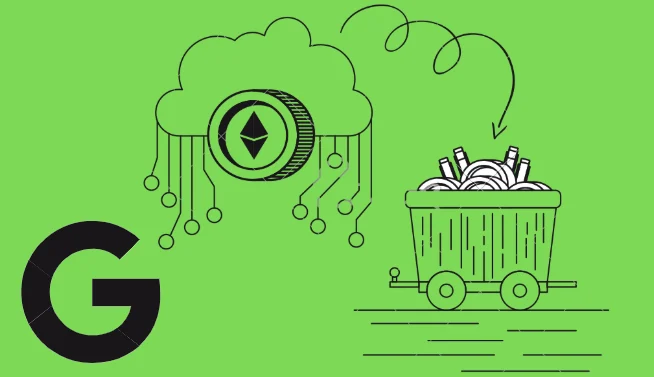
In a candid revelation that underscores the growing generational shift toward digital assets, Sundar Pichai, the Chief Executive Officer of Google and its parent company Alphabet Inc., recently shared that his 11-year-old son has been actively mining Ethereum. The disclosure, made during the New York Times DealBook conference, provides a rare glimpse into the personal life of one of the world’s most powerful tech executives and highlights how decentralized technologies are being adopted by younger, "digital native" generations. Pichai’s anecdote arrives at a time when Google continues to navigate a complex and often contradictory relationship with the broader cryptocurrency industry, balancing consumer protection with the inevitable evolution of blockchain technology.
The revelation emerged when Pichai was asked about his personal views on cryptocurrency and his family’s engagement with the technology. Pichai admitted that while he does not personally own any cryptocurrency, his household is far from disconnected from the market. He recounted an instance where he was discussing Bitcoin at the dinner table, only to be corrected by his son, who clarified that the subject at hand was actually Ethereum. The 11-year-old then informed his father that he was mining the digital currency on a home computer that Pichai himself had helped build.
Parental Guidance in the Age of Decentralized Finance
The conversation between the Google CEO and his son highlights a significant shift in financial literacy. Pichai noted that his son seemed to have a more intuitive grasp of Ethereum and its underlying patterns than he did of traditional monetary systems. This prompted Pichai to sit down with his son to discuss the historical and structural foundations of the global banking system. The CEO emphasized the importance of understanding "real" money—paper currency and centralized banking—as a counterpoint to the automated, code-based rewards of cryptocurrency mining.
This educational challenge is one faced by many parents in the Silicon Valley ecosystem and beyond. As children grow up in an era where value can be represented by digital tokens and secured by cryptography, the abstract nature of traditional fiat currency can sometimes seem more foreign than the mechanics of a blockchain. Pichai’s son is part of a demographic that views decentralized ledger technology not as a radical disruption, but as a standard feature of the technological landscape.
A Recurring Theme Among Silicon Valley Elite
Sundar Pichai is not the only high-ranking Google executive with a crypto-miner in the family. Sergey Brin, the co-founder of Google and current board member of Alphabet, has previously shared a strikingly similar story. Speaking at a blockchain conference in Morocco, Brin revealed that he and his young son were mining Ethereum together on a gaming PC. Brin noted that his interest in the technology was piqued by his son’s enthusiasm, leading the tech pioneer to research the mathematical complexities of zero-knowledge proofs and decentralized consensus mechanisms.
The fact that the children of both the CEO and the co-founder of Google are engaged in Ethereum mining is more than just a coincidence of wealthy hobbies; it reflects the accessibility of Ethereum’s "Proof of Work" (PoW) algorithm during this era. Unlike Bitcoin, which transitioned almost exclusively to specialized ASIC (Application-Specific Integrated Circuit) hardware years ago, Ethereum remained mineable on high-end consumer Graphics Processing Units (GPUs) for a significant period. This allowed tech-savvy hobbyists—and the children of tech giants—to participate in the network using standard gaming hardware or custom-built home PCs.
The Paradox of Google’s Corporate Policies
The personal engagement of the Pichai and Brin families with cryptocurrency stands in stark contrast to Google’s institutional caution regarding the industry. Over the past several years, Google has implemented various restrictive policies designed to protect its massive user base from the volatility and fraud often associated with the nascent crypto market.
In June 2018, Google issued a significant update to its Developer Program Policy, effectively banning all apps that mine cryptocurrency on mobile devices. The company gave developers a 30-day window to comply with the new rules. The primary motivation for this ban was the protection of hardware; mobile mining often leads to severe overheating, battery degradation, and diminished device performance, which can be catastrophic for the average smartphone user. Furthermore, many "mining" apps on the Play Store were found to be deceptive, either serving as fronts for malware or failing to deliver the promised rewards to users.
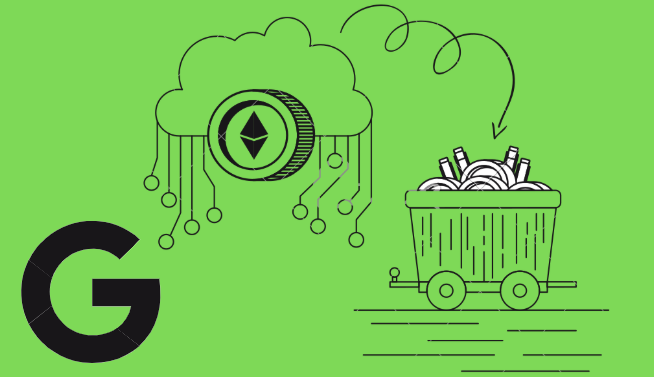
However, Google’s stance has been characterized by a "push-and-pull" dynamic. Prior to the app store ban, the search giant had implemented a sweeping prohibition on all cryptocurrency-related advertisements. This included ads for Initial Coin Offerings (ICOs), digital wallets, and trading advice. The company cited the high-risk nature of the market and the prevalence of "bad actors" as the reason for the blackout. Sundar Pichai has consistently defended these measures, arguing that the company has a responsibility to prevent its platforms from being used to facilitate Ponzi schemes or financial scams that target vulnerable investors.
Chronology of Google’s Regulatory Shifts
The timeline of Google’s interactions with the cryptocurrency sector reveals a cautious evolution rather than a stagnant opposition:
- March 2018: Google announces a total ban on cryptocurrency advertisements, effective June 2018. This move mirrored a similar policy enacted by Facebook (now Meta) earlier that year.
- June 2018: The ban on mobile mining apps is added to the Google Play Store policies.
- September 2018: Google begins to soften its stance on ads. The company announces it will allow regulated cryptocurrency exchanges to purchase advertisements in the United States and Japan, provided they go through a rigorous certification process.
- Late 2018: Sundar Pichai reveals his son is mining Ethereum, signaling a personal acceptance of the technology even as corporate guardrails remain in place.
- 2019-Present: Google Cloud begins integrating blockchain datasets (including Bitcoin and Ethereum) into its BigQuery platform, allowing developers to analyze on-chain data with Google’s enterprise tools.
Technical Barriers and the Accessibility of Ethereum Mining
To understand why Pichai’s son chose Ethereum over Bitcoin, one must look at the technical requirements of the time. Bitcoin mining has evolved into a massive industrial enterprise, requiring immense electrical power and specialized hardware that is prohibitively expensive for a household setting. Ethereum, however, was designed with "ASIC resistance" in mind during its early years, favoring the use of GPUs.
For an 11-year-old with access to a custom-built PC—likely equipped with a high-end graphics card—mining Ethereum was a tangible way to interact with the world of finance. It involves setting up a digital wallet, joining a mining pool, and configuring software to solve complex cryptographic puzzles. The rewards are small fractions of Ether (ETH), which can then be tracked on public ledgers like Etherscan. For a child, this process provides a gamified introduction to economics, hardware optimization, and network security.
Broader Implications for the Tech Industry
The revelation from the Google CEO carries significant weight for the broader tech industry. It suggests that while the "old guard" of Silicon Valley may be cautious about the regulatory and reputational risks of cryptocurrency, the "new guard" is being raised in an environment where blockchain is ubiquitous.
This creates a unique tension for companies like Google. On one hand, they must police their platforms to prevent fraud; on the other hand, they are home to the very people—and the children of those people—who are building and participating in the future of decentralized finance (DeFi). The personal interest of leaders like Pichai and Brin suggests that Google’s long-term strategy will likely involve a deeper integration with blockchain technology, even if the current public-facing policies remain conservative.
Critics have often accused Google of being "anti-crypto," but the internal reality appears more nuanced. The company’s primary concern has always been the integrity of its ecosystem. By banning unregulated ads and harmful mining apps, Google aims to maintain a "clean" environment for the billions of users who rely on its search engine and mobile OS. However, as the industry matures and regulatory frameworks become clearer, the "ban-first" approach is gradually being replaced by a "verify-and-list" model.
Conclusion: The Future of Finance in the Pichai Household
Sundar Pichai’s story of his son’s mining activities serves as a microcosm of the global shift in how we perceive and generate value. While the CEO of Google focuses on the massive regulatory and ethical challenges of AI, data privacy, and global search, his son is focused on the decentralized hash rates of the Ethereum network.
The anecdote underscores the fact that the next generation of innovators will not see cryptocurrency as a speculative bubble, but as a foundational layer of the internet. As Pichai continues to lead Google through the complexities of the digital age, his son’s Ethereum mining serves as a constant, personal reminder that the future of the monetary system may look very different from the one he had to explain at the dinner table. Whether through Google Cloud’s blockchain initiatives or the eventual re-introduction of crypto services to the Play Store, the influence of these young "miners" will undoubtedly shape the trajectory of the world’s most powerful technology companies.