The harsh reality of modern cryptocurrency mining for retail participants was recently brought into sharp focus by a Reddit user operating under the pseudonym "nstran541." In a candid post shared on the popular r/CryptoCurrency subreddit, the user revealed that a four-day effort using the WinMiner application yielded a total profit of just $1.07. This disclosure has ignited a broader conversation regarding the diminishing returns of small-scale mining operations and the rising barrier to entry for individual enthusiasts in an increasingly institutionalized digital asset landscape.
The anecdote serves as a microcosm for the systemic shifts occurring within the blockchain industry. While the early days of cryptocurrency were characterized by "garage miners" utilizing consumer-grade hardware to secure networks, the contemporary mining environment has transitioned toward industrial-scale data centers. For the average hobbyist, the combination of hardware depreciation, high electricity tariffs, and the extreme difficulty of cryptographic puzzles has rendered small-scale mining a precarious, often unprofitable endeavor.
The Economics of Retail Mining: A Case Study in Diminishing Returns
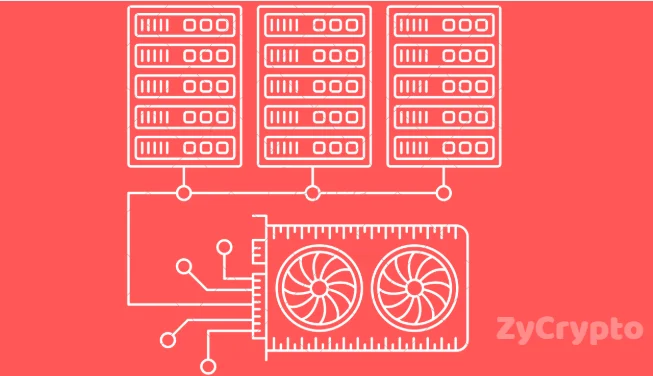
The experience of "nstran541" is not an isolated incident but rather a symptom of the current market cycle. While the user did not disclose the specific digital asset being mined or the technical specifications of the hardware involved, the outcome highlights the severe discrepancy between energy input and financial output. When accounting for the wear and tear on hardware—specifically the strain placed on Graphics Processing Units (GPUs) and power supply units—many retail miners find that their "net profit" is effectively negative.
This sentiment was echoed by another Reddit user, "MagniGames," who shared a cautionary tale regarding his past attempts to mine Ravencoin (RVN). Despite the asset experiencing significant market appreciation—climbing from obscurity to becoming a top-tier token listed on major exchanges like Binance—the miner reported failing to break even. "I was mining Raven when it was like #400," the user remarked. "Now it’s rocketed all the way up to #50… and I still haven’t even broken even when factoring in the electricity and wear on my PC."
This reality suggests that for most retail miners, the capital expenditure (CapEx) and operational expenditure (OpEx) required to mine effectively far outweigh the current market valuation of the rewards, especially when accounting for the volatility inherent in smaller altcoins.
The Global Regulatory Landscape and Energy Constraints
Beyond individual profitability, the geography of mining has become a primary point of contention. As the computational power (hash rate) required to mine major cryptocurrencies like Bitcoin continues to hit all-time highs, energy consumption has scaled accordingly. This has led to a fragmented regulatory response globally.
In the United States, several municipalities have taken proactive measures to curb the impact of industrial mining on local power grids. Cities such as Plattsburgh, New York, and Ephrata, Washington, have implemented temporary or permanent bans on cryptocurrency mining activities. These decisions are largely motivated by concerns over power grid stability and the potential for mining facilities to monopolize cheap local energy, driving up costs for residential consumers. While some jurisdictions like Plattsburgh have moved to revisit or roll back these restrictions, the prevailing trend in energy-sensitive regions remains one of skepticism.
Conversely, regions like Iceland, once considered a global hub for mining due to its abundant geothermal energy and cool climate, have begun to pivot. Industry reports suggest that Icelandic entities are transitioning away from pure-play Bitcoin mining, opting instead to leverage their infrastructure for broader, more diversified blockchain applications and cloud computing services. This strategic shift reflects a growing awareness that mining, as a singular business model, is increasingly vulnerable to market fluctuations.
The Dominance of Industrial Mining and the "China Factor"
The debate surrounding profitability and sustainability cannot be separated from the industrialization of the sector. For years, China was the undisputed center of the global mining industry, largely due to a combination of affordable electricity—often hovering around $0.08 per kWh—and a concentration of high-end manufacturing capabilities. Companies like Bitmain Technologies, headquartered in Beijing, revolutionized the industry by producing specialized Application-Specific Integrated Circuits (ASICs) that made traditional GPU mining obsolete for major networks like Bitcoin.
Data suggests that miners operating in regions with access to subsidized or low-cost power can achieve profitability margins up to 30 times higher than those in regions where electricity costs exceed $0.12 per kWh. This economic advantage creates a massive barrier to entry; when large-scale firms can operate with significantly lower overhead, they effectively out-compete smaller players, leading to the centralization of hash power.
Historical Context and Chronology of the Mining Shift
To understand the current state of mining, one must look at the evolution of the industry over the last decade:
- 2009–2012 (The CPU Era): Mining could be performed on standard desktop computers. Profitability was high for early adopters, and the process was largely decentralized.
- 2013–2015 (The GPU and FPGA Era): As the network difficulty increased, users shifted to high-performance Graphics Processing Units. Mining became a specialized hobby.
- 2016–2018 (The ASIC Revolution): The introduction of dedicated mining hardware moved the industry from home basements to massive, purpose-built warehouses.
- 2019–Present (Institutionalization and ESG Focus): Mining has become a capital-intensive industry. Concerns regarding carbon footprints have led to a greater focus on renewable energy sources and the development of greener mining protocols.
Analysis of Implications for Future Investors
The narrative of "nstran541" serves as a vital reminder to prospective cryptocurrency participants: mining is no longer a "get-rich-quick" scheme for the average computer user. It is a highly competitive, industrial-grade utility business. For those interested in the cryptocurrency ecosystem, the implications are threefold:
- Shift to Proof-of-Stake (PoS): Many networks are moving away from energy-intensive Proof-of-Work (PoW) consensus mechanisms toward PoS, which removes the need for hardware-based mining entirely. This shift mitigates the environmental and hardware-intensive barriers described in the Reddit thread.
- Increased Centralization Risk: As mining becomes more industrial, the distribution of network security becomes concentrated in the hands of a few large entities. This poses long-term questions regarding network decentralization and censorship resistance.
- The Rise of Cloud Mining Services: While the retail miner may struggle, various cloud mining services have emerged. However, these services carry their own risks, including potential scams, lack of transparency, and contract-based profitability that often favors the provider over the user.
In conclusion, the story of a miner making $1.07 over four days is emblematic of a broader transition within the blockchain space. While the dream of decentralized, egalitarian mining remains a core pillar of cryptocurrency ideology, the practical reality is one of high-stakes industrial competition. Potential participants must weigh the costs of hardware, electricity, and network difficulty before committing resources to a field where the margins for error—and profit—have never been slimmer. As the industry matures, it is likely that mining will continue to consolidate into larger, energy-efficient operations, leaving the "hobbyist" era firmly in the past.