The Evolution of Mining Hardware and Computational Demand
The history of Bitcoin mining is a narrative of rapid technological escalation. In the earliest days of the network, initiated by the mysterious Satoshi Nakamoto in 2009, the computational difficulty was low enough that a standard home computer’s Central Processing Unit (CPU) was sufficient to solve the cryptographic puzzles required to mint new blocks. As the network grew and the protocol’s difficulty adjustment algorithm—designed to keep block production time at an average of ten minutes—kicked in, CPUs quickly became obsolete.
The industry transitioned through several distinct hardware eras. First, enthusiasts moved to Graphics Processing Units (GPUs), which offered superior parallel processing capabilities compared to CPUs. This was followed by Field-Programmable Gate Arrays (FPGAs), which provided better power efficiency. Today, the landscape is dominated by Application-Specific Integrated Circuits (ASICs). These machines are engineered for one single purpose: to perform the SHA-256 hashing algorithm as efficiently as possible. Modern ASICs can operate at speeds measured in terahashes per second (TH/s), making them roughly 100 times more efficient than the hardware used just a few years prior. This arms race for computational power has transformed mining from a hobbyist endeavor into a specialized industrial sector.
Understanding the Proof-of-Work Mechanism
At its core, mining is the process of verifying a block of transactions. The Bitcoin network utilizes a consensus mechanism known as Proof-of-Work (PoW). To add a new block to the blockchain, a miner must compete against others to solve a complex mathematical puzzle. This requires significant expenditure of energy and computational power.
When a miner successfully solves the cryptographic hash, they broadcast the block to other nodes in the network. If the transaction data is valid and the proof-of-work is verified, the block is added to the permanent, immutable public ledger. The successful miner is then rewarded with newly minted bitcoin and the transaction fees associated with the data in that block. This incentive structure is what encourages participants to dedicate expensive hardware and electricity to the network, thereby ensuring its decentralized security.
Mining Pools vs. Independent Operations
Given the extreme difficulty of mining Bitcoin today, the probability of an individual miner successfully solving a block independently is statistically negligible. To mitigate this, miners frequently join "mining pools." A mining pool is a collaborative group of miners who aggregate their computational power to increase their collective chances of solving blocks.
When the pool succeeds, the rewards are distributed among the participants in proportion to the amount of hashing power each member contributed. While individual mining (solo mining) offers the prospect of keeping the entire block reward, the high variance and low probability of success make it an impractical choice for most. Mining pools provide a more consistent, albeit smaller, stream of revenue, which is vital for covering the substantial electricity and operational costs associated with large-scale mining rigs.
The Rise of Cloud Mining Services
For those who wish to participate in the mining ecosystem without the burden of maintaining physical hardware, noise management, or cooling systems, cloud mining has emerged as a popular alternative. Cloud mining service providers allow individuals to rent hashing power from large-scale data centers.
The process typically involves signing a contract, selecting a specific hash power package, and paying a fee to the provider. The provider manages the hardware, electricity, and maintenance, while the user receives a share of the Bitcoin generated by that rented power. While this lowers the barrier to entry for newcomers, it also requires careful due diligence. Investors must evaluate the provider’s reputation, the contract terms, and the projected return on investment, which fluctuates based on the Bitcoin price, network difficulty, and operational costs.
Essential Infrastructure: Security and Wallets
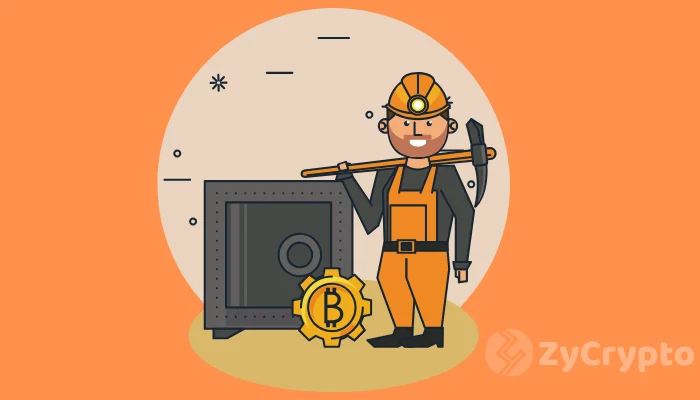
Regardless of the mining method chosen, the end result is the acquisition of digital assets that must be secured. A Bitcoin wallet is a mandatory requirement for any miner. These wallets come in various forms, including hardware wallets (physical devices), software wallets (applications), and paper wallets.
The security of a miner’s earnings is paramount. Since the blockchain is irreversible, if a miner loses the private keys to their wallet, the assets are effectively lost forever. Professional miners often employ multi-signature wallets or institutional-grade cold storage solutions to protect the fruits of their labor from cyber threats.
Broader Economic and Environmental Implications
The mining industry is currently navigating a period of intense scrutiny regarding its energy consumption. Because mining requires vast amounts of electricity, critics have raised concerns about the environmental impact of the network. However, industry proponents argue that miners are increasingly incentivized to seek out low-cost, renewable energy sources to maximize their profit margins.
The geographic distribution of mining has also shifted significantly over the past decade. Historically concentrated in regions with cheap electricity, mining operations are now becoming increasingly globalized. This dispersion helps strengthen the network against censorship and regional regulatory crackdowns.
Furthermore, the "halving" events—which occur roughly every four years and reduce the block reward by 50%—serve as a deflationary check on the Bitcoin supply. As the reward decreases, the mining industry must become more efficient to survive. This creates a cycle where inefficient hardware is retired and replaced with more advanced technology, effectively forcing the network to evolve continuously.
Future Outlook for Bitcoin Mining
As the network approaches the limit of 21 million bitcoins, the security model of the system will undergo a gradual transition. Currently, miners rely heavily on the block subsidy (newly minted coins). Eventually, as the subsidy trends toward zero, the network will rely primarily on transaction fees to incentivize miners.
Industry analysts suggest that this transition will likely happen over the course of several decades, giving the market time to adjust. In the interim, Bitcoin mining remains a foundational pillar of the cryptocurrency ecosystem. Whether through industrial-scale ASIC farms, participation in global mining pools, or cloud-based agreements, the act of mining continues to be the primary engine of trust for the world’s first decentralized digital currency.
For those interested in entering the space, the requirements remain constant: a solid understanding of the underlying technology, access to reliable and affordable energy, and the ability to navigate a highly competitive, rapidly evolving market. As long as the Bitcoin network remains operational, the incentive to secure it through mining will persist, ensuring the continued viability of the blockchain for generations to come.