For over a decade, Bitcoin has served as the foundational "store of value" within the digital asset ecosystem. Its narrative, anchored in fixed supply, decentralization, and algorithmic scarcity, has historically positioned it as the "digital gold" of the twenty-first century. However, as of early 2026, market dynamics are shifting. A new class of assets—fractionalized Non-Fungible Tokens (f-NFTs)—is beginning to challenge the singular dominance of fungible cryptocurrencies, offering investors a novel approach to capital preservation and liquidity. By transforming illiquid, high-value digital collectibles into tradable, divisible tokens, this emerging sector is forcing a re-evaluation of what constitutes a reliable store of value in an increasingly tokenized economy.
The Evolution of Digital Scarcity: A Chronological Overview
The journey toward fractionalization began with the 2020–2021 NFT boom, which saw individual assets, such as CryptoPunks and Bored Ape Yacht Club pieces, command valuations in the millions of dollars. While these assets represented significant digital cultural value, they suffered from extreme illiquidity. A holder could not easily sell a "fraction" of a rare piece to meet financial needs; they were forced to either hold the entire asset or exit the position entirely.
By 2023, the infrastructure for fractionalization matured. Protocols began allowing owners to lock their NFTs into smart contracts, which subsequently issued ERC-20 compliant tokens representing proportional ownership. This development effectively bridge the gap between the uniqueness of NFTs and the high liquidity of fungible tokens.

Entering 2026, the market has moved beyond experimental status. The integration of f-NFTs into broader Decentralized Finance (DeFi) ecosystems has catalyzed institutional interest. Investors no longer view NFTs merely as static JPEGs, but as underlying collateral for lending protocols, yield-bearing assets, and components of sophisticated portfolio management strategies.
Quantifying the Shift: Market Data and Valuation
The rise of fractionalized assets is supported by substantial growth metrics. According to recent industry reports, the market for NFT fractionalization was valued at approximately $3.8 billion in 2025. Projections from market intelligence firms suggest an aggressive growth trajectory, with estimates pointing toward a $9.2 billion valuation by 2033. This represents a compound annual growth rate (CAGR) of 17.8%, a figure that outpaces several traditional sectors within the digital asset space.
While general NFT trading volumes experienced volatility throughout 2025, the sub-sector of fractionalized tokens has maintained consistent liquidity. This divergence is largely attributed to the "low barrier to entry" provided by fractionalization. By allowing investors to acquire portions of "blue-chip" assets for as little as $10, protocols have democratized access to high-end digital real estate, art, and intellectual property. This shift mirrors the transition from buying full bars of gold to purchasing gold-backed ETFs—a move that fundamentally changes the accessibility and velocity of an asset class.
Why Fractionalization Redefines "Value"
To understand why some market participants are elevating f-NFTs to the status of a "store of value," one must look at the utility they offer compared to Bitcoin. Bitcoin is the quintessential store of value because it is uniform; one unit is identical to another. However, f-NFTs offer a unique value proposition: they act as "fractionalized scarcity."

When an investor buys a fraction of a rare, historically significant NFT, they are capturing a slice of a finite, non-replicable item. Unlike fiat currency or even some inflationary cryptocurrencies, the underlying NFT possesses a "floor" established by the scarcity of the original item. Furthermore, these fractional tokens are inherently more useful in a DeFi context. They can be staked to earn interest, used as collateral for loans, or integrated into decentralized autonomous organizations (DAOs) to influence the governance of the underlying asset.
Market analysts observe that this utility creates a "floor price" dynamic that is absent in pure-play volatile assets. If a vault of high-value assets is backed by tangible digital property, the fractional tokens become a proxy for the entire vault’s health, providing a level of fundamental grounding that many speculative tokens lack.
Implications for Institutional Portfolios
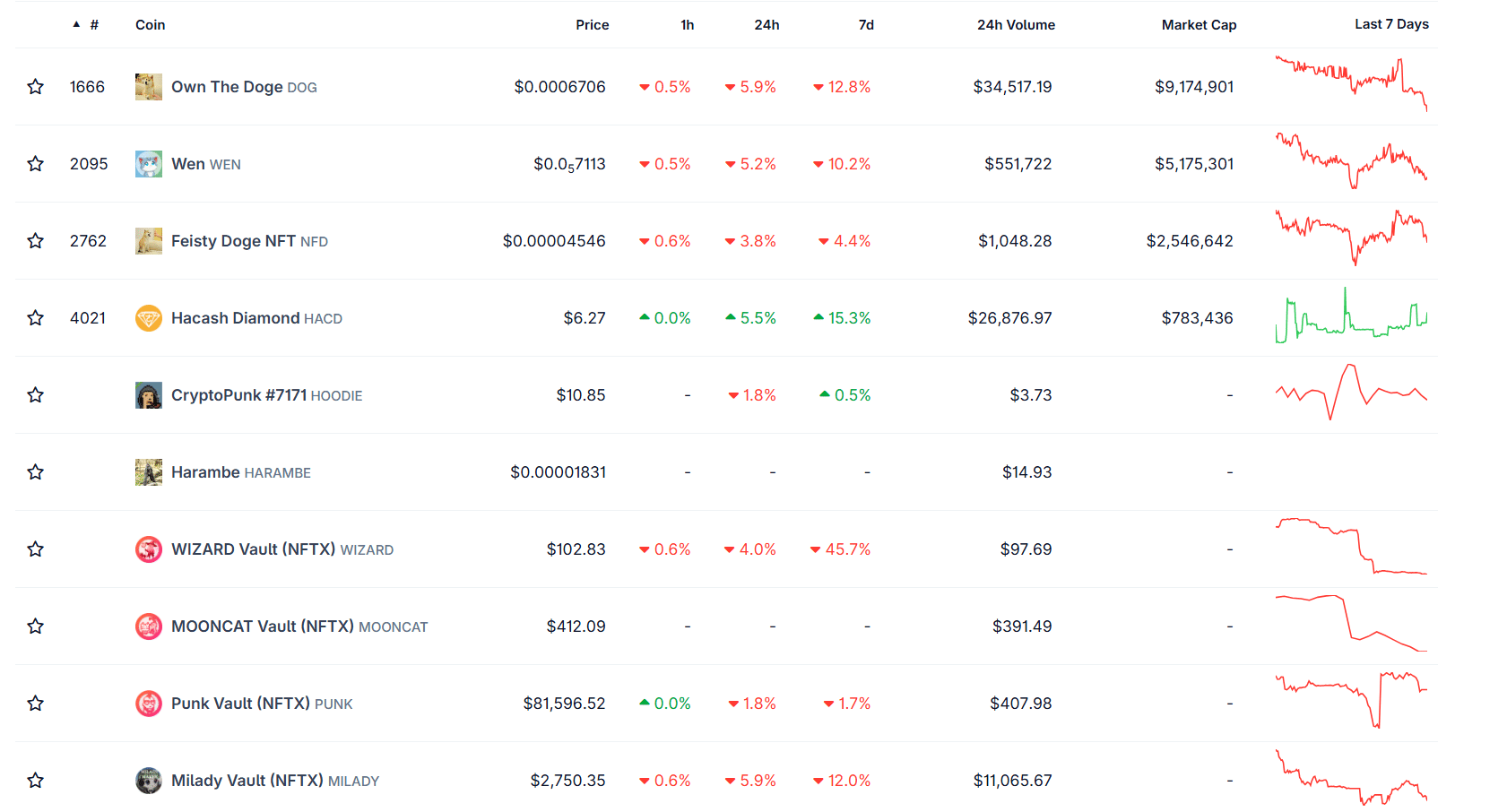
The potential for f-NFTs to function as a hedge or a store of value has not escaped institutional attention. By 2026, several investment firms have begun to incorporate "Tokenized Vaults" into their digital asset holdings. These vaults allow institutions to gain exposure to high-end digital art and virtual land without the operational overhead of managing physical assets or the liquidity risks associated with single-asset ownership.
The broader implications are significant. If an asset can be fractionalized, it can be priced, collateralized, and traded with the same ease as a stock. This reduces the "illiquidity premium" that historically plagued the NFT market. Consequently, we are seeing a trend where capital is moving from purely speculative meme coins toward assets with verifiable, albeit digital, "underlying" value.

Critical Risks and Regulatory Considerations
Despite the optimism, the transition of f-NFTs into a store of value is not without risks. The primary concern remains the regulatory status of fractional tokens. In many jurisdictions, the issuance of tokens that derive their value from the performance of a third-party asset may be classified as an investment contract or a security.
Furthermore, the technological risks of smart contract failure cannot be ignored. While Bitcoin’s code is battle-tested and simple, the infrastructure behind fractionalization is complex, often involving multiple layers of smart contracts and decentralized oracles. A vulnerability in the "locking" mechanism or the pricing oracle for the underlying NFT could result in significant losses for holders of the fractionalized tokens.
Analysts also caution that the "store of value" label is a high bar. For an asset to qualify, it must demonstrate stability during periods of market stress. While the fractionalized market has shown resilience in early 2026, it has yet to be tested by a prolonged, systemic crypto winter equivalent to those that Bitcoin has weathered.
The Road Ahead: 2026 and Beyond
As we move through the remainder of 2026, the focus will likely turn to standardization. The industry is currently experimenting with various models of fractionalization, from simple vaults to complex voting rights structures. Increased regulation will likely force a consolidation of these platforms, pushing liquidity toward the most robust and transparent protocols.
The debate over whether f-NFTs are "better" than Bitcoin is perhaps less important than the shift in market behavior they represent. The market is signaling that it no longer desires to choose between the scarcity of a digital asset and the utility of a liquid token. By combining the two, fractionalized NFTs are effectively creating a new asset class that occupies the middle ground.
Whether this trend will persist long-term depends on the continued demand for the underlying assets being fractionalized. If the culture and utility surrounding NFTs—ranging from virtual real estate in the metaverse to intellectual property rights in music and media—continue to grow, the fractionalized tokens representing them may indeed solidify their place as a viable alternative for investors seeking diversification.
Ultimately, the rise of fractionalization signifies a maturation of the blockchain economy. We are moving from a phase of "asset creation" to "asset optimization." Bitcoin will likely remain the king of store-of-value assets due to its unmatched security and decentralization. However, the emergence of f-NFTs demonstrates that the digital economy is evolving to accommodate more complex, nuanced forms of ownership that align with the diverse needs of modern investors. As the total value locked in these fractionalized vaults continues to climb, it is clear that the definition of a "store of value" is being rewritten in real-time, one fraction at a time.