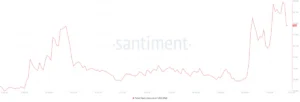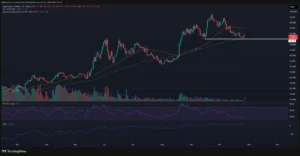
The quest for dominance among Layer-1 (L1) blockchains has shifted from simple transaction speed metrics to a more holistic evaluation of ecosystem health, developer retention, and decentralized finance (DeFi) liquidity. As the blockchain industry navigates the post-2025 market landscape, two prominent networks—Sui and Aptos—have emerged as the primary contenders in the race to define the "Move" programming language standard. While both projects share a technical lineage rooted in Meta’s original Diem initiative, recent performance metrics suggest that the two ecosystems are diverging significantly in terms of adoption and resilience. Data from industry analysts, including Electric Capital and DeFiLlama, indicates that while both chains offer robust scalability, Sui is currently outpacing Aptos across critical developer engagement and liquidity benchmarks.
The Origins of the Move Standard
To understand the current competition between Sui and Aptos, one must look back at the development of the Move programming language. Originally designed by Meta for the ill-fated Libra/Diem stablecoin project, Move was built to prioritize security and resource management. When the Diem project was shuttered, several engineers and researchers from the original team dispersed to form new ventures, most notably Mysten Labs (the primary contributor to Sui) and Aptos Labs.

Both networks were engineered to solve the "blockchain trilemma"—balancing security, scalability, and decentralization—by utilizing parallel execution engines. This design allows them to process transactions concurrently rather than sequentially, a significant departure from the architecture of Ethereum or Bitcoin. Despite these shared foundations, the two chains have pursued different strategic paths regarding network architecture and community incentives, leading to the current disparity in on-chain activity.
Chronology of Competitive Growth
The rise of the "Move-based" ecosystem began in earnest in 2023, following the successful mainnet launches of both protocols. Aptos was the first to market, launching its mainnet in late 2022 and quickly attracting significant venture capital interest and early-stage DeFi protocols. Throughout 2023, Aptos held a lead in terms of public awareness and total number of ecosystem partnerships.
However, the 2024-2025 period marked a pivot in the industry. As the market entered a cyclical downturn, developer interest began to coalesce around platforms that offered more intuitive developer tooling and a more seamless user experience for dApp integration. By the end of 2025, the narrative had shifted. While Aptos maintained a consistent performance, Sui’s aggressive developer outreach programs and technical upgrades—specifically regarding its object-centric data model—began to translate into tangible network growth. By January 2026, the metrics reflected a clear shift in momentum, with Sui consistently outperforming Aptos in active developer count and TVL.

Quantifying the Developer War
Developer activity is widely considered the leading indicator of a blockchain’s long-term viability. A robust ecosystem of builders ensures that a network remains innovative, secure, and user-friendly. According to the latest data from the Electric Capital Developer Report, Sui has solidified its position as the more active ecosystem, currently reporting 954 monthly active developers. In contrast, Aptos reports 465 monthly active developers.
This disparity, which shows Sui operating with more than double the developer workforce of Aptos, has profound implications. A larger developer pool generally correlates with a higher rate of code commits, faster bug fixes, and a more diverse range of applications. For investors and stakeholders, this suggests that the "Move" standard is being more effectively leveraged within the Sui environment, potentially creating a network effect that makes it increasingly difficult for rival chains to bridge the gap.
Resilience Amid Market Volatility
The 2025 bear market provided a litmus test for the durability of these L1 networks. Financial markets were characterized by significant deleveraging, which impacted the valuation of native tokens across the crypto sector. During this period, the resilience of a blockchain’s underlying technology and its ability to retain liquidity became paramount.

Both SUI and APT tokens experienced downward pressure throughout the year. However, the depth of these corrections highlighted the difference in market sentiment and institutional support. SUI recorded a price decline of approximately 65% for the year, while APT faced a sharper correction, ending the year down 80.7%. This variance suggests that the market perceived Sui’s ecosystem growth—evidenced by its increasing TVL and stable developer activity—as a stabilizing force, providing a buffer against the broader market sell-off.
The DeFi Frontier: Liquidity and TVL
Total Value Locked (TVL) serves as the primary metric for assessing the health and utility of a DeFi ecosystem. It represents the aggregate amount of capital held in smart contracts on a network. As of early 2026, the divergence in DeFi performance is stark. Sui currently commands roughly double the TVL of Aptos.
The reasons for this gap are multifaceted. Firstly, Sui’s native DeFi primitives have been praised for their modularity, allowing liquidity providers and traders to interact with the chain with higher efficiency. Secondly, the successful deployment of high-liquidity decentralized exchanges (DEXs) and lending protocols on Sui has incentivized capital migration. In contrast, while Aptos has successfully hosted several innovative DeFi applications, it has struggled to maintain the same velocity of capital inflows. For Aptos to reclaim its competitive position, it will likely need to focus on incentivizing liquidity migration and expanding its suite of institutional-grade financial tools.

Implications for the Future of L1 Blockchains
The current state of the competition between Sui and Aptos raises critical questions about the future of L1 infrastructure. The move toward parallel execution is clearly the next industry standard, but the market is proving that technical superiority alone is not enough to win. Execution, developer experience, and community building are equally important.
If the current trend persists, Sui is positioned to become the default home for the Move programming language. This would create a "winner-take-most" scenario for developers looking for the most robust tooling. For Aptos, the path forward requires a re-evaluation of its growth strategy. Whether through improved developer grants, more aggressive marketing, or technical pivots, Aptos must address the current deficit in developer activity to prevent further marginalization.
Ultimately, the battle between these two chains is a microcosm of the broader blockchain industry. As the market matures, the focus is shifting away from speculative potential and toward functional utility. The networks that can demonstrate consistent growth in active developers and real-world DeFi usage are the ones that will define the next cycle of blockchain adoption. While Sui currently holds the upper hand, the landscape remains dynamic, and both teams continue to iterate at a pace that keeps the competition for the Move ecosystem highly relevant to the future of decentralized finance.