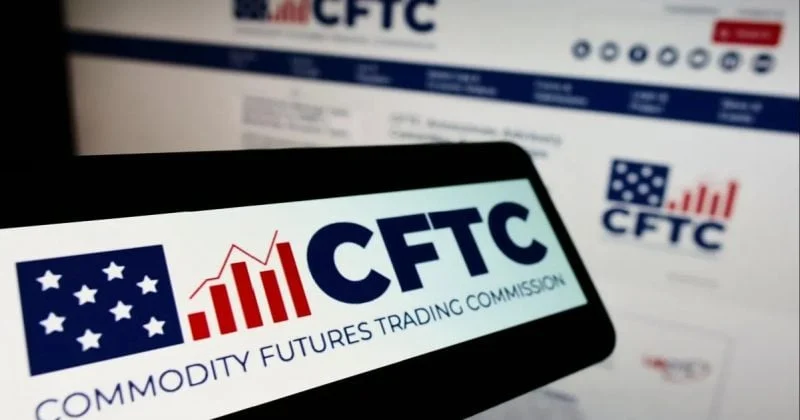
The Commodity Futures Trading Commission (CFTC) has taken a decisive step toward establishing a comprehensive federal regulatory framework for digital asset markets, bypassing stalled legislative efforts in Congress to forge its own path forward. According to official federal records, the agency submitted a detailed proposed framework governing crypto asset transactions and market structures to the White House’s Office of Management and Budget (OMB) on September 17.
This move underscores a growing regulatory urgency within independent federal agencies to address the rapidly evolving digital economy. By leaning on its existing statutory authorities, the CFTC aims to create regulatory clarity, foster institutional participation, and retain financial technology innovation within the United States. The submission to the OMB marks a critical preliminary phase in the federal rulemaking process, setting the stage for potential sweeping changes in how crypto derivatives, leveraged trading, and digital asset exchanges are supervised nationwide.
The Push for Regulatory Autonomy Amid Congressional Stalemate
The decision by the CFTC to draft standalone rules comes at a time of persistent legislative inertia in Washington. For years, lawmakers on Capitol Hill have debated various comprehensive bills designed to define the jurisdictional boundaries between the CFTC and the Securities and Exchange Commission (SEC). Most notably, the CLARITY Act, which sought to establish a clear statutory blueprint for digital asset classification and market oversight, has repeatedly faced hurdles and failed to move forward in the US Senate.
Frustrated by the lack of statutory direction from Congress, financial regulators have increasingly opted to interpret their legacy mandates to fit modern technological developments. CFTC Chairman Michael Selig signaled this strategic pivot during a public address in August, outlining an ambitious innovation agenda. This agenda explicitly covers crypto assets, artificial intelligence-related compute markets, and burgeoning prediction markets. Selig emphasized that clear federal rules are no longer optional if the United States intends to remain a global hub for financial and technological innovation.
Rather than waiting for Capitol Hill to reach a bipartisan consensus, CFTC leadership directed agency staff to explore innovative pathways using only current statutory powers. The cornerstone of this initiative involves the creation of a specialized regulatory category explicitly tailored for digital assets.
Chronology of Regulatory Action
The journey toward the current OMB submission has unfolded through a series of calculated administrative milestones over recent months:
- August: CFTC Chairman Michael Selig announces an innovation agenda at the inaugural meeting of the Innovation Advisory Committee, directing staff to explore market structure rules for crypto assets using existing statutory powers.
- September 17: The CFTC formally submits its proposed framework governing crypto asset transactions and markets to the White House’s Office of Management and Budget for review.
- Concurrent SEC Activity: The SEC approves a five-year conditional exemption allowing blockchain-based platforms to facilitate tokenized securities trading via automated market makers and liquidity pools without traditional exchange registration.
- CFTC Relief Measures: The agency extends no-action relief to qualifying providers of passive trading software, permitting them to connect users to regulated derivatives markets without registering as introducing brokers, subject to strict compliance conditions.
Decoding the CFTC Framework: Expanding Designated Contract Markets
At the heart of the CFTC’s proposal is a mechanism to integrate both established financial entities and native crypto platforms into a unified federal oversight structure. Speaking at the Innovation Advisory Committee’s inaugural meeting, Chairman Selig elaborated on the operational mechanics of the initiative.
According to Selig, the agency’s staff has been actively working on rules that would establish a brand-new category of designated contract market (DCM) specifically designated as a "crypto asset market." This specialized classification could be extended to current registrants as well as non-registrant crypto exchanges. Once designated, these entities would be permitted to offer crypto asset trading on a leveraged or margined basis, provided they adhere to purpose-fit rules established under the CFTC’s regulatory oversight.
This approach represents a significant departure from traditional enforcement-heavy strategies. By offering a structured pathway to compliance, the agency hopes to bring offshore liquidity and unregulated platforms onshore, thereby enhancing consumer protection without suffocating market liquidity. The framework is expected to have broad applications, potentially extending to decentralized crypto wallets and various trading interfaces that offer users access to regulated derivatives, including perpetual contracts and complex event contracts.
The Rulemaking Process Ahead
Despite the significance of submitting the proposal to the OMB, the regulatory marathon is only in its early stages. The document remains subject to rigorous review, inter-agency feedback, and potential revisions by the OMB before it can be officially returned to the CFTC.
Once the OMB completes its review, the commissioners of the CFTC must vote to advance the proposal. If a majority approves the measure, the agency will open the text to public comment, inviting feedback from industry stakeholders, consumer advocates, and legal experts. Following the public comment period, agency staff will review the submissions, make necessary adjustments, and draft a final rule. This final text must then be presented to the commission for a final authorizing vote before it can officially take effect and carry the force of law.
Broader Regulatory Landscape: The SEC and Complementary Relief
The CFTC’s proactive posture does not occur in a vacuum. It coincides with a broader recalibration of regulatory strategy across federal financial agencies, particularly the SEC. Recently, the SEC approved a five-year conditional exemption allowing select blockchain-based platforms to facilitate tokenized stock trading. This temporary framework permits platforms to utilize automated market makers (AMMs) and liquidity pools without the burdensome requirement of registering as traditional national securities exchanges.
Concurrently, the CFTC has demonstrated flexibility through administrative relief mechanisms. The agency recently extended no-action relief to qualifying providers of passive trading software. This targeted policy allows software developers and interface providers to connect users directly to regulated derivatives markets without registering as introducing brokers, provided they meet stringent operational conditions set by the agency.
Together, these parallel actions by the CFTC and SEC suggest a coordinated, albeit fragmented, effort by federal regulators to accommodate blockchain architecture, tokenization, and decentralized finance (DeFi) within existing legal boundaries.
Market Implications and Industry Analysis
From an analytical standpoint, the CFTC’s initiative carries profound implications for the digital asset ecosystem. For years, crypto enterprises operating in the United States have complained of a hostile "regulation by enforcement" environment, where compliance guidelines were murky and legal risks were exorbitant. By laying out a clear blueprint for leveraged and margined crypto trading under a dedicated DCM framework, the CFTC is offering a degree of regulatory certainty that has long been absent.
Institutional investors, who have often hesitated to enter the crypto derivatives space due to regulatory ambiguity, may view the creation of CFTC-regulated crypto asset markets as a green light for expanded capital allocation. Furthermore, bringing decentralized finance interfaces and non-custodial tools into a structured compliance dialogue could bridge the gap between traditional finance (TradFi) and decentralized protocols.
However, challenges remain. The success of the framework will heavily depend on the flexibility of the final rules and whether the cost of compliance proves prohibitive for smaller, native crypto startups. Additionally, because these rules are being promulgated under existing statutory authorities rather than new legislation, they may face legal challenges from industry participants or jurisdictional pushback from the SEC regarding the exact boundaries between securities and commodities.
As the OMB reviews the CFTC’s proposal, market participants, institutional investors, and legal scholars will be closely watching for signs of how the White House and the administration intend to shape the future of American digital asset policy in the absence of congressional action.