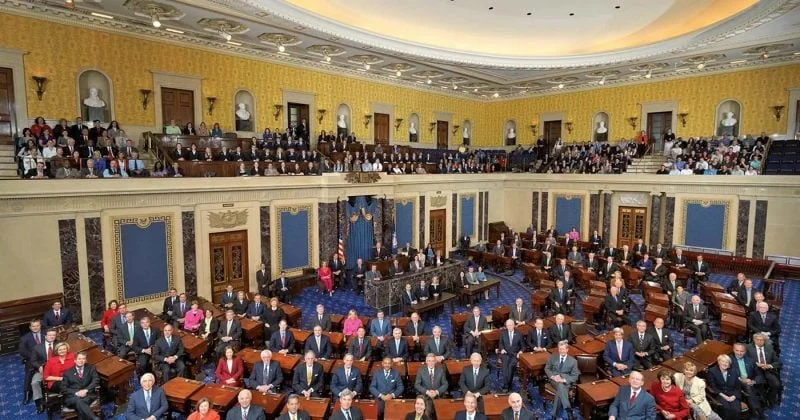
The United States Senate is currently navigating a complex legislative landscape as it considers the Digital Asset Market Clarity Act, a comprehensive bill aimed at establishing a definitive regulatory framework for the burgeoning cryptocurrency industry. While Senate leadership has expressed a desire to begin floor proceedings before the upcoming summer recess, the prospect of finalizing the legislation by the industry-favored deadline of August 7 is becoming increasingly remote. Senate Majority Leader John Thune indicated on Thursday that while he intends to initiate the formal process for the bill, the timing and ultimate success of the endeavor remain contingent on securing sufficient bipartisan support.
The legislative window is rapidly closing as the Senate prepares for its summer state work period, scheduled to commence on August 10. Lawmakers are not expected to return to Washington until September 14, leaving a narrow margin for error. The delay is primarily attributed to a crowded legislative calendar, which currently prioritizes judicial nominations, an Iran war powers resolution, and the annual defense authorization bill. Industry stakeholders and congressional negotiators have long identified August 7 as a critical "practical deadline," noting that once the September session begins, political attention will inevitably shift toward the high-stakes November midterm elections.
The Legislative Chronology and the Path to the Senate Floor
The Digital Asset Market Clarity Act represents the culmination of several years of legislative debate regarding the classification and oversight of digital assets. The House of Representatives successfully passed its version of the market structure bill in July 2025, providing a template for the current Senate deliberations. Since then, the Senate Banking and Agriculture committees have worked to synthesize their respective proposals into a single, unified draft. This combined version was released earlier this week, setting the stage for what many hoped would be a swift passage.
The Senate’s current schedule, however, presents significant obstacles. Majority Leader Thune’s comments—"I would like to at least get Clarity started… We’ll see where the votes are"—suggest a strategy of procedural momentum rather than immediate finalization. By beginning the floor process before the August recess, the Senate could technically "preserve the path" for the bill, allowing it to remain active on the calendar for a more intensive push in mid-September.
However, the procedural requirements of the Senate mean that any amended version approved by the chamber would need to be sent back to the House for a concurrence vote. Given that the House is also subject to election-year scheduling constraints, any delay in the Senate ripple-effects through the entire legislative branch, potentially pushing the bill’s final approval into the "lame-duck" session or even the following year.
Core Provisions of the Digital Asset Market Clarity Act
The Clarity Act is designed to resolve the long-standing jurisdictional friction between the Securities and Exchange Commission (SEC) and the Commodity Futures Trading Commission (CFTC). For years, the digital asset industry has operated in a state of regulatory uncertainty, with different agencies asserting authority over various tokens and platforms.
The current draft of the bill aims to provide a comprehensive rulebook for:
- Digital Asset Exchanges: Establishing registration requirements and operational standards to ensure market integrity and prevent wash trading.
- Intermediaries: Defining the responsibilities of brokers, dealers, and transfer agents within the crypto ecosystem.
- Issuers: Setting disclosure requirements for entities launching new tokens, ensuring that investors have access to material information.
- Federal Oversight: Formally delineating which assets fall under the "security" designation (SEC) and which are "commodities" (CFTC).
One of the most significant aspects of the bill is its attempt to create a "pathway to compliance" for existing firms that have struggled to fit decentralized technologies into traditional regulatory boxes. By providing a clear statutory definition of "decentralization," the bill seeks to offer a bridge for projects to move from SEC oversight to the typically less burdensome CFTC regime as they become more autonomous.
Areas of Contention: Stablecoins and Ethics
Despite the broad agreement on the need for clarity, two primary points of contention continue to stall progress: the treatment of stablecoin rewards and the enforcement of ethics restrictions on senior government officials.
The debate over stablecoin rewards centers on whether the "yield" generated by certain digital dollar products should be classified as a security offering. Some Republicans have voiced opposition to strict regulations in this area, arguing that overly burdensome rules could stifle innovation and drive stablecoin issuance offshore. They contend that stablecoins are primarily a medium of exchange and that rewards programs are analogous to interest-bearing bank accounts rather than investment contracts.
Conversely, Democrats have raised concerns regarding the enforcement of ethics rules. The current draft includes provisions to prevent "revolving door" practices, where senior government officials transition directly from regulatory roles to high-paying positions within the crypto industry. The dispute involves which agency should hold enforcement power; Democrats have expressed skepticism about giving the Department of Justice (DOJ) primary responsibility for these rules, favoring instead the internal oversight mechanisms of the SEC or a dedicated ethics office.
Senator Cynthia Lummis, a prominent advocate for the bill, has acknowledged these friction points. She noted that while the most contentious provisions remain open to revision, the goal is to secure the 60 votes necessary to overcome a potential filibuster. "Negotiators are actively seeking Democratic support," Lummis stated, emphasizing that the bill’s survival depends on a bipartisan consensus that addresses both consumer protection and market growth.
Supporting Data and Market Context
The urgency surrounding the Clarity Act is underscored by the rapid growth of the digital asset market. As of mid-2026, the total market capitalization of cryptocurrencies fluctuates between $2.5 trillion and $3 trillion. Recent data suggests that approximately 20% of the U.S. adult population has owned or traded digital assets, representing a significant constituency for lawmakers.
Furthermore, the lack of a federal framework has led to a patchwork of state-level regulations. According to reports from industry trade groups, the "regulation by enforcement" approach previously favored by the SEC has resulted in over $2 billion in legal fees and settlements for U.S.-based crypto firms over the last three years. Proponents of the Clarity Act argue that a federal statute would provide the legal certainty necessary for institutional investors—such as pension funds and insurance companies—to enter the market more fully, potentially injecting billions of dollars in liquidity.
The international context also plays a role. The European Union’s Markets in Crypto-Assets (MiCA) regulation has already begun its implementation phase, providing a comprehensive framework for the 27-member bloc. Lawmakers in the U.K., Singapore, and Hong Kong have also made significant strides in codifying crypto laws. U.S. legislators are increasingly concerned that if the Clarity Act is not passed soon, the United States will lose its status as a global hub for financial technology.
Broader Impact and Political Implications
The failure to pass the bill before the August recess would carry significant political weight. As the November midterm elections approach, the window for non-controversial, bipartisan legislation narrows. If the bill is pushed into September, it will compete for floor time with mandatory spending bills and high-profile campaign rhetoric.
For the crypto industry, a delay signifies another year of operating in a "gray zone." This uncertainty impacts everything from venture capital funding to the ability of crypto firms to secure traditional banking services. Many firms have indicated that they are waiting for the passage of the Clarity Act before proceeding with major U.S.-based expansions or Initial Public Offerings (IPOs).
From a political perspective, the bill is a litmus test for the Senate’s ability to handle complex, modern financial issues. The "60-vote threshold" remains the primary hurdle. If Leader Thune cannot demonstrate a clear path to those 60 votes before August 10, the bill risks being relegated to the next Congress, effectively resetting the legislative clock.
Analysis of the September Session
When lawmakers return on September 14, they will face an abbreviated session. Traditionally, the weeks leading up to an election are characterized by "pro forma" sessions and a focus on keeping the government funded. The Digital Asset Market Clarity Act would require a dedicated block of time for amendments and debate—time that is currently in short supply.
If the bill does advance in September, the pressure will shift to President Donald Trump’s desk. The administration has signaled a general willingness to support "clear and fair" rules for the industry but has remained cautious about specific provisions that might weaken the oversight powers of executive agencies.
In conclusion, while the Digital Asset Market Clarity Act remains a priority for a bipartisan group of senators and a vast array of industry participants, the reality of the congressional calendar and unresolved policy disputes make an August breakthrough unlikely. The coming days will determine whether Senate leadership can at least lay the groundwork for a final push in the autumn, or if the quest for regulatory clarity will be deferred once again.