
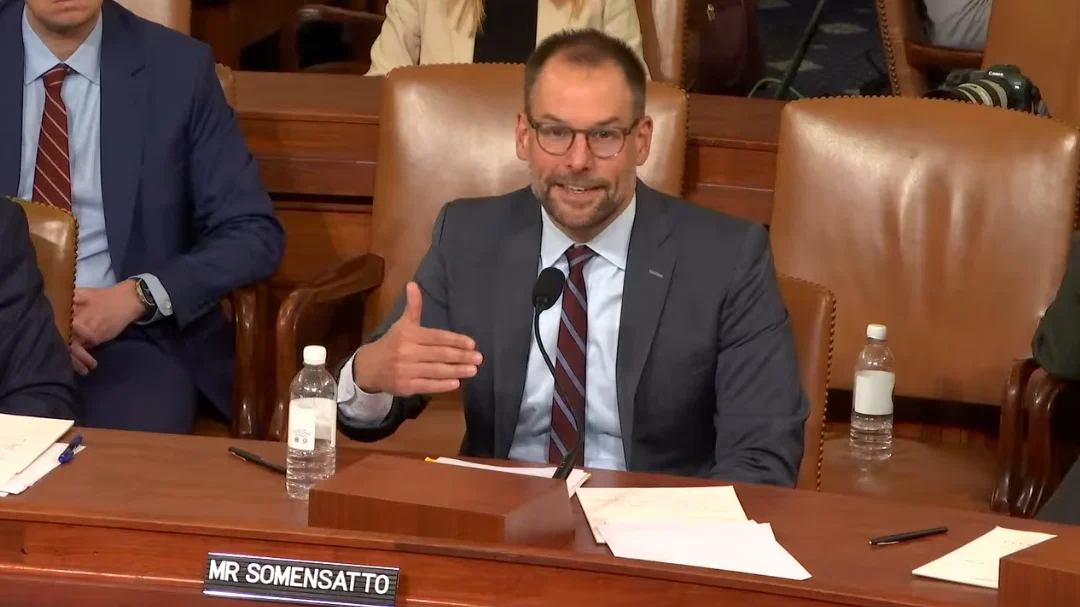
The hearing, held before the powerful House Committee on Ways and Means, represents a critical juncture in the ongoing dialogue between the federal government and the burgeoning digital asset sector. As the adoption of cryptocurrencies, decentralized finance (DeFi) protocols, and non-fungible tokens (NFTs) continues to expand, the legislative branch is increasingly focused on reconciling traditional fiscal policy with the unique technical architecture of blockchain technology. Jason Somensatto, representing the policy interests of Coin Center, provided a comprehensive analysis of the existing regulatory friction points that hinder both tax compliance and the technological maturation of the industry.
The Legislative Landscape of Digital Asset Taxation
The Ways and Means Committee, which holds jurisdiction over all taxation and revenue-raising measures in the U.S. House of Representatives, has signaled that digital assets are no longer a peripheral concern. The hearing sought to address the ambiguity surrounding the Internal Revenue Code as it applies to decentralized networks. A central theme of the discussion was the challenge of applying reporting requirements—originally designed for centralized financial institutions like brokerage firms—to decentralized protocols where no intermediary exists to collect or report user data.
Somensatto’s testimony emphasized that while the industry is not opposed to clear tax reporting standards, the current regulatory framework imposes impossible burdens on developers and users of decentralized software. The crux of the issue lies in the definition of a "broker" under existing legislative proposals. If the definition is too broad, it could encompass software developers, node operators, and individual liquidity providers, effectively criminalizing the act of contributing to open-source code because these participants lack the technical capability to comply with KYC (Know Your Customer) and reporting obligations that rely on custodial relationships.
Chronology of Regulatory Engagement
The trajectory leading to this hearing has been marked by a series of legislative attempts to integrate digital assets into the federal tax net.
- November 2021: The Infrastructure Investment and Jobs Act was signed into law, introducing section 6045 reporting requirements for "brokers" of digital assets. The ambiguity of this language immediately triggered concerns from industry advocates regarding its reach into the decentralized software ecosystem.
- 2022-2023: The Internal Revenue Service (IRS) and the Treasury Department issued several rounds of proposed rulemaking aimed at clarifying these reporting requirements. These efforts faced significant pushback from both industry groups and members of Congress who argued that the proposed rules were overly broad and technically unfeasible.
- Early 2024: The House Ways and Means Committee prioritized a series of hearings to examine the impact of digital asset taxation on American innovation and global competitiveness.
- June 2026: The current legislative hearing featuring Somensatto served as a forum for stakeholders to present expert analysis on how to balance tax enforcement with the preservation of privacy and decentralization.
Data and Economic Implications
The economic stakes are significant. Data from the IRS suggests that the tax gap—the difference between taxes owed and taxes paid—is heavily impacted by the difficulty of tracking digital asset transactions. However, industry proponents argue that aggressive, poorly targeted taxation could drive development and capital flight to jurisdictions with more favorable regulatory climates, such as the European Union under MiCA (Markets in Crypto-Assets) or jurisdictions in Asia.
According to research from the Blockchain Association and various think tanks, the U.S. currently accounts for a substantial portion of global blockchain research and development. However, excessive tax reporting burdens that are applied to non-custodial participants could result in a "brain drain," where the talent responsible for developing next-generation financial infrastructure moves to countries that offer greater legal certainty. Furthermore, the administrative costs for individual taxpayers to comply with current reporting standards are disproportionately high, often requiring expensive tax software or specialized accounting services to track thousands of micro-transactions, a reality that the current tax code fails to accommodate.
Key Points of Contention
During the testimony, several specific policy hurdles were highlighted as primary concerns:
- Cost Basis Tracking: Digital assets are frequently moved between wallets and exchanges. Tracking the original cost basis for tax purposes becomes exponentially difficult when assets are moved across disparate protocols, leading to potential overpayment or underpayment of capital gains taxes.
- De Minimis Thresholds: Current law does not provide a practical exemption for small, everyday transactions. Treating the purchase of a coffee with a digital asset as a taxable event requires the consumer to calculate the capital gain on that specific fraction of an asset, which is practically impossible for the average user.
- Definition of Decentralized Protocols: A significant portion of the debate centers on whether software developers who release code should be treated as financial intermediaries. Somensatto argued that imposing reporting requirements on developers is equivalent to taxing the creator of a spreadsheet for the financial transactions conducted by its users.
Official Responses and Stakeholder Reactions
While the committee members remained largely in listening mode during the hearing, the questioning from both sides of the aisle revealed a divide. Democratic members generally focused on the need for robust tax enforcement to ensure that the digital asset sector contributes its fair share to federal revenue. Republican members expressed concerns that the Treasury Department’s regulatory approach might be overreaching and could stifle technological innovation if not curtailed by specific legislative guardrails.
Industry observers noted that the hearing reflects a growing maturity in the policy discourse. Instead of debating whether digital assets should be taxed, the conversation has shifted toward how they should be taxed in a way that is technically sound and fair. The consensus among technical experts present was that the tax code must be updated to recognize the difference between a centralized exchange—which functions similarly to a bank—and a decentralized protocol, which is a piece of neutral software.
Broader Impact and Future Implications
The long-term implications of this legislative hearing are likely to manifest in future tax reform packages. If the House Ways and Means Committee moves toward codifying a more precise definition of a "broker," it could provide the legal certainty the industry has long sought. Conversely, failure to address these technical nuances could lead to protracted litigation, as industry participants may seek to challenge IRS rules in federal court on the grounds that they exceed statutory authority.
Furthermore, the integration of digital assets into the traditional tax regime is a prerequisite for broader institutional adoption. Large financial institutions and asset managers have indicated that they are waiting for clearer guidance on the tax treatment of these assets before committing significant capital to the space. As such, the outcome of these hearings will likely influence the pace of institutional integration into the digital asset ecosystem.
Ultimately, the hearing highlighted that the tax code is currently misaligned with the realities of decentralized technology. The challenge for policymakers will be to draft legislation that captures revenue from illicit or evasive activities without inadvertently penalizing the developers and users who are building the financial infrastructure of the future. The testimony provided by experts like Jason Somensatto serves as a roadmap for legislators to navigate these complexities, emphasizing that precise definitions and clear exemptions are the necessary ingredients for a balanced regulatory approach that fosters growth while ensuring tax compliance. As the committee deliberates on the next steps, the industry remains poised to advocate for a framework that treats digital assets not as a foreign anomaly, but as a legitimate and evolving component of the modern global economy.
