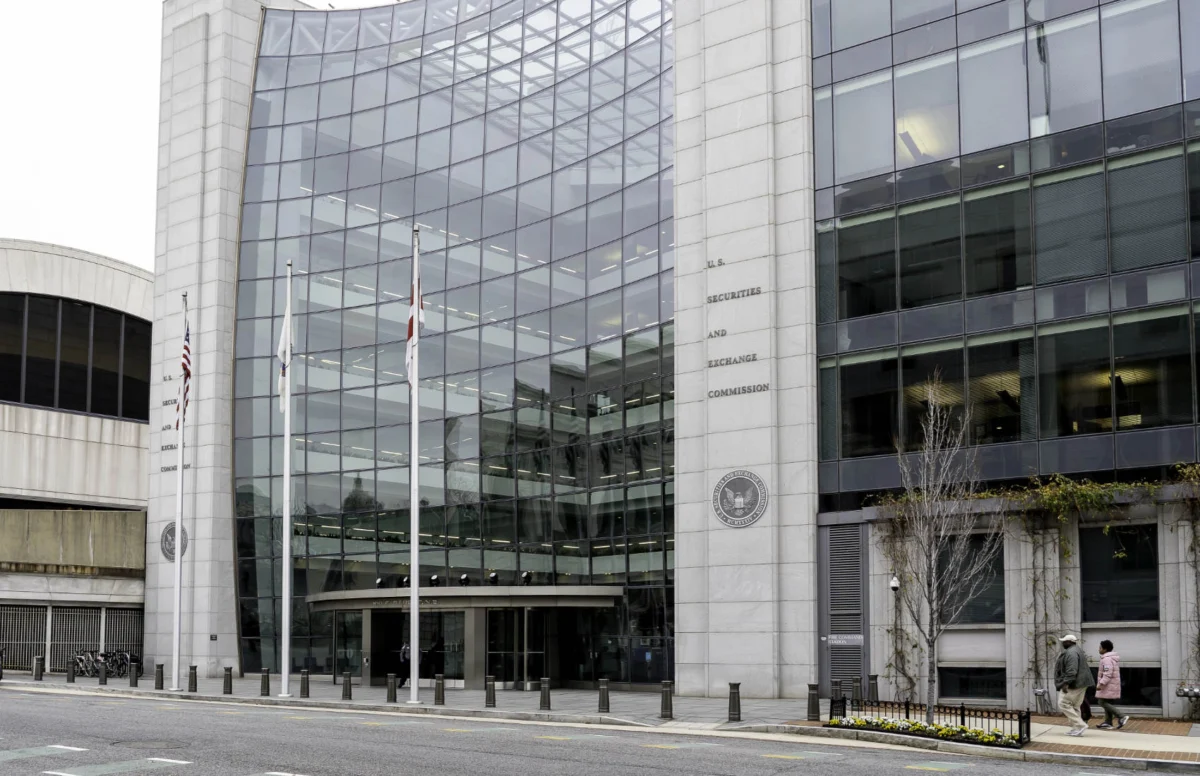
The United States Securities and Exchange Commission has formally resolved months of widespread speculation across financial technology and regulatory circles by unveiling a targeted innovation exemption framework. Under the newly released order, specific tokenized exchange-listed equities—technically designated as National Market System stocks—will be permitted to trade via decentralized automated market makers. This regulatory relief introduces a structural pathway that exempts these innovative AMM trading venues from traditional, cumbersome national securities exchange registration mandates, while similarly relieving participating liquidity providers from standard broker-dealer registration requirements.
This historic regulatory maneuver represents one of the most substantial federal acknowledgments of public permissionless blockchain infrastructure to date. Designed to operate under strict parameters, the exemption remains in effect for an initial trial period of five years, during which time the Commission has formally invited comprehensive public commentary from market participants, legal scholars, technology developers, and traditional financial institutions.
The Mechanics and Structural Parameters of the Exemption
While the utilization of automated market makers signifies a monumental leap toward decentralized finance integration within traditional equity markets, the SEC’s order imposes rigorous structural limitations designed to protect systemic market integrity. The exemption explicitly mandates that while the underlying settlement and execution mechanisms must reside on public, permissionless blockchains, the actual trading interactions must be conducted in a permissioned fashion. This hybrid model ensures that participant verification, anti-money laundering protocols, and know-your-customer standards remain strictly enforced despite the decentralized nature of the trading rails.
Furthermore, the regulatory framework establishes strict quantitative ceilings to mitigate potential market disruption during this five-year experimental phase. These limitations restrict both the aggregate trading volumes permissible across these AMM protocols and the specific number of distinct stock symbols eligible for tokenized trading at any given time. By implementing these caps, regulatory authorities aim to observe how automated market-making algorithms interact with conventional equity liquidity without exposing the broader financial architecture to runaway systemic risks.
Distinguishing True Representation: Full Shareholder Rights Versus Synthetic Tokens
The timing of the SEC’s announcement coincides with heightened public discourse regarding the legal and operational definition of tokenized assets. Recent high-profile controversies—such as the public disagreements between prominent corporate executives and retail brokerage leaders regarding synthetic stocks and third-party debt representations—underscored the urgent need for regulatory clarity. The SEC’s order directly addresses these controversies by drawing a bright line between genuine asset backing and derivative or synthetic equivalents.
Under the terms of the new exemption, synthetic tokens that merely represent a different issuer’s debt or an indirect financial claim backed one-for-one with actual shares do not qualify for regulatory relief. Instead, to be eligible for the exemption, tokenized equities must provide holders with full, unencumbered shareholder rights, including direct voting capabilities and economic entitlements equivalent to holding the underlying physical security in traditional brokerage accounts.
This strict requirement for full rights intersects with a newly established corporate notification mandate. The regulatory framework does not restrict the issuance of these tokens exclusively to the original stock issuers. Entities such as the Depository Trust Company, independent custodians, or licensed broker-dealers may issue qualified tokens, provided they successfully convey full shareholder rights to the end token holder. However, to protect corporate governance, the issuing company of the underlying stock retains the ultimate right to object. The AMM venue is legally required to provide formal written notification to the underlying stock issuer at least thirty days prior to the commencement of trading for any third-party-issued token, granting corporations a definitive window to contest the tokenization of their equity.
Background Context: The Evolution of Tokenized Equities and SEC Oversight
The intersection of distributed ledger technology and traditional securities regulation has been a focal point of intense debate for nearly a decade. Following the initial wave of initial coin offerings and the subsequent regulatory crackdown on unregistered digital asset securities in 2017 and 2018, market participants shifted their focus toward real-world asset tokenization. Tokenized equities—digital tokens representing shares of publicly traded companies—emerged as a compelling frontier, promising frictionless settlement, 24/7 trading capabilities, and programmatic compliance via smart contracts.
Despite these technological promises, adoption was severely stifled by regulatory ambiguity. Under existing federal securities laws, any facility that brings together buyers and sellers of securities must register as a national securities exchange unless an exemption applies. Similarly, individuals or entities that provide liquidity or facilitate trades on behalf of others face stringent dealer registration mandates under the Securities Exchange Act of 1934. Because automated market makers rely on algorithmic smart contracts rather than human intermediaries to pool liquidity and execute trades, applying these decades-old statutory definitions created an insurmountable compliance barrier.
Over the past several years, fintech startups, decentralized finance developers, and progressive financial institutions have actively lobbied federal regulators for a bespoke "regulatory sandbox" or innovation exemption. Industry advocacy groups argued that without a formalized pathway to test blockchain-based equity trading domestically, capital and technological innovation would inevitably migrate to more permissive foreign jurisdictions. The SEC’s five-year order is a direct response to these pressures, offering a controlled, supervised environment to evaluate the viability of decentralized market structures.

Chronology of Regulatory Engagement and Industry Milestones
The path toward this landmark exemption order reflects a gradual, deliberate hardening of regulatory policy paired with increasing industry sophistication:
- 2017–2018: The SEC initiates extensive enforcement actions against unregistered digital asset offerings, establishing the broad interpretation that many tokens fall under the legal definition of an investment contract.
- 2019–2021: Financial technology startups begin experimenting with private, permissioned tokenized equity models, operating within highly restrictive, closed-loop ecosystems to avoid federal securities violations.
- 2022–2023: The rise of automated market makers on public blockchains prompts renewed discussions surrounding decentralized finance. Industry participants formally petition regulatory bodies for clarity on how broker-dealer and exchange registrations apply to algorithmic liquidity pools.
- 2024: Public disputes regarding synthetic tokenization and third-party corporate debt instruments highlight systemic vulnerabilities, prompting the SEC to tighten asset-qualification standards.
- 2025 (Current): The SEC officially issues a five-year innovation exemption order permitting the AMM trading of NMS stocks under strict permissioned parameters, paired with a mandatory public comment period and issuer notification protocols.
Implications for Market Structure, Liquidity Providers, and Corporate Governance
The issuance of this five-year exemption order carries profound implications for the future evolution of global financial markets. From a market structure perspective, traditional exchanges—traditionally characterized by centralized order books and established clearinghouses—will now coexist, however tentatively, with decentralized algorithmic liquidity pools. This creates a fascinating laboratory to test whether automated market makers can compress bid-ask spreads and enhance capital efficiency for equity securities without destabilizing core market functions.
For liquidity providers, the waiver of standard dealer registration requirements under specific conditions removes a major legal deterrent that previously kept institutional capital on the sidelines of decentralized finance. Liquidity providers can now participate in algorithmic tokenized equity pools with greater legal certainty, provided they adhere to the strict volume caps, asset limitations, and permissioned access controls outlined in the order.
Corporate issuers, meanwhile, are granted unprecedented leverage over how their securities are represented in digital formats. By incorporating a mandatory 30-day advance notification window and granting underlying stock issuers the absolute right to object to third-party tokens, the SEC has balanced the drive for technological innovation with corporate governance rights. Companies can now prevent unauthorized, poorly structured, or potentially predatory derivative representations of their equity from circulating on public blockchains.
As the financial technology sector digests the full text of the Commission’s order, the coming months will likely see intense engagement during the public comment period. Legal experts, compliance officers, and decentralized finance developers will scrutinize the precise volume limits and operational definitions laid out by regulators. Ultimately, the success or failure of this five-year experiment will likely dictate whether decentralized automated market makers become a permanent, foundational pillar of mainstream United States equity markets or remain a strictly regulated, niche financial frontier.