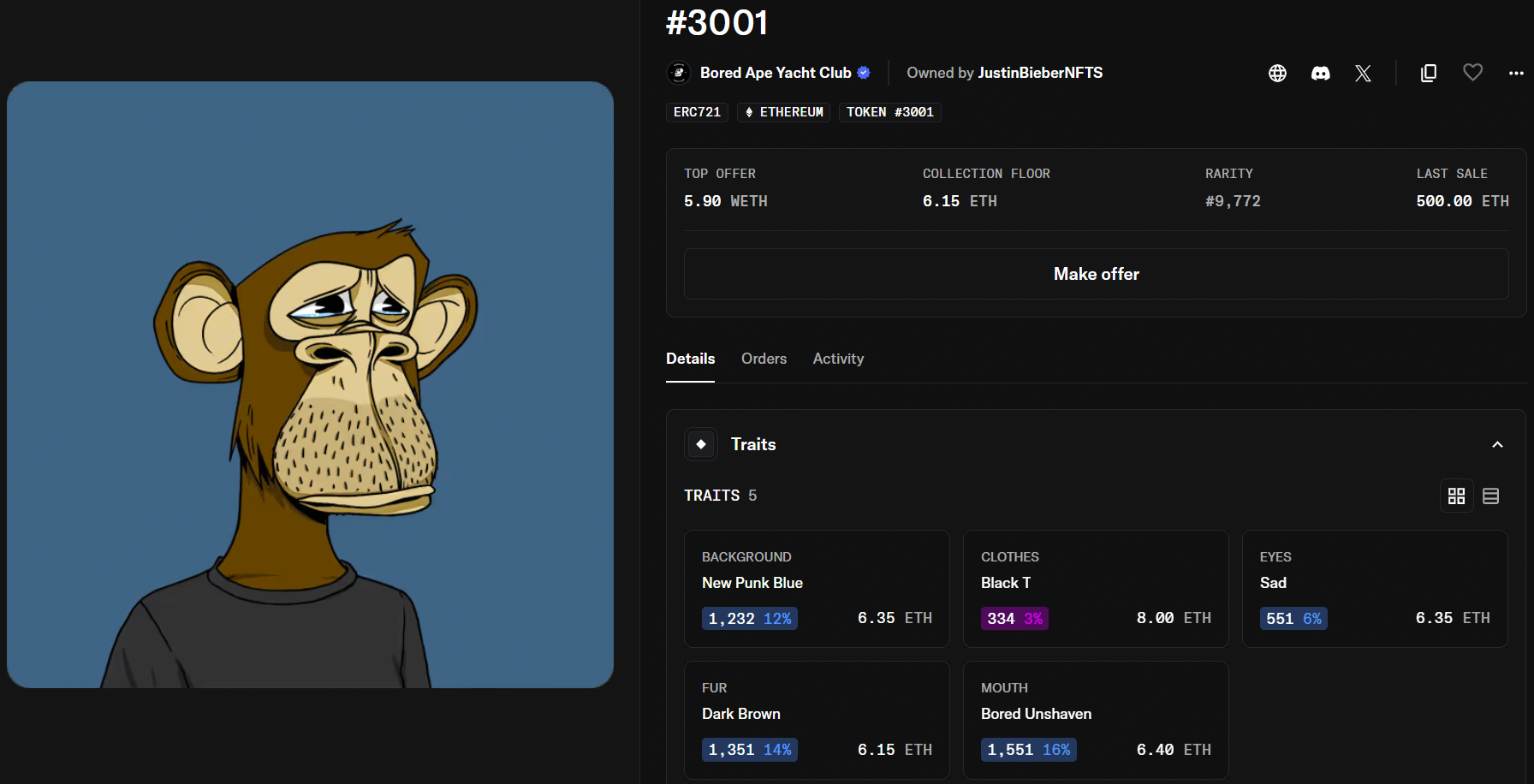
The intersection of celebrity culture and digital asset speculation reached a definitive, if sobering, milestone this week as market data revealed the staggering depreciation of Justin Bieber’s Bored Ape Yacht Club (BAYC) NFT #3001. Acquired during the height of the 2022 non-fungible token (NFT) frenzy for a premium price of 500 ETH—valued at approximately $1.3 million at the time—the asset is now estimated to be worth roughly $12,000. This realization marks a nearly 99% decline from the purchase price, serving as a stark case study for the volatility that defined the NFT market’s speculative zenith and its subsequent long-term correction.
A Chronology of a High-Profile Acquisition
To understand the scale of the current downturn, one must revisit the atmosphere of early 2022. The Bored Ape Yacht Club, a collection of 10,000 algorithmically generated primate avatars created by Yuga Labs, had transcended its niche origins to become a global status symbol. By January 2022, the "Bored Ape" brand was synonymous with wealth, exclusivity, and the promise of a digital-first future.
Justin Bieber, already an active participant in the Web3 space, purchased Bored Ape #3001 on January 29, 2022. At the time of the transaction, the market was in a state of extreme euphoria. While the average floor price for a Bored Ape hovered between 200 ETH and 300 ETH—roughly $500,000 to $750,000—Bieber opted to pay a significantly higher premium, signaling a willingness to overlook standard market valuations in favor of immediate ownership of a specific "rare" trait asset.
The acquisition did not end there. Shortly after the purchase of #3001, Bieber expanded his portfolio by acquiring Bored Ape #3850 for approximately $470,000. These purchases were widely publicized, contributing to a period where celebrity endorsements were viewed as a primary driver of NFT liquidity and valuation. However, as the global macroeconomic environment shifted toward higher interest rates and a cooling of speculative fervor, the "Bieber premium" vanished, leaving the assets vulnerable to the broader market liquidity crisis.
Market Dynamics and the Mechanics of the Decline
The current valuation of $12,000 is derived from the prevailing "floor price"—the lowest price at which an asset in a collection can be purchased on the secondary market. Recent data indicates that the BAYC floor has hovered near 6.15 ETH. With Ethereum trading near the $2,000 mark, the dollar-denominated value of these assets has been decimated.
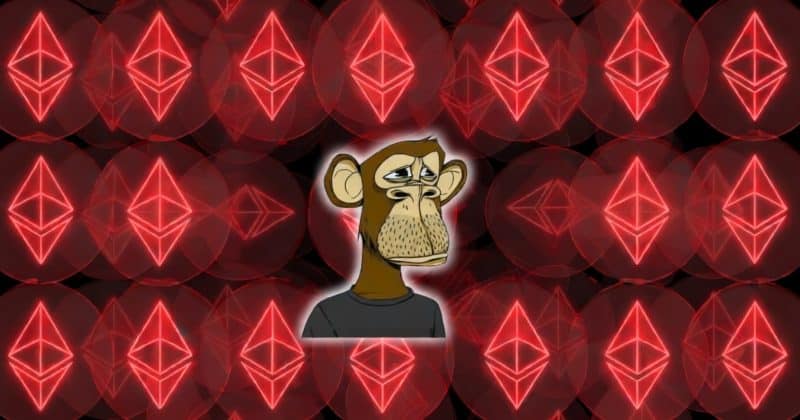
The decline is not isolated to Bieber’s portfolio; it represents a systemic correction within the Yuga Labs ecosystem. Launched in April 2021 with a mint price of just 0.08 ETH, the collection saw a meteoric rise, with prices peaking in May 2022 at ranges between 128 and 145 ETH. At the time, this equated to roughly $350,000 to $420,000 per unit. The subsequent collapse was fueled by a combination of factors:
- Macroeconomic Headwinds: As central banks increased interest rates, risk-on assets—including cryptocurrencies and NFTs—saw massive capital outflows.
- Saturation and Fatigue: The rapid proliferation of "PFP" (Profile Picture) projects led to market oversaturation, diluting the perceived scarcity of early collections.
- Liquidity Fragmentation: As investors exited the space, the lack of depth in secondary market order books exacerbated price slippage, making it difficult to sell high-value assets without accepting deep discounts.
Comparative Analysis: The Broader NFT Landscape
The collapse of blue-chip NFT valuations has forced a re-evaluation of the asset class. During the 2021-2022 bull run, NFTs were largely treated as digital fine art or speculative financial vehicles. Today, the sector has been forced to pivot toward utility.
The industry has moved away from the "collectible-only" model, with developers focusing on integrating NFTs into functional frameworks. This includes in-game assets for Web3 gaming, digital identity verification, access passes for decentralized autonomous organizations (DAOs), and the tokenization of real-world assets (RWAs). While the speculative volume has plummeted, the underlying technology continues to mature.
Furthermore, the infrastructure supporting these assets has evolved. While Ethereum remains the primary hub for high-value NFT trading due to its security and cultural prominence, competitors like Solana and Polygon have successfully captured significant market share. By offering lower transaction fees and higher throughput, these blockchains have lowered the barrier to entry for users who find Ethereum’s cost-prohibitive structure unattractive.
Implications for Celebrity and Institutional Investors
The financial experience of Justin Bieber serves as a cautionary tale for high-net-worth individuals and celebrities entering the digital asset market. When the NFT market was at its peak, the allure of being part of an "exclusive club" often superseded traditional due diligence.
Market analysts note that the failure of these assets to maintain value does not necessarily invalidate the underlying blockchain technology, but it does highlight the extreme risk inherent in non-productive digital assets. For celebrities, these purchases were often part of a broader marketing strategy to engage with fanbases in a digital-native manner. However, the optics of a $1.3 million investment shrinking to $12,000 highlight the lack of a "floor" in a market driven entirely by sentiment rather than cash flow or tangible utility.
From an institutional perspective, the "Bieber case" underscores the necessity of secondary market depth. High-end collectibles are notoriously illiquid. Unlike stocks or cryptocurrencies that can be sold instantly on centralized exchanges, high-value NFTs often require specialized buyers. In a bear market, those buyers simply vanish, turning a theoretical million-dollar asset into a practically illiquid digital file.
Future Outlook and Sector Maturation
Despite the public losses, the Bored Ape Yacht Club remains a significant entity in the Web3 space. Yuga Labs has continued to build, pivoting toward the development of the "Otherside" metaverse and diversifying its intellectual property holdings. The goal is to move the brand from a speculative collection into a multi-media franchise, though it remains to be seen whether such efforts can restore the valuation of early-entry assets like #3001.
For the wider NFT industry, the post-2022 landscape is defined by "building in the dark." The speculative fervor has been replaced by quiet development cycles. The focus has shifted toward creating assets that offer long-term value, such as intellectual property rights for holders or interoperability across different digital platforms.
The journey of Bored Ape #3001 is a reflection of a volatile period in financial history. It serves as a reminder that in the nascent world of digital assets, the distance between peak hype and market reality can be measured in millions of dollars. As the sector matures, the emphasis on speculative PFP projects is likely to continue to wane, making way for more pragmatic, utility-driven applications of blockchain technology.
Investors, celebrities, and casual collectors alike have been forced to reconcile with the reality that digital ownership, while technically secure on the blockchain, is subject to the same laws of supply, demand, and economic cycles that govern every other financial market. Whether or not these specific assets ever return to their former valuation is a secondary question; the primary takeaway remains the critical importance of market timing and the inherent risks of participating in speculative asset bubbles.