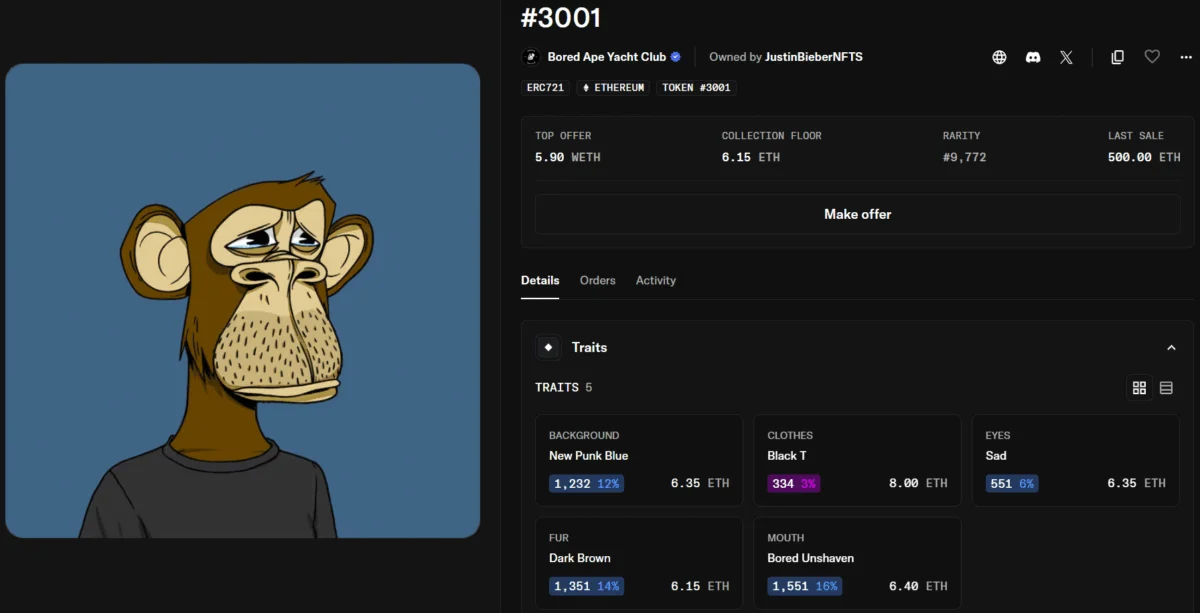
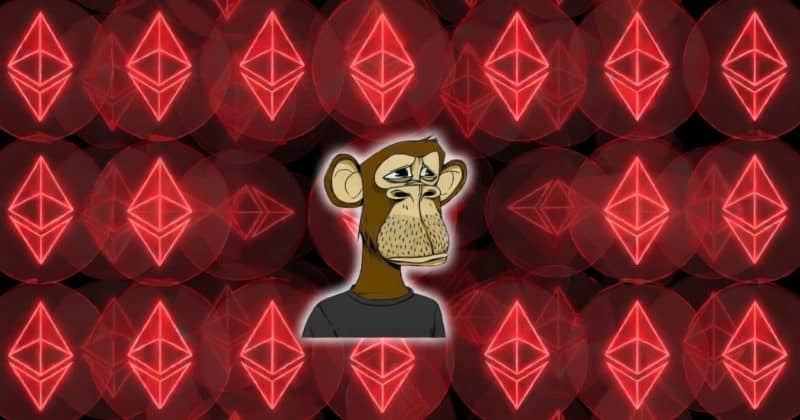
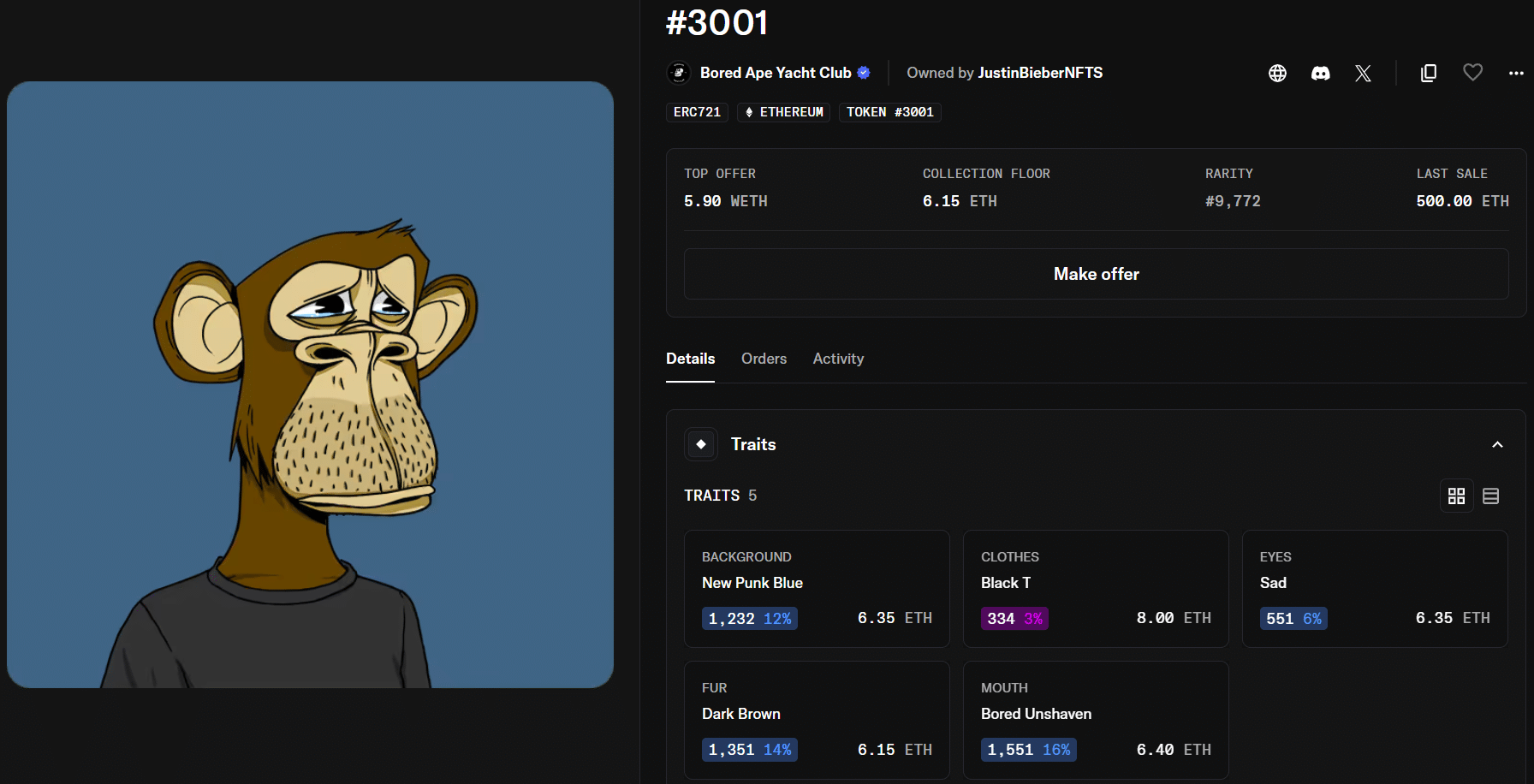
The digital collectibles market, once characterized by unprecedented capital inflows and aggressive celebrity endorsements, is currently enduring a profound correction that has dismantled the paper wealth of many high-profile investors. Among the most notable casualties of this downturn is global pop superstar Justin Bieber, whose once-celebrated acquisition of Bored Ape Yacht Club (BAYC) #3001 has seen its market value erode by approximately 99%. Purchased for a staggering 500 ETH in early 2022—a transaction valued at roughly $1.3 million at the time—the asset is now appraised at a mere $12,000, underscoring the severe evaporation of liquidity and investor sentiment that has plagued the non-fungible token (NFT) sector since the peak of the 2021-2022 bull cycle.
This dramatic devaluation serves as a case study in the risks associated with speculative asset classes during periods of irrational exuberance. When Bieber acquired the asset, the NFT ecosystem was experiencing a "gold rush" phase, driven by low interest rates, high retail participation, and the perceived status of holding rare digital art. However, as the broader cryptocurrency market faced contractionary monetary policy and heightened regulatory scrutiny, the speculative premium attached to these digital collectibles vanished, leaving owners with assets that have struggled to find consistent demand.
A Chronology of the Bored Ape Phenomenon
To understand the scale of this loss, one must examine the meteoric rise and subsequent fall of Yuga Labs’ flagship collection. The Bored Ape Yacht Club debuted in April 2021, initially released as a generative art series of 10,000 unique avatars. At the time of its minting, the entry cost was a modest 0.08 ETH, and the project sold out within a twelve-hour window. The community-centric model of the project, which granted holders intellectual property rights to their individual apes, fostered a rapid increase in demand.
By the second quarter of 2022, the collection had achieved mainstream cultural saturation. The floor price—the minimum price required to purchase an item from the collection—soared, reaching peaks between 128 and 145 ETH. At the exchange rates of that era, this represented a valuation of $350,000 to $420,000 per entry-level asset. It was during this period of peak fervor that Bieber made his acquisitions. Records indicate that he paid well above market value, with contemporary analysts noting that similar pieces were trading in the $200,000 to $300,000 range.
Bieber’s portfolio did not end with #3001. Shortly after his initial purchase, he added BAYC #3850 to his collection for an estimated $470,000. These acquisitions, publicized across social media platforms, functioned as a powerful, albeit unintended, catalyst for wider public interest in the NFT space. However, as the macroeconomic environment shifted in late 2022 and throughout 2023, the floor prices for the BAYC collection began a steady, persistent decline. Current market data shows the floor price hovering near 6.15 ETH, with the highest bids for assets like #3001 often languishing around the 5.9 ETH mark.
Market Realities and Valuation Metrics
The financial discrepancy between Bieber’s acquisition price and current valuations is exacerbated by the volatility of the underlying currency. During the 2022 rally, Ethereum was trading at significantly higher price points relative to the U.S. dollar. Today, with Ethereum fluctuating near the $2,000 threshold, the "double-whammy" of a lower ETH-denominated floor price combined with a lower dollar-denominated exchange rate has resulted in an intensified loss for early-entry investors.
This phenomenon is not isolated to celebrity portfolios. Data from analytics firms suggests that the entire NFT sector has undergone a systemic revaluation. The period of "flipping"—buying assets with the sole intent of reselling them at a higher price shortly thereafter—has largely been replaced by a period of stagnation. Many investors who entered the market at the top of the cycle are now facing unrealized losses that appear permanent, as the "floor" for these digital assets has failed to recover despite intermittent rallies in the broader cryptocurrency markets.
The Shift Toward Utility and Practical Application
While the speculative bubble has burst, the underlying technology behind NFTs—distributed ledger technology—remains in a state of maturation. Industry experts note that the market is currently undergoing a "utility pivot." The initial phase of the NFT market was driven by digital scarcity and vanity, but the current development cycle is increasingly focused on tangible applications.
Modern projects are moving away from speculative generative art toward functional utility. This includes:
- In-Game Assets: Integrating NFTs as verifiable, tradeable assets within blockchain-based gaming ecosystems, where they serve a functional purpose rather than acting as a purely decorative store of value.
- Access Passes: Utilizing tokenized assets to grant holders exclusive access to digital or physical events, communities, and gated content.
- Identity and Authentication: Using non-fungible tokens as digital credentials or certificates of authenticity for real-world items, such as luxury goods, real estate, or academic records.
- Tokenized Real-World Items: Linking physical assets (such as rare collectibles or fine art) to a digital token to provide a verifiable history of ownership and provenance.
This transition is arguably a necessary phase for the long-term viability of the technology. By decoupling the value of an NFT from purely speculative market sentiment and anchoring it to a specific service or utility, developers hope to create a more sustainable economic model.
Competitive Landscapes: Ethereum, Solana, and Polygon
The infrastructure supporting NFTs has also diversified. While Ethereum remains the primary venue for high-value transactions and major blue-chip collections due to its robust security and liquidity, other blockchains have made significant inroads.
Solana, for instance, has gained traction as a platform for high-frequency, low-cost NFT activity. Its lower gas fees and superior transaction throughput make it an attractive environment for gaming and mass-market consumer projects. Similarly, Polygon has established itself as a hub for brands and corporations looking to launch NFT initiatives without the cost barriers associated with Ethereum’s Layer 1 network. This fragmentation of the market suggests that the "winner-take-all" dynamic of 2021 has evolved into a more competitive, specialized ecosystem.
Broader Implications and Institutional Outlook
The contraction of the NFT market has led to a more cautious approach from institutional and retail participants alike. The era of "easy gains" has been replaced by a focus on project longevity, team transparency, and sustainable business models. Analysts suggest that for projects to survive, they must provide value beyond the initial purchase price, whether through software development, community-building, or integration with existing legacy systems.
Furthermore, the legal and regulatory landscape is evolving. As global authorities begin to categorize various types of digital assets, the distinction between a "collectible" and an "investment contract" becomes increasingly critical. The losses suffered by high-profile investors have drawn the attention of regulators who are keen to ensure that platforms and creators are not misleading consumers regarding the potential for profit.
The story of Justin Bieber’s investment serves as a stark reminder of the risks inherent in emerging digital markets. While the NFT space continues to innovate and build, the volatility observed in the last three years has fundamentally changed the public’s perception of these assets. For many, the focus has shifted from the prospect of astronomical returns to the potential for blockchain technology to solve real-world problems in supply chain management, identity verification, and digital ownership.
Ultimately, the collapse of speculative NFT valuations is a corrective event. It has purged the market of unsustainable projects and forced the remaining participants to focus on actual development. While the financial losses for those who entered at the peak remain a significant point of discussion, the broader technological infrastructure continues to move forward, albeit at a pace more aligned with long-term technological adoption rather than short-term market hype. The industry is now entering a "build phase," where the value of a project is measured not by its floor price on an exchange, but by its contribution to the decentralized digital economy.