The rapid maturation of blockchain technology has fundamentally transformed how society perceives, establishes, and exchanges ownership of digital content. Among the most prominent developments in this sector are Non-Fungible Tokens (NFTs) and BRC-20 tokens, which have collectively captured the attention of creators, investors, and technologists worldwide. For artists, developers, and entrepreneurs, the ability to tokenize digital assets offers unprecedented control, direct monetization channels, and innovative ways to build engaged communities. Beyond simple digital art, NFTs now serve as keys for exclusive event access, instruments for decentralized fundraising, and representations of virtual real estate. However, entering the token creation space requires more than creative vision; it demands a solid grasp of blockchain infrastructure, smart contract deployment, risk management, and regulatory awareness. This comprehensive guide examines the foundational mechanics of NFTs, details the step-by-step process of minting digital assets on major EVM-compatible networks using decentralized infrastructure, and analyzes the broader economic implications of the tokenized economy.
Understanding Non-Fungible Tokens and Their Market Evolution
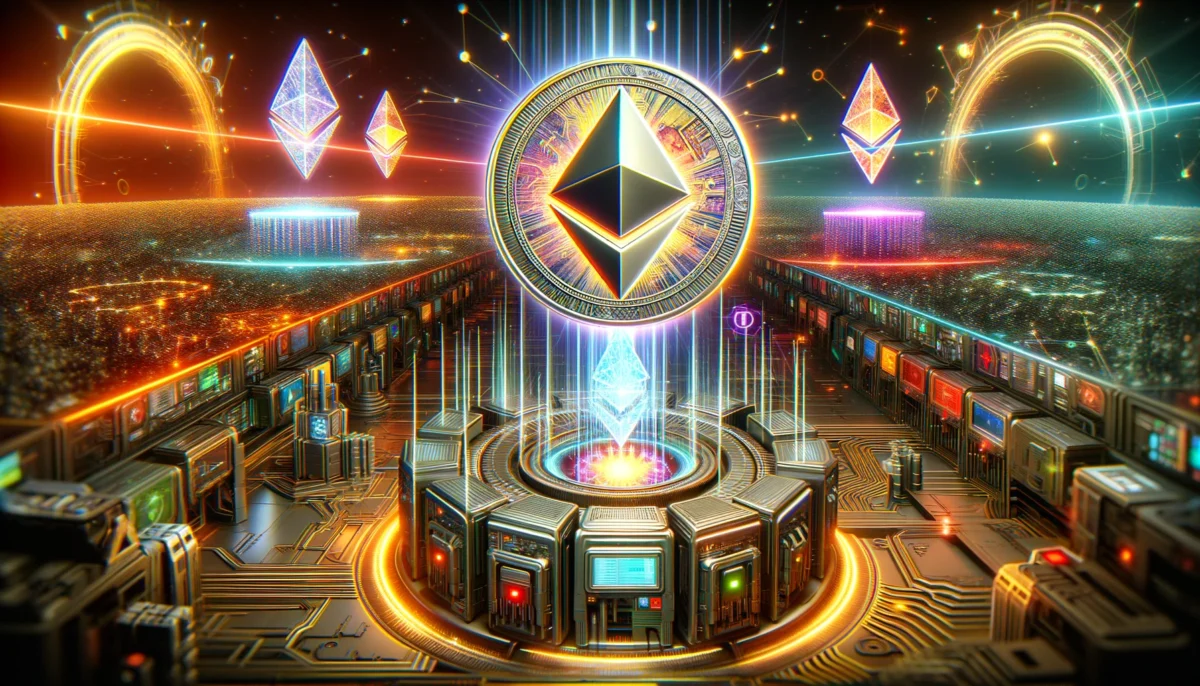
To appreciate the utility of NFTs, one must first understand their structural differences from traditional cryptocurrencies. Unlike fungible digital assets such as Bitcoin or Ethereum—where each individual coin or token holds an identical value and can be exchanged on a direct, one-to-one basis—NFTs are entirely unique. Each non-fungible token incorporates cryptographic metadata and a distinct identifier stored on a distributed ledger, verifying absolute ownership and authenticity for a specific item. This underlying technology prevents duplication and establishes a permanent, immutable record of provenance.

The concept of digital scarcity is not entirely new, but blockchain implementation solved the historical problem of infinite digital replication. By utilizing smart contracts—self-executing code stored on blockchains like Ethereum, Binance Smart Chain, and others—creators can issue assets whose transfer history, royalties, and ownership rights are automatically enforced without intermediaries. Throughout recent market cycles, the NFT ecosystem has evolved from a niche hobby for crypto enthusiasts into a multi-billion-dollar global marketplace encompassing visual art, music, collectible items, virtual worlds, and domain names.
Preparation and Strategic Considerations Before Minting
Before initiating the technical steps required to deploy a smart contract or mint a token, creators and prospective issuers must conduct a thorough strategic assessment. Entering the blockchain ecosystem involves financial commitments, primarily in the form of network transaction fees, commonly referred to as gas fees. These fees fluctuate dynamically depending on network congestion, making timing and platform selection critical factors for cost management.
Furthermore, creators must evaluate their technical preparedness. While modern decentralized applications (dApps) have drastically simplified user interfaces, users must still interact with Web3 wallets, manage private keys securely, and understand the permanence of blockchain transactions. Once an NFT is successfully minted and recorded onto a decentralized ledger, its fundamental metadata cannot be altered. Therefore, meticulous preparation of digital files, thorough legal review of intellectual property rights, and a clear understanding of target audiences are essential prerequisites for success.
Step-by-Step Technical Guide: Creating and Minting an NFT on OpenSea
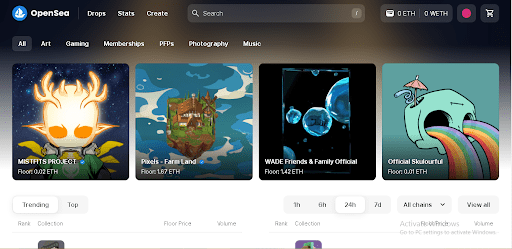
Navigating the technical landscape of NFT creation has become significantly more accessible thanks to specialized decentralized marketplaces. For the purposes of this guide, we examine OpenSea, one of the pioneering and most widely utilized decentralized marketplaces built primarily on the Ethereum blockchain. OpenSea provides a standardized framework that allows users to interact with smart contracts, deploy custom collections, and mint digital assets directly to their Web3 wallets.
Step 1: Connecting a Web3 Wallet
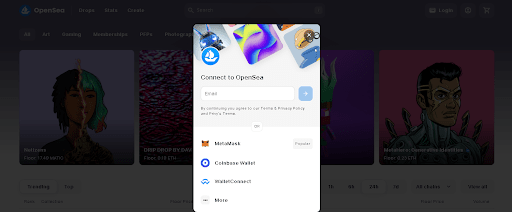
The foundational requirement for interacting with any decentralized platform is a secure Web3 wallet. Popular options compatible with the Ethereum network and EVM-compatible chains include MetaMask, Coinbase Wallet, and WalletConnect-supported applications. To begin, navigate to the official OpenSea platform and select the login or profile connection option to link your preferred wallet. This action establishes a secure cryptographic bridge between your browser interface and the blockchain network, authorizing you to sign transactions and manage your digital portfolio.
Step 2: Accessing the Creator Studio
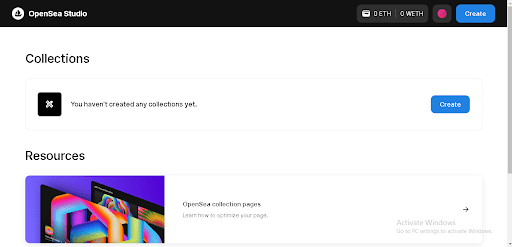
Once your wallet is successfully connected, access your user profile interface located at the top right corner of the platform. From the drop-down menu, select the "Studio" option. This developer-friendly environment is designed specifically to help creators deploy custom smart contracts and manage their token collections without needing to write raw Solidity code from scratch.
Step 3: Initiating the Creation Process
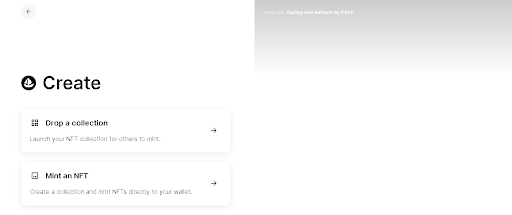
Within the Studio interface, locate and click the "Create" button situated in the upper right quadrant of the screen. The platform will typically offer choices regarding whether you wish to drop an entire collection or mint an individual token. Selecting the option to create an NFT allows you to begin the asset generation process and mint the item directly into your connected wallet.
Step 4: Establishing a Smart Contract and Collection
If you are utilizing the platform for the first time, you will be prompted to create a new collection. This step involves deploying a custom smart contract to the blockchain. To configure your contract correctly, you must supply specific parameters:
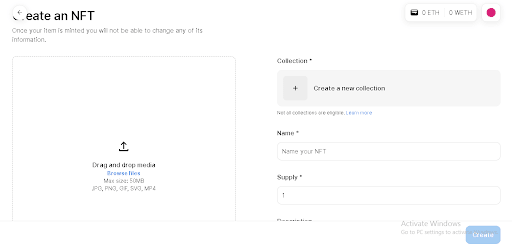
- A high-resolution logo image representing your collection or brand.
- A distinct contract name.
- A designated token symbol (an abbreviated ticker).
- Selection of the target EVM-compatible blockchain network.
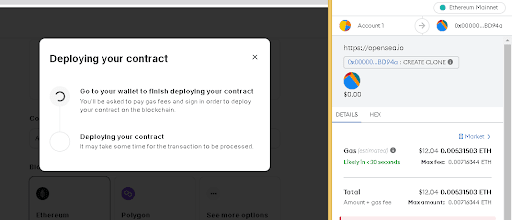
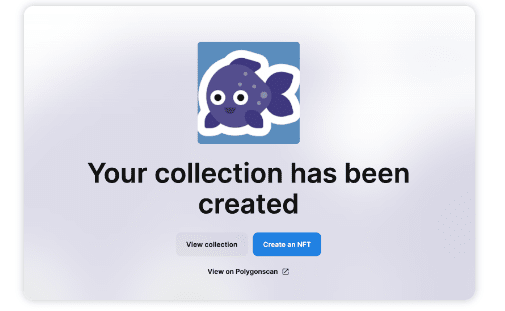
Deploying a smart contract requires an initial transaction, which incurs a gas fee determined by current network activity. If network congestion is high and estimated fees exceed your budget, it is advisable to wait until activity subsides, as gas prices fluctuate continuously. Once parameters are finalized, click "Continue," review the transaction details, and authorize the signature request within your Web3 wallet.
Step 5: Uploading Media and Minting the NFT
Following the successful deployment of your smart contract, you are ready to mint your digital asset. In this guide, we focus on the ERC-1155 token standard, which allows creators to mint either a unique one-of-one item or multiple identical copies of the same digital asset.
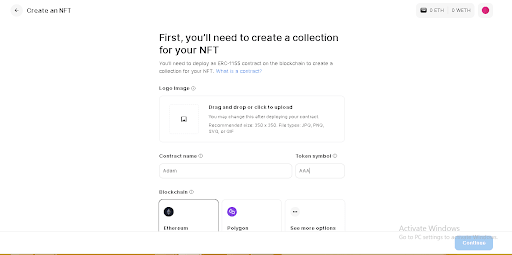
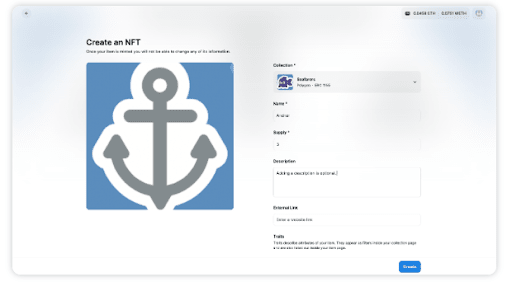
Begin by uploading your digital media file, which serves as the visual or auditory representation of your NFT. Next, assign the item to your newly created collection. Provide a clear, descriptive title for the item and specify the desired item supply (e.g., entering "1" creates a singular, unique asset, whereas entering a higher integer creates a multi-edition collection).
Review all details carefully, as metadata permanence ensures that once the minting process is executed, modifications are no longer possible. Click the "Create" button, and approve the final minting transaction prompt inside your Web3 wallet. Upon network confirmation, a success message will display, signifying that your digital asset has been successfully minted and added to your blockchain-enabled portfolio.
Broader Economic Implications and Industry Analysis
The proliferation of accessible minting tools marks a major milestone in the democratization of digital commerce. By removing traditional gatekeepers such as galleries, record labels, and centralized publishers, blockchain technology empowers individual creators to establish direct economic relationships with global audiences.
However, this democratization also introduces new challenges for the broader digital asset economy. Market saturation remains a persistent concern, as the ease of deploying smart contracts and minting thousands of tokens has led to an oversupply of low-quality digital assets. Consequently, collectors and investors are placing an increasingly high value on proven utility, community engagement, brand reputation, and verified provenance.
Furthermore, regulatory scrutiny surrounding digital assets continues to evolve. Financial regulators and tax authorities across various jurisdictions are developing comprehensive frameworks to monitor NFT issuances, secondary market royalties, and potential securities classifications. Creators and platform operators must remain vigilant, ensuring compliance with evolving legal standards to protect both their projects and their consumer base.
Conclusion
The integration of NFTs and tokenized digital assets into the modern economy represents a paradigm shift in how humanity defines, protects, and transacts value in a digital-first world. While navigating the technical requirements of smart contract deployment and managing blockchain transaction costs requires diligence, the long-term potential for creators and technologists is vast. By approaching token creation with careful planning, adherence to editorial and technical best practices, and a clear understanding of underlying market dynamics, participants can successfully navigate the expanding ecosystem of blockchain-based digital assets.