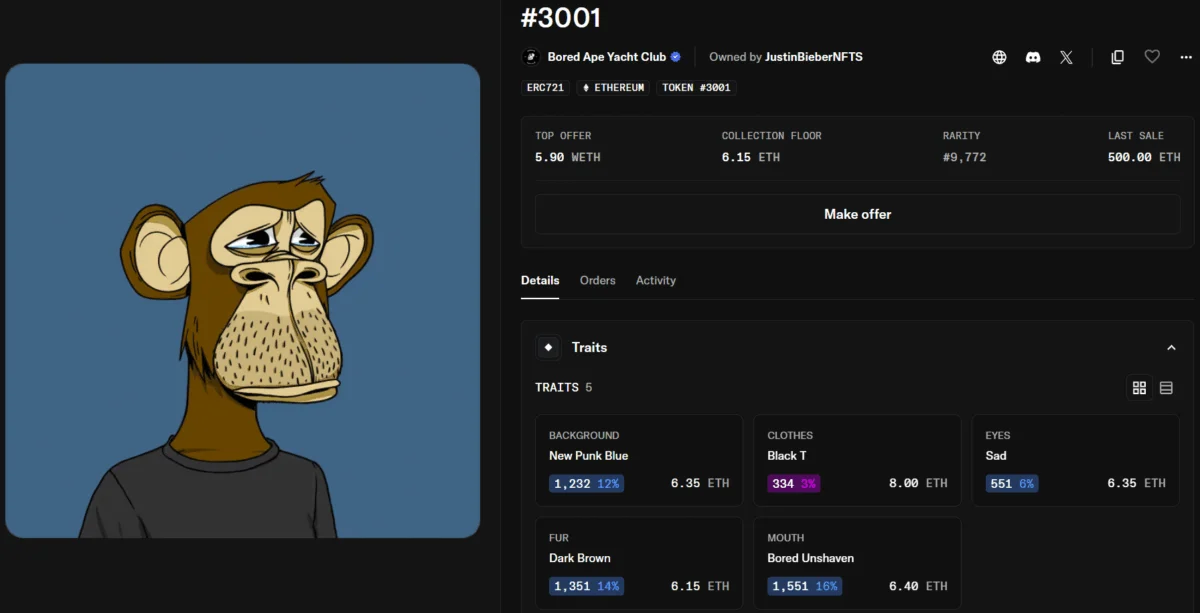
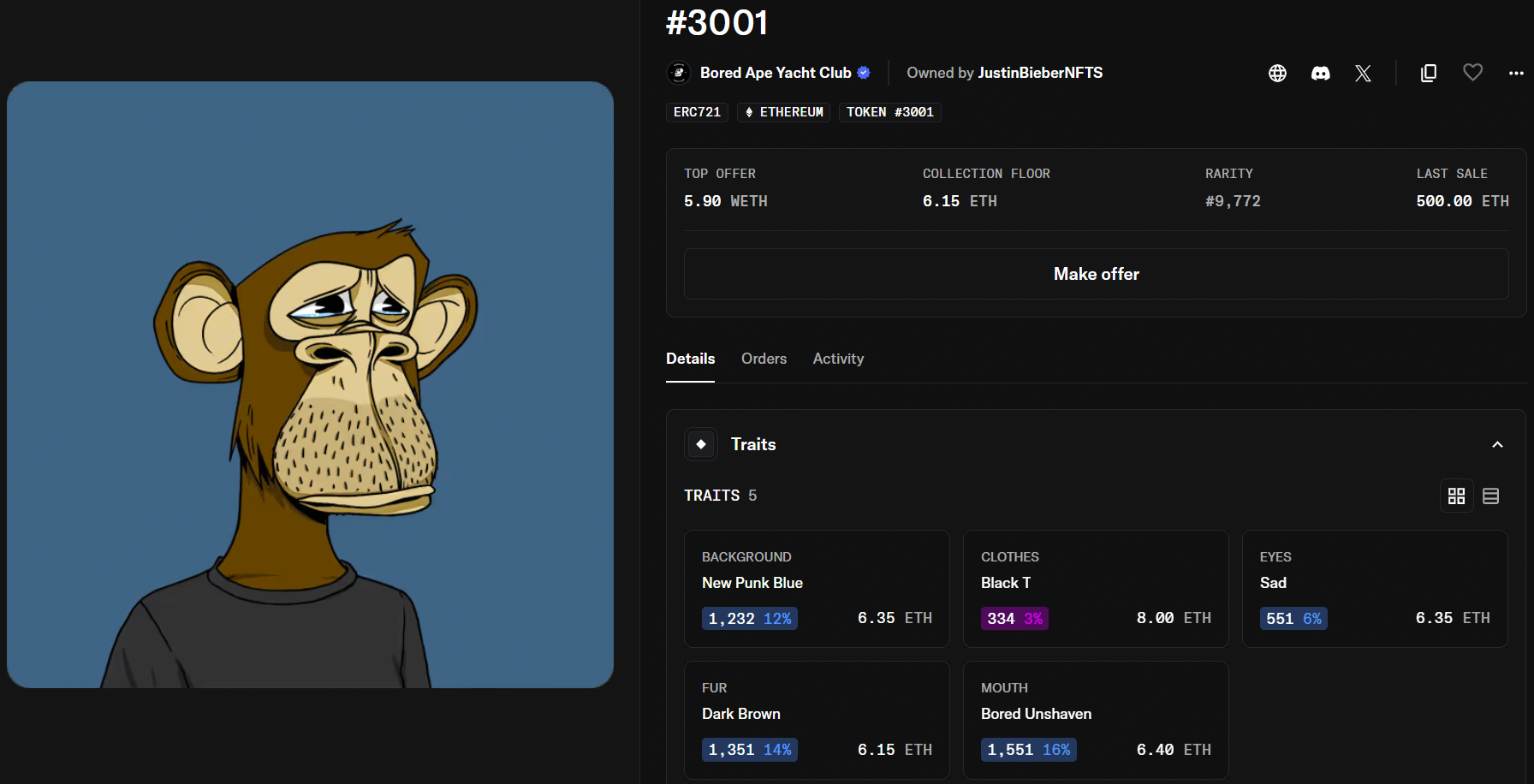
The staggering 99% decline in the value of pop superstar Justin Bieber’s highly publicized Bored Ape Yacht Club (BAYC) NFT, Bored Ape #3001, from its peak valuation serves as a stark reminder of the extreme volatility and speculative nature that characterized the non-fungible token (NFT) market in early 2022. Acquired for an eye-watering 500 Ether (ETH) in January 2022, a transaction then valued at approximately $1.3 million, the digital collectible is now reportedly worth around $12,000, representing a near-total evaporation of Bieber’s initial investment. This dramatic fall from grace underscores the significant risks associated with celebrity endorsements in the nascent and often unpredictable world of digital assets.
The acquisition of Bored Ape #3001 by Bieber occurred during a period of unprecedented enthusiasm and widespread adoption of NFTs, a trend that saw a surge in celebrity participation and investment. At the time of purchase, the NFT sector was experiencing a euphoric boom, with digital art and collectibles commanding astronomical prices. Analysts and market observers had already noted that Bieber’s investment in Bored Ape #3001 was significantly above the prevailing market rates for comparable assets within the Bored Ape Yacht Club collection. At that juncture, similar NFTs were trading in the range of $200,000 to $300,000, suggesting that Bieber, or his advisors, may have paid a premium, potentially driven by the desire for high-profile ownership in a trending market.
The Rise and Fall of the Bored Ape Yacht Club
The Bored Ape Yacht Club (BAYC) itself emerged as a premier NFT project, launched by Yuga Labs in April 2021. This collection of 10,000 unique, algorithmically generated ape avatars quickly captured the imagination of the digital art and cryptocurrency communities. The initial minting cost was a modest 0.08 ETH, a price point that proved to be an incredible bargain as the project rapidly sold out within a mere half a day. The subsequent meteoric rise in the BAYC’s popularity was fueled by its perceived exclusivity, the community it fostered, and the celebrity endorsements it attracted, including that of Justin Bieber.
By May 2022, the "floor price" – the lowest price at which an NFT from the collection could be purchased – had soared to astonishing heights. Floor prices for BAYC NFTs reached between 128 and 145 ETH. Considering the prevailing exchange rates at that time, this translated to a staggering valuation of roughly $350,000 to $420,000 per NFT. This period represented the zenith of the NFT market’s speculative bubble, where the perceived value of digital assets often outstripped any tangible utility or underlying fundamentals.
Justin Bieber’s foray into the BAYC ecosystem was not limited to a single purchase. Records indicate that shortly after acquiring Bored Ape #3001, he also purchased another ape NFT, #3850, for an estimated $470,000. This second acquisition further cemented his status as a prominent figure within the NFT community and highlighted the significant capital he was willing to deploy in this emerging asset class.
The Crypto Winter and the NFT Market Correction
The euphoria of 2021 and early 2022 proved to be unsustainable. As the broader cryptocurrency market began to experience a significant downturn, often referred to as a "crypto winter," the NFT market followed suit with a sharp and dramatic correction. Factors contributing to this downturn included rising interest rates, increased regulatory scrutiny, and a general cooling of speculative fervor.
The impact on NFT trading volumes and floor prices was profound. Many NFT projects, including the once-dominant BAYC, saw their values plummet from their all-time highs. The current market conditions for the Bored Ape Yacht Club collection are a testament to this correction. As of recent reporting, the highest bid for any BAYC NFT was a mere 5.9 ETH, and the collection’s floor price was hovering around 6.15 ETH. With the price of Ethereum fluctuating around $2,000, this means that investors who entered the market during the 2022 rally, especially those who paid prices comparable to Bieber’s initial investment, are now facing substantial dollar-denominated losses. Bieber’s Bored Ape #3001, valued at approximately $12,000, reflects this stark reality, representing a depreciation of over $1.28 million from its peak value.
Beyond Speculation: The Evolving Landscape of NFTs
Despite the dramatic contraction in speculative trading and the significant decline in the value of many NFT assets, the NFT sector has not disappeared. Instead, the market has undergone a significant evolution, shifting its focus from purely speculative collectibles towards applications offering tangible utility. This maturation process is characterized by a move towards projects that provide real-world benefits, integrate with existing platforms, or offer unique experiences to holders.
Current trends in NFT development highlight a pivot towards:
- In-Game Assets: NFTs are increasingly being utilized as unique, ownable assets within video games, allowing players to truly own their virtual items, from character skins to powerful weapons.
- Access Passes: Many NFT projects now function as digital keys, granting holders exclusive access to communities, events, content, or early releases of new products and services.
- Identity Tools: NFTs are being explored as digital identity solutions, allowing individuals to manage and verify their online presence and credentials in a decentralized manner.
- Tokenized Real-World Items: The concept of representing ownership of physical assets, such as real estate or luxury goods, through NFTs is gaining traction, potentially streamlining ownership transfer and reducing fraud.
This shift in focus signals a potential move towards more sustainable and long-term value creation within the NFT space, moving beyond the hype-driven valuations of the past.
Blockchain Dominance and Emerging Platforms
In terms of underlying blockchain technology, Ethereum continues to be the dominant platform for high-value and prominent NFT collections like the Bored Ape Yacht Club. Its robust ecosystem, established network effects, and widespread developer adoption have made it the go-to blockchain for many significant NFT projects.
However, the landscape is not monolithic. Other blockchains are actively gaining market share, particularly in areas where lower transaction fees and improved scalability are paramount. Solana and Polygon have emerged as significant players in this regard. Solana, known for its high transaction speeds and low costs, has attracted a growing number of NFT projects. Polygon, a Layer 2 scaling solution for Ethereum, offers a more cost-effective and faster alternative for NFT transactions, making it an attractive option for both creators and users. This diversification of blockchain infrastructure suggests a more mature and multifaceted NFT ecosystem is developing.
Implications and Future Outlook
The precipitous decline in the value of Justin Bieber’s Bored Ape NFT, while a significant personal financial setback for the artist, serves as a broader cautionary tale for the entire digital asset market. It underscores the critical importance of due diligence, understanding market fundamentals, and recognizing the inherent risks associated with highly speculative investments, particularly those driven by celebrity endorsement and market sentiment.
For celebrities and influencers who have entered the NFT space, the experience highlights the potential for substantial financial losses if market conditions shift unfavorably. While endorsements can drive initial hype and demand, the long-term value of an NFT is ultimately determined by its utility, community, and the ongoing development of its associated project.
The evolution of the NFT market from a purely speculative frenzy towards utility-driven applications suggests that the sector may be entering a more sustainable phase. Projects that can demonstrate tangible value and solve real-world problems are more likely to weather market fluctuations and achieve long-term success. However, the memory of the dramatic price swings and the substantial losses incurred by many investors, including high-profile figures like Justin Bieber, will undoubtedly continue to shape market sentiment and investor behavior for the foreseeable future. The pursuit of innovation and the development of practical use cases will be crucial for the continued growth and legitimacy of the NFT ecosystem.