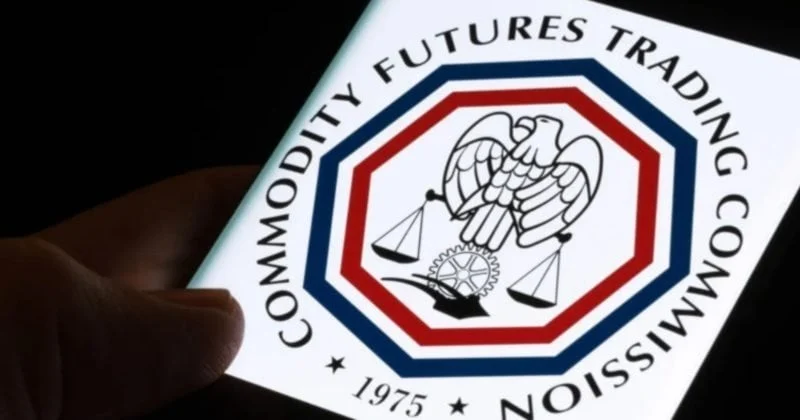
The Commodity Futures Trading Commission has significantly escalated its oversight of decentralized prediction markets, launching at least three previously undisclosed investigations into suspected insider trading on Polymarket. According to a comprehensive investigative report published by WIRED, the federal regulatory body has set its sights on several high-profile event contracts, probing whether market participants capitalized on confidential, non-public information to secure substantial financial gains. The inquiries span a diverse and sensitive range of topics, including preemptive executive pardons issued by former President Joe Biden, critical geopolitical developments involving Iran, and corporate data leaks tied to Google’s annual search trends.
This regulatory squeeze arrives at a delicate juncture for Polymarket, which has spent the past several years navigating a complex labyrinth of American compliance hurdles. Once exiled from the United States following a stringent 2022 regulatory crackdown, the platform has recently sought to reestablish its operational footprint domestically. However, the emergence of multiple parallel enforcement actions—including cooperation with the Department of Justice and the United States Attorney’s Office for the Southern District of New York—highlights the escalating friction between decentralized prediction markets and traditional financial regulators. As prediction markets gain mainstream traction as alternative barometers of real-world events, the integrity of these platforms has become a matter of acute national interest.
Chronology of the Investigations
The genesis of the Commodity Futures Trading Commission’s current enforcement sweep dates back to the spring of 2025, sparked largely by investigative journalism that exposed anomalies in trading patterns on the platform. The timeline of these regulatory interventions reveals a methodical approach by the agency to address systemic vulnerabilities in event contract trading.
In early May 2025, CFTC Chairman Michael Selig officially approved the agency’s first formal investigation into Polymarket. This initial probe was triggered by a public report from National Public Radio, which detailed the activities of an anonymous trader who amassed more than $300,000 in profits. The trader had successfully navigated Polymarket’s pardon-related markets by correctly predicting several preemptive executive pardons issued by the White House before they were publicly announced. The statistical improbability of these precise wagers drew immediate scrutiny from market observers and subsequently caught the attention of federal regulators tasked with policing market manipulation.
Weeks later, at the close of May 2025, the regulatory net widened. Chairman Selig authorized a second investigation, this time focusing on event contracts linked to Iran. This probe was catalyzed by a segment on CBS’s 60 Minutes, which brought to light a cluster of suspicious trading accounts. According to the broadcast and subsequent regulatory reviews, these accounts managed to generate approximately $2.4 million in profits while maintaining an astonishing 98% win rate on geopolitical outcomes involving the Middle Eastern nation. The sheer consistency and magnitude of these returns suggested to regulators that participants possessed actionable intelligence regarding sensitive diplomatic or state actions long before public dissemination.
The third pillar of the CFTC’s current enforcement campaign materialized in July 2025. The agency approved an inquiry into suspected insider trading surrounding Google’s 2025 Year in Search rankings. While this probe shares thematic overlap with corporate data security, enforcement officials have clarified that it operates as a distinct administrative track. Nevertheless, the July investigation runs parallel to an aggressive criminal case spearheaded by the Southern District of New York against former Google engineer Michele Spagnuolo. Federal prosecutors allege that Spagnuolo leveraged his internal access to misappropriate confidential company data, funneling it into Polymarket contracts to generate upwards of $1.2 million in illicit proceeds.
Regulatory Framework and Historical Context
To understand the weight of these ongoing investigations, one must examine the turbulent regulatory history between Polymarket and American authorities. Founded in 2020, Polymarket quickly evolved into the world’s largest crypto-based prediction market, allowing users worldwide to speculate on everything from elections and macroeconomic indicators to cultural phenomena and corporate milestones using USD Coin (USDC).
However, the platform’s rapid rise intersected uncomfortably with federal commodities laws. In January 2022, the CFTC slapped Polymarket with a $1.4 million civil monetary penalty for operating an unregistered facility that offered event-based binary options. As part of the resulting settlement, Polymarket formally agreed to wind down its operations for United States-based users, implementing geofencing protocols to block domestic Internet Protocol addresses. For nearly four years, the platform operated strictly outside the US perimeter, functioning as an offshore venue where Americans theoretically could not participate.
The landscape shifted dramatically in late 2025. In a strategic maneuver designed to capture the lucrative domestic market legally, Polymarket executed the acquisition of QCEX, a regulated derivatives platform. Through this corporate restructuring, the company orchestrated a calculated US relaunch, granting American traders limited, compliant access to specific event contracts under the direct oversight of the CFTC.
This reintegration, however, brought immediate friction. Prior to the QCEX acquisition, both the Department of Justice and the CFTC initiated preliminary inquiries to determine whether Polymarket had covertly permitted US-based traders to bypass the 2022 settlement restrictions through the use of virtual private networks and other circumvention tools. While federal authorities ultimately closed that specific structural probe in July 2025, the closure did not signal regulatory amnesty. Instead, it appears to have cleared the runway for enforcement divisions to pivot their focus from platform architecture to individual market integrity—specifically targeting insider trading, market manipulation, and the misuse of confidential material non-public information.
The Broader Implications for Decentralized Prediction Markets
The implications of the CFTC’s triple investigation extend far beyond the corporate ledgers of Polymarket, striking at the foundational philosophy of decentralized finance and prediction markets. Proponents of platforms like Polymarket have long championed them as superior forecasting tools, arguing that the aggregation of crowdsourced capital yields more accurate predictions than traditional polling, expert panels, or bureaucratic forecasting models.
Yet, the presence of systemic insider trading threatens to undermine that core premise. When market prices are distorted not by collective wisdom, but by the clandestine exploitation of privileged data—such as confidential government pardons, sensitive geopolitical maneuvers, or unreleased corporate metrics—the predictive utility of the market degrades. Instead of serving as a democratic barometer of future events, the platform risks morphing into an unregulated playground for corporate insiders, government whistleblowers, and bad actors equipped with asymmetric advantages.
Furthermore, the involvement of multiple federal agencies—including the CFTC, the Department of Justice, and the Southern District of New York—signals a unified government stance that cryptographic rails do not exempt financial activity from traditional securities and commodities enforcement. The prosecution of former Google engineer Michele Spagnuolo serves as a watershed moment, demonstrating that federal prosecutors are fully prepared to apply traditional insider trading doctrines to decentralized prediction markets.
As these investigations unfold, Polymarket faces a critical existential test. The platform’s long-term viability in the United States depends heavily on its ability to demonstrate robust compliance, surveillance, and enforcement mechanisms capable of detecting and deterring illicit trading behaviors. Failure to police its own markets could invite even harsher regulatory restrictions, potentially jeopardizing the hard-won domestic relaunch that the company fought to achieve throughout 2025. For the broader crypto industry, the outcome of these probes will establish a vital legal precedent, defining the boundaries of market integrity in the burgeoning sector of decentralized prediction finance.