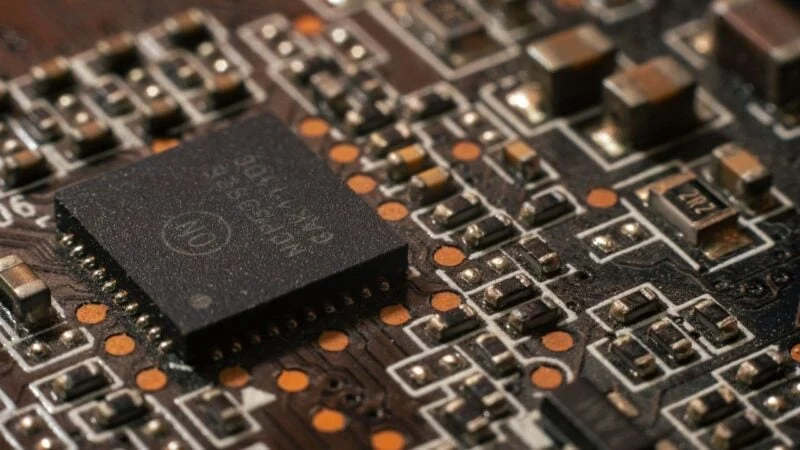
The United States intelligence community has formally concluded that the People’s Republic of China successfully acquired thousands of restricted, cutting-edge American artificial intelligence processors through a sophisticated, state-directed clandestine campaign. This covert operation effectively undermined the comprehensive export-control framework painstakingly constructed by Washington to prevent Beijing from obtaining the hardware foundational to next-generation military and commercial AI capabilities.
According to classified assessments that have recently leaked to policy makers, the operation was not executed by opportunistic grey-market brokers or decentralized commercial entities. Instead, it was systematically organized and spearheaded by China’s Ministry of State Security (MSS), the nation’s premier civilian intelligence and counterintelligence agency. Operating under the direct authority of MSS leadership, including Minister Chen Yixin, the agency has spent at least two years orchestrating a multifaceted blueprint designed to subvert Western trade restrictions.
The fallout from these intelligence findings has triggered an immediate, aggressive policy realignment in Washington, resulting in severe regulatory tightening aimed at global data center operations and transit hubs across Southeast Asia. The revelation exposes deep structural vulnerabilities in the global semiconductor supply chain and highlights the escalating technological cold war between the world’s two superpowers.
Anatomy of an Intelligence-Led Procurement Campaign
The campaign to acquire restricted Nvidia graphics processing units (GPUs) began no later than late 2024, operating as a coordinated national security priority. US intelligence reports indicate that the MSS did not merely facilitate illegal trade routes; it deployed state resources to map, manipulate, and exploit global supply chains.
The primary targets of this state-sponsored acquisition drive were advanced Nvidia GPUs, specifically architectures capable of handling the massive parallel mathematical computations required to train large language models (LLMs) and advanced neural networks. Because these microchips represent the absolute pinnacle of modern computing power—and are deemed dual-use technologies with significant military applications—they have been subjected to increasingly stringent export curbs by the US Bureau of Industry and Security (BIS).
Rather than relying on simple, ad-hoc smuggling methods, the MSS reportedly synchronized efforts across multiple sectors. This included providing intelligence cover for front companies, deploying cyber operations to monitor Western supply chain logistics, and coordinating financial flows to obscure the final destinations of high-end hardware. Independent technical audits of advanced Chinese AI models have subsequently uncovered definitive hardware "fingerprints" aligning with Nvidia’s elite Blackwell-series architecture, including the high-performance B200 and GB200 variants.
Independent forensic analyses of major training runs conducted inside mainland China estimate that anywhere between 7,000 and 22,000 Nvidia Blackwell GPUs were successfully funneled into domestic data centers. These high-end semiconductors are believed to have powered the foundational training phases for models developed by prominent Chinese artificial intelligence firms, including DeepSeek, Moonshot AI, and Ant Group. The involvement of these leading commercial giants alongside historical military procurement channels underscores a unified, national-level strategy to neutralize US export barriers.
A Chronology of Escalation: From Early Tenders to State-Level Smuggling
To understand the current crisis, observers must trace the evolution of China’s semiconductor acquisition strategy over the past decade. The timeline of evasion and tightening US controls highlights a persistent cat-and-mouse game between Washington and Beijing:
- 2019–2021: Early indicators of strategic ambition emerge as Chinese military research institutions and state-affiliated universities continuously issue public procurement tenders for high-performance Western computing hardware, specifically targeting Nvidia A100 and older generation chips.
- October 2022: The Biden administration implements sweeping export controls designed to choke off China’s access to advanced computing chips and semiconductor manufacturing equipment, setting off a scramble by Chinese entities to secure existing stockpiles.
- Late 2024: According to US intelligence assessments, the Ministry of State Security formally steps in to centralize and elevate chip acquisition to an official intelligence operation, shifting tactics from private smuggling rings to a state-managed logistics network.
- Throughout 2025: Forensic digital audits reveal that Chinese AI labs—including newly prominent market disruptors—are successfully training advanced foundational models on hardware featuring Nvidia architectural fingerprints, circumventing existing point-of-origin checks.
- November 16, 2026: In direct response to the intelligence community’s findings regarding the MSS campaign, the Trump administration announces a landmark package of secondary regulations targeting overseas data centers and transit hubs.
Washington Responds: Closing Loopholes in Data Centers and Transit Hubs
The confirmation that a foreign civilian intelligence agency successfully bypassed strict American export controls has left regulatory bodies with little choice but to expand the scope of US jurisdiction. On November 16, 2026, the administration unveiled a sweeping set of emergency rules designed to plug the leaks exploited by Beijing’s procurement networks.
At the core of the new regulatory framework is a strict licensing mandate for overseas data centers that provide computing services to Chinese entities. Historically, foreign cloud providers and international hosting facilities operating outside mainland China could purchase US-built AI hardware without the same level of granular oversight applied to direct shipments into China. Under the updated policy, any foreign-based infrastructure utilizing American chips must submit to rigorous end-user verification if their client base includes organizations tied to the Chinese market.
Furthermore, the regulations severely restrict semiconductor shipments passing through designated intermediary transit countries. For years, illicit procurement networks relied on transshipment hubs—most notably Singapore and Malaysia—to launder the origin of high-value electronics before forwarding them to mainland buyers.
A prime focal point of this crackdown is Megaspeed International, a Singapore-based trading entity that accumulated massive inventories of Nvidia hardware. Recent investigations by the US Commerce Department into Megaspeed and related intermediary nodes have uncovered troubling structural links connecting these corporate fronts to facilities utilized by the People’s Liberation Army (PLA). By clamping down on these transit corridors, Washington aims to choke off the secondary pipelines that kept Beijing’s supercomputing centers well-supplied.
Broader Economic and Geopolitical Implications
The transition of semiconductor smuggling from an economic crime driven by profit-seeking intermediaries to a strategic campaign orchestrated by a national intelligence apparatus fundamentally alters the geopolitical landscape of the global technology sector.
For chipmakers such as Nvidia, Advanced Micro Devices, and their manufacturing partners like TSMC, the new regulatory environment introduces profound compliance challenges. Navigating the delicate balance between maximizing global commercial revenue and adhering to tightening national security mandates requires unprecedented levels of supply-chain transparency. Compliance is no longer simply a matter of knowing the immediate buyer; it demands end-to-end visibility across global data centers and secondary leasing markets.
For the international AI race, the findings demonstrate that export controls—while undeniably effective at slowing down China’s aggregate computing capacity—cannot completely airtight a borderless digital ecosystem. While Chinese AI labs face higher friction, inflated costs, and logistical hurdles to acquire elite hardware, the MSS-backed pipelines have proven that determination and state intelligence resources can temporarily bridge technological gaps.
As the US Commerce Department deepens its investigations into front companies like Megaspeed, and as international pressure mounts on transit hubs in Southeast Asia, the global semiconductor supply chain faces a permanent transformation. The central question moving forward will be whether enhanced enforcement of overseas data center licensing can successfully close the remaining loopholes, or if state-sponsored networks will continue to find innovative ways to outpace Western regulators.