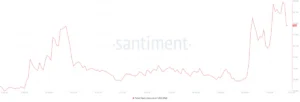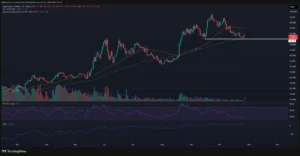
As February 2026 unfolds, the Solana ecosystem finds itself at a precarious crossroads, characterized by waning investor confidence and significant downward pressure on its native token, SOL. Trading at approximately $105.03 at the time of reporting—a valuation not seen since April 2025—the asset has experienced a sharp 7.17% decline within a 24-hour window. This retreat is part of a broader, sustained downtrend that has seen the token shed more than 54% of its market value over the past year, according to data from CoinMarketCap. The psychological barrier of $100 has now become the primary focus for traders and analysts alike, serving as a critical support level that, if breached, could signal further capitulation.
The Emergence of the "Solana Killer" Flaw Narrative
Beyond the immediate price action, a growing segment of the developer and investor community has begun to focus on a theoretical vulnerability colloquially labeled the "Solana Killer" flaw. This narrative, which has gained traction in industry forums and social media, posits that deep-seated architectural weaknesses within the network’s consensus mechanism and state management could pose existential risks if left unaddressed.
While critics argue that these potential flaws could lead to systemic network disruptions, technical proponents emphasize the progress made via recent infrastructure upgrades. The integration of Firedancer—a high-performance validator client designed to improve throughput and fault tolerance—and the expansion of multi-client support have been touted as significant leaps toward hardening the network. Despite these technical advancements, the debate persists: are these patches merely cosmetic, or do they effectively mitigate the underlying architectural risks that have historically plagued Solana’s uptime and stability?
Chronology of Network Challenges and Evolution
Solana’s history is defined by a rapid expansion that frequently outpaced its infrastructure’s maturity. Since its inception, the network has been praised for its high transaction speed and low cost, which allowed it to dominate in sectors like decentralized finance (DeFi) and non-fungible tokens (NFTs).
- 2023–2024: The network experienced significant growth in transaction volume, solidifying its position as a primary hub for retail and institutional dApp development.
- Early 2025: SOL prices reached local highs, driven by the anticipation of institutional adoption and the potential for spot-based financial products.
- April 2025: The onset of a market-wide cooling period began to pressure SOL, marking the beginning of the current downward trajectory.
- February 2026: The current "Solana Killer" discourse emerged, coinciding with a drop in speculative volume and heightened concerns regarding validator decentralization.
This timeline reflects a network that has proven its capacity for high-scale usage but now faces the "post-growth" challenge: proving that the platform can transition from a high-utility experimental network to a secure, institutional-grade settlement layer.
Analyzing the Cooling of Speculative Metrics
On-chain data reveals a notable shift in user behavior. According to metrics provided by DeFiLlama, the ecosystem’s spot decentralized exchange (DEX) volumes have experienced a precipitous decline, dropping to $4.6 billion from the $38.4 billion peak observed in January 2026. This contraction in trading volume is symptomatic of a broader retreat in speculative activity across the crypto-asset class, but the impact on Solana is particularly pronounced given its heavy reliance on high-frequency DeFi interactions.
The situation was further complicated by a confirmed security breach involving Step Finance, which affected a portion of its treasury wallets. While the incident was localized, it served as a catalyst for renewed skepticism regarding the security of third-party protocols built atop the Solana blockchain. Simultaneously, institutional sentiment, as tracked by Farside Investors, has soured, with SOL-focused exchange-traded products recording $11.3 million in net outflows. This outflow represents a departure from the bullish sentiment that defined the previous year, suggesting that institutional capital is becoming increasingly selective in the face of macro-economic uncertainty.
Institutional Perspectives and Governance Concerns
Despite the bearish technical indicators, research firms such as 21Shares continue to highlight Solana’s fundamental strengths. Their 2026 outlook emphasizes that Solana remains one of the most active blockchains globally, leading the industry in transaction counts and stablecoin utility. The argument here is that the "scalability debate"—the question of whether Solana could handle mass adoption—has been settled in the affirmative. The current challenge is no longer technological throughput, but "value capture."
Value capture refers to the ability of the network to translate massive user activity into long-term appreciation for the SOL token. This is where governance and validator concentration become critical. Critics point to the fact that a relatively small number of large entities control a significant portion of the network’s stake. For institutional investors, this concentration presents a regulatory and operational risk. If the network is perceived as too centralized, it may struggle to attract the long-term, conservative capital required to stabilize its price floor and ensure the longevity of its decentralized infrastructure.
Implications for the Broader Crypto Ecosystem
The current state of Solana serves as a case study for the "third-generation" blockchain transition. Many projects that launched with the goal of being "Ethereum killers" have found that achieving speed is only the first step. The more difficult transition involves maintaining decentralized integrity, ensuring robust security protocols, and fostering an economic model where the native token serves as a store of value rather than just a medium for transaction fees.
If the "Solana Killer" flaw narrative is proven to be a manageable technical hurdle, and if the network can successfully decentralize its validator set while maintaining its current transaction speed, it may emerge from this correction as a more mature and resilient platform. Conversely, if the architectural concerns are found to be structural and unfixable, the network may face a permanent loss of market share to competing layer-1 and layer-2 solutions that prioritize security and decentralization over raw, high-throughput performance.
Conclusion: The Path Forward
The path ahead for Solana in the remainder of 2026 will be dictated by its ability to resolve the tension between high-velocity usage and sustainable security. While market metrics—including the decline in DEX volume and negative institutional fund flows—paint a challenging picture, the network’s underlying demand remains substantial.
Investors and developers are watching closely to see if the network can sustain its activity levels during this period of price discovery. The $100 support level is more than just a number; it represents a test of the community’s belief in the Solana architecture. If the ecosystem can successfully navigate the current security concerns and pivot toward a more sustainable governance model, the current downturn may be viewed in hindsight as a necessary correction for a network attempting to bridge the gap between high-frequency crypto trading and stable, long-term financial infrastructure. For now, the sentiment remains cautious, with the broader market waiting for a signal that the network’s architectural, governance, and security concerns are firmly in the rearview mirror.